
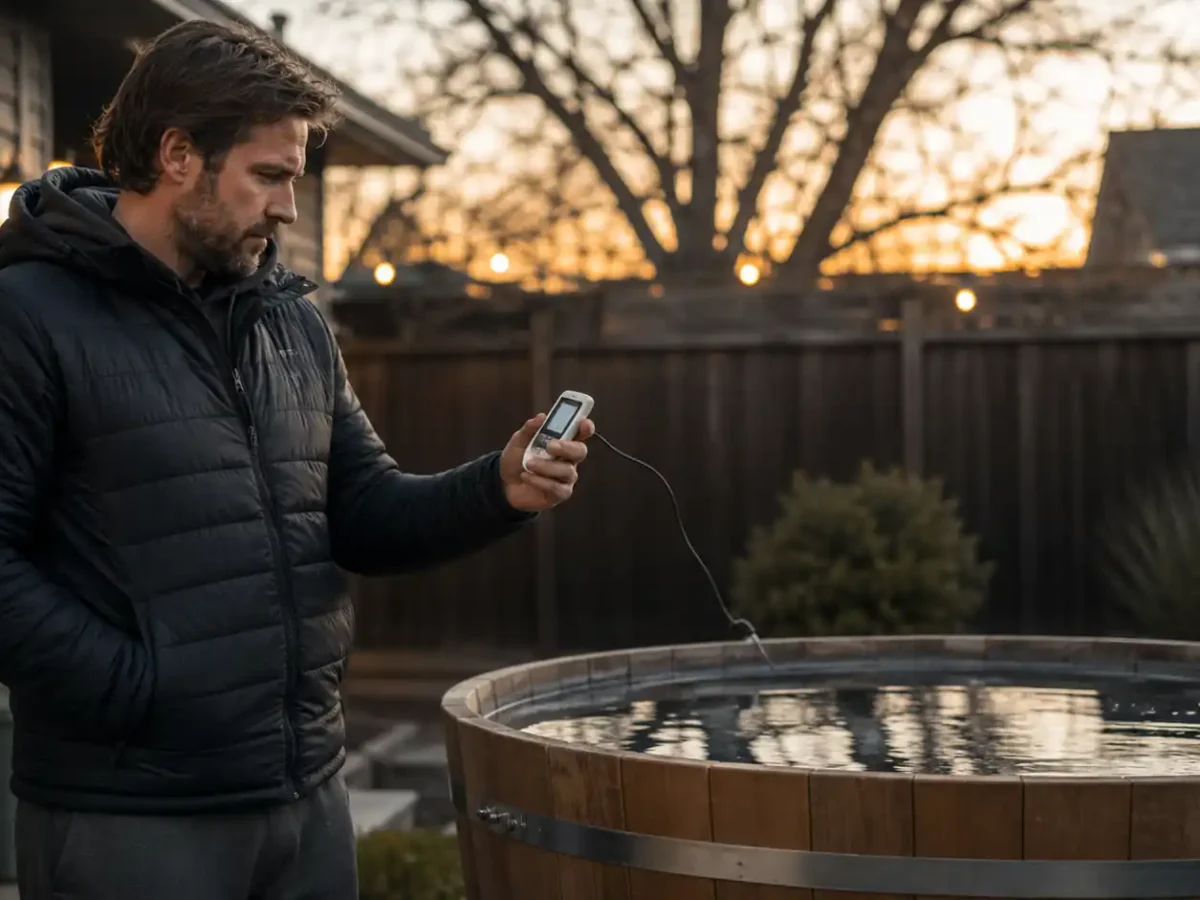
The water looks still. Then the first breath after stepping in comes out sharp and involuntary — that’s not fear, it’s a real physiological reflex, and it’s exactly why cold plunge safety deserves more attention than a quick warning label at the bottom of a wellness article.
What’s Actually Happening to Your Body
The gasp, the racing heart, the urge to breathe fast — this is called the cold shock response, and it’s the starting point for understanding cold plunge safety. Within the first 30 to 60 seconds of cold immersion, heart rate and blood pressure both rise sharply as blood vessels near the skin constrict.
For most healthy adults, this response settles within a minute or two. The risk isn’t the response itself — it’s what happens when that spike in cardiovascular demand meets a heart or circulatory system that’s already under strain.
Breathing plays a bigger role in this than most people expect. The involuntary gasp is followed by a strong urge to hyperventilate, and losing control of breathing during those first moments is what tends to make the experience feel more dangerous than it usually is. Slow, deliberate exhales — longer than the inhales — are one of the simplest ways to keep that initial response from snowballing into genuine distress rather than just discomfort.
Who Should Not Cold Plunge
Is cold plunging safe for beginners in general? For most healthy adults, yes — with reasonable caution. But cold plunge risks are meaningfully higher for specific groups, and this is where a lot of casual advice online falls short by treating cold exposure as universally low-risk.
Healthy Adults
No diagnosed heart, circulatory, or respiratory conditions; not pregnant. Standard precautions still apply.
Asthma, Mild Circulatory Issues
Cold air and water can trigger airway constriction. A doctor’s input before starting is a reasonable step, not an overreaction.
Heart Conditions, Pregnancy, Raynaud’s
Includes arrhythmia, uncontrolled high blood pressure, history of heart attack, and pregnancy. Cold plunge safety guidelines for heart conditions consistently point to medical clearance first.
Cold plunge risks for high blood pressure specifically come from the sudden vasoconstriction combined with the heart rate spike — a combination that’s manageable for most people but genuinely risky for those with existing cardiovascular strain. Is cold plunging safe during pregnancy is a question best answered by an obstetrician directly, given the added strain cold shock places on circulation.
Age, Medications, and Other Overlooked Risk Factors
Most cold plunge safety guidelines focus on obvious conditions like heart disease, but a few less-discussed factors change the risk picture too. Certain medications — particularly beta-blockers, which blunt the heart’s normal response to stress, and diuretics, which affect blood pressure regulation — can interact with the cardiovascular demands of cold shock in ways that aren’t always obvious to the person taking them. This isn’t a reason to panic if you’re on either type of medication, but it is a reasonable prompt to mention cold plunging to whoever prescribed it.
Older adults face a somewhat different risk profile as well, mainly because cardiovascular response to sudden temperature change tends to become less efficient with age, even without a diagnosed heart condition. This doesn’t mean older adults can’t cold plunge safely — many do — but it does support starting with shorter, milder sessions and paying closer attention to how the body responds, rather than assuming the same approach that works for a 25-year-old applies equally at 65.
Children are generally advised against unsupervised cold plunging altogether. Their smaller body mass means core temperature can drop faster relative to exposure time, and they’re less able to reliably communicate early warning signs like numbness or disorientation.
Cold Plunge Risks People Don’t Talk About Enough
Beyond cardiovascular strain, a few less-discussed cold plunge side effects are worth knowing:
- Cold shock drowning risk — the involuntary gasp reflex can be dangerous in open water if it happens underwater or mid-swim, which is why open-water cold exposure carries different risks than a controlled tub.
- Numbness affecting grip and coordination — extended exposure can reduce fine motor control, making exiting a tub or ladder harder than expected.
- Afterdrop — core body temperature can continue dropping for a short period after exiting the water, which is part of why a rewarming plan matters as much as the plunge itself.
None of this means cold plunging is inherently dangerous for healthy adults — it means the dangers of cold plunging are specific and manageable, not vague and unpredictable, once you know what they actually are. Afterdrop in particular catches people off guard, since it’s easy to assume the risk ends the moment you step out of the water. In reality, core temperature can keep falling for ten to twenty minutes afterward as colder blood from the skin’s surface circulates back toward the body’s core — which is exactly why a rewarming plan matters as much as the session itself, not just as an afterthought.
Safety Rules Worth Actually Following
Cold plunge safety tips tend to repeat the same handful of points, mostly because they’re the ones that matter most:
- Know the water temperature before getting in — guessing leads to inconsistent, sometimes unsafe exposure.
- Never cold plunge alone if you’re new to it, especially in open water rather than a home tub.
- Enter gradually rather than diving in, to reduce the intensity of the shock response.
- Set a time limit in advance and stick to it, rather than judging by feel alone.
- Have warm, dry clothing and a towel within reach before you start.
If you’re still working out the basics of a first session, the practical steps in our beginner’s guide to starting cold plunging pair well with these safety rules — one covers how to begin, this one covers how to do it without unnecessary risk.
Warning Signs That Mean Stop Immediately
Cold plunge safety guidelines generally agree on a short list of signs that should end a session right away, not “push through”:
- Chest pain or tightness — stop immediately and seek medical attention; this is never something to wait out.
- Numbness spreading beyond hands and feet — a sign the body is struggling to regulate temperature.
- Confusion or disorientation — even mild confusion during a plunge is a clear signal to exit.
- Uncontrollable shivering after exiting — expected briefly, but if it doesn’t ease with warm clothing and movement, it warrants attention.
- Shortness of breath unrelated to the initial gasp reflex — the first gasp is normal; ongoing breathlessness is not.
Is It Safe to Cold Plunge Every Day?
For healthy adults without underlying conditions, daily cold plunging is generally considered reasonable by most safety guidance, provided sessions stay short and temperatures aren’t pushed to extremes. The bigger question isn’t frequency alone — it’s whether the benefits people associate with cold plunging are worth pursuing daily versus a few times a week, since most research on recovery and mood effects doesn’t show daily use as clearly superior to a consistent 2–3 session routine.
There’s also a practical middle ground worth mentioning: alternating days rather than committing to strict daily sessions gives the body a chance to fully rewarm and recover between exposures, which several people who plunge long-term describe as easier to sustain than an unbroken daily streak.
What I Learned From a Friend’s Close Call
A friend who’d been cold plunging casually for months once described nearly losing her grip on a tub ladder after an unusually long session — not from panic, but because her hands had gone numb enough that she genuinely couldn’t feel the rungs. Nothing serious happened, but it was a clear reminder that numbness affecting coordination isn’t a minor inconvenience; it’s a practical safety issue that rarely gets mentioned outside of cold-water sport communities.
What stood out most from that conversation wasn’t the moment itself, but how casually it had built up to that point. She’d gradually extended her sessions over a few weeks without really tracking it, going by feel rather than a clock, until one ordinary session ran noticeably longer than the rest. It’s a fairly ordinary way for cold plunge risks to sneak up on someone — not through one obviously reckless decision, but through a slow drift away from the basic structure that made early sessions safe in the first place.
That conversation is part of why a basic thermometer and a strict time limit matter more than they might seem to on paper — the kind of simple cold plunge gear that actually supports safer sessions isn’t about comfort, it’s about knowing exactly how long and how cold you’ve actually been exposed, rather than relying on memory or how tough a particular day happens to feel.
Where this information comes from
- Cardiovascular response patterns are consistent with general cold-water immersion physiology described by organizations such as the American Heart Association.
- General cold exposure safety guidance aligns with public health resources such as the UK’s National Health Service.
Cold Plunge Safety: Frequently Asked Questions
Is cold plunging safe for beginners?
Can cold plunging be dangerous?
Who should avoid cold plunging?
Is it safe to cold plunge with high blood pressure?
Can cold plunging cause a heart attack?
How cold is too cold for a cold plunge?
Is it safe to cold plunge alone?
What are the warning signs of cold shock?
One honest question before your next session
If you had to explain your cold plunge routine to a doctor in one sentence, would it sound cautious and deliberate, or would it sound like you’ve been getting lucky?

Related Articles
Cold Plunge When Sick? 6 Rules for Illness, Immunity and a Faster Recovery
Last month I woke up with that unmistakable scratch in the back of my throat — the kind…
Read Guide
Who Should Avoid Cold Plunge? A Complete Safety Checklist
A quick note before you read on: This article shares general safety information, not medical advice. Always talk…
Read Guide
Is Cold Plunge Safe? What the Research Actually Says
A quick note before you read on: This article shares general safety information and isn’t medical advice. Always…
Read Guide