
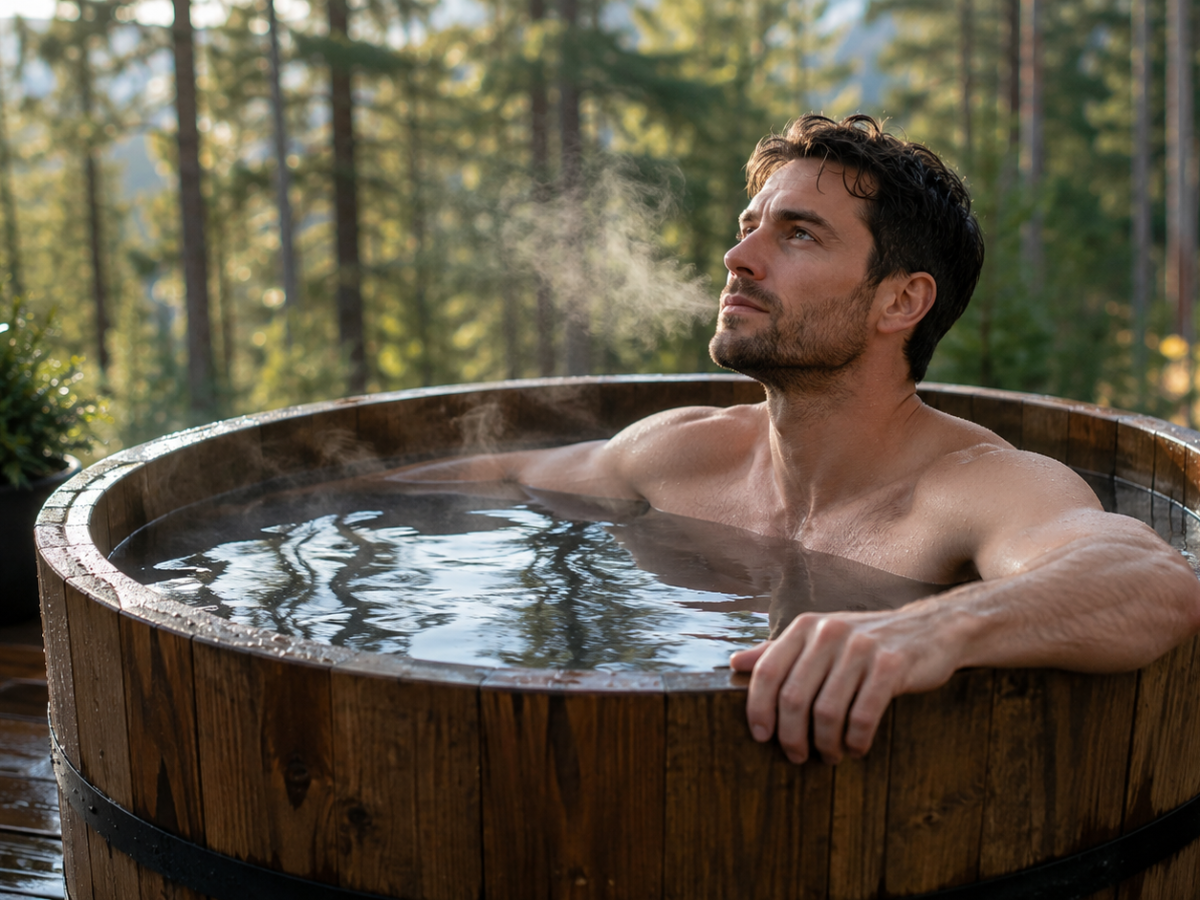
Search for cold plunge benefits and you’ll find claims ranging from “reduces soreness slightly” to “cures nearly everything.” The honest picture sits somewhere in between — and it’s more interesting, and more useful, than either extreme.
What Happens to Your Body During a Cold Plunge
Cold water immersion triggers a fairly predictable physiological response: blood vessels near the skin constrict, heart rate typically rises briefly, and stress hormones like norepinephrine spike. This is the basis for most cold plunge benefits people describe — it’s a controlled physical stressor, not a passive relaxation technique.
That stress response is also why cold plunging isn’t automatically safe for everyone, which is worth keeping in mind before assuming more exposure always means more benefit.
Recovery and Muscle-Related Benefits
Cold plunge benefits for muscle recovery are among the most studied claims in this space, largely because athletes have used cold water immersion for decades. Some research suggests it can modestly reduce perceived muscle soreness after intense exercise, though the effect on actual muscle damage markers is less consistent across studies.
It’s worth noting that a few studies have found frequent cold exposure right after strength training may blunt some long-term muscle-building adaptations — so timing appears to matter more than people often assume.
Mental Health, Mood, and Stress Response
Cold plunge benefits for mental health are frequently discussed anecdotally, and there’s a plausible physiological basis: the norepinephrine and dopamine release triggered by cold exposure is associated with improved alertness and mood in the hours afterward. Some smaller studies link regular cold exposure to reduced perceived stress over time.
This isn’t the same as evidence that cold plunging treats anxiety or depression — the research is still early, and it shouldn’t replace established mental health care.
Immune Function and Inflammation
Cold plunge benefits for the immune system get cited often, usually referencing a well-known study that found regular cold water swimmers took fewer sick days — though that same study also involved exercise and breathing techniques together, making it hard to isolate cold exposure alone as the cause.
On inflammation, cold plunge benefits for inflammation are more nuanced than headlines suggest: acute cold exposure does reduce short-term inflammatory markers, which is useful after an injury or hard workout, but chronic inflammation is a different, more complex process that a cold tub alone isn’t going to resolve.
How Cold Plunging Affects Your Nervous System
A lot of what people feel during a cold plunge traces back to the nervous system rather than the muscles. How cold plunge affects the nervous system is a growing area of interest: the initial shock activates the sympathetic (“fight or flight”) response, but with controlled breathing, many people notice a shift toward calm fairly quickly after exiting — a pattern some researchers associate with improved vagal tone over repeated sessions.
This is one of the areas where cold plunge benefits backed by research are still developing. Early findings are promising for stress regulation, but sample sizes remain small, and results vary noticeably between individuals.
Cold Plunge Benefits for Men and Women: Is There a Real Difference?
Most of the available research doesn’t show dramatically different outcomes between cold plunge benefits for men and cold plunge benefits for women — the core physiological response to cold is broadly similar. That said, a few practical differences are worth knowing:
Commonly Reported by Men
- Slightly faster subjective recovery reports post-training
- Higher likelihood of using cold plunging alongside strength training
Commonly Reported by Women
- Greater sensitivity to cold at the same water temperature, on average
- Hormonal cycle phases may influence cold tolerance and recovery perception
These are general patterns, not fixed rules — individual tolerance varies more within each group than between them.
Before vs. After: What Changes With Consistency
Cold plunge benefits for sleep quality and general resilience tend to show up less from a single session and more from sustained practice. Here’s a general comparison of what people commonly report before starting versus after several weeks of consistent sessions:
| Area | Before Starting | After Consistent Practice |
|---|---|---|
| Tolerance to cold | High discomfort, strong urge to exit quickly | Noticeably calmer entry, steadier breathing |
| Post-exercise soreness | Standard recovery timeline | Modestly reduced perceived soreness for some people |
| Morning alertness | Relies mainly on caffeine or routine | Some report a noticeable, short-term energy lift |
| Stress response | No structured stress-tolerance practice | Self-reported improved composure under discomfort |
Brown Fat, Metabolism, and the Weight-Loss Question
Cold plunge brown fat activation benefits get a lot of attention online, and there’s real science behind the basic mechanism: cold exposure can activate brown adipose tissue, a type of fat that burns calories to generate heat. Where the claims start to stretch is in how much this actually affects body weight.
The calorie burn from a few minutes of cold exposure is small in the context of daily energy needs. So while cold plunge benefits for weight loss aren’t zero, they’re modest at best, and cold plunging shouldn’t be treated as a substitute for diet or exercise when weight loss is the primary goal.
Skin and Circulation: A Smaller but Real Benefit
Cold plunge benefits for skin are less discussed than recovery or mood, but the mechanism is straightforward: cold-induced vasoconstriction followed by rewarming can temporarily improve circulation to the skin. Some people notice a brighter, less puffy appearance shortly after a session, though this effect is short-lived rather than a lasting change to skin health.
Who Tends to Benefit Most
Not everyone gets the same value out of cold plunging, and cold plunge benefits for athletes tend to look somewhat different from benefits for someone using it mainly for stress management or morning alertness.
So, Does Cold Plunge Really Work? A Straight Answer
After going through the research, the fair summary of the benefits of cold plunge therapy is this: it works, but within more modest boundaries than a lot of marketing suggests. The cold plunge health benefits with the strongest support are recovery-related soreness reduction, short-term mood and alertness improvement, and gradual stress-tolerance building.
So what are the benefits of cold plunging in practical terms? Mostly incremental, not miraculous — and that’s not a criticism. The science behind cold plunge benefits, cold plunge benefits explained plainly, points to a low-cost, low-risk practice (for most healthy adults) with real but bounded upside, rather than either a wellness fad or a cure-all.
What the Science Doesn’t Confirm Yet
It’s just as important to be clear about what isn’t well established. Are cold plunge benefits scientifically proven across the board? Not entirely. Claims about significant fat loss, major metabolic changes, or long-term disease prevention are based on limited or preliminary research, not strong consensus.
Long term benefits of cold plunging are still being studied, and much of the existing research involves small sample sizes or short study periods. That doesn’t mean the practice is without value — it means the certainty around some of the bigger claims is weaker than marketing around cold plunging often implies.
What Stood Out While Researching This
Going through the actual studies behind these claims — rather than just summaries of summaries — made one thing clear: the most repeated benefits (recovery, mood, alertness) have reasonable, if modest, support. The more dramatic claims tend to trace back to a handful of small studies that get stretched far beyond what they actually measured.
That gap between the original research and how it’s often repeated online is probably the most useful thing to know before deciding how much to expect from cold plunging.
Cold Plunge Benefits: Frequently Asked Questions
What are the real benefits of cold plunging?
How long until you see cold plunge benefits?
Do cold plunges actually reduce inflammation?
Can cold plunging help with anxiety?
Is cold plunging good for your heart?
Does cold plunging boost metabolism?
How often do you need to cold plunge for benefits?
Keep reading: New to this? See our beginner’s guide to starting cold plunging — and before your first session, review who should avoid cold plunges and the real risks.
So what does that mean for you?
If you’re weighing whether cold plunging is worth trying, the honest answer is: probably, for modest, well-supported benefits — not as a cure-all. What would you actually want it to help with most — recovery, mood, or simply building a habit you can stick with?

Related Articles
Cold Plunge and Cortisol: 7 Science-Backed Facts About Stress Hormones
Stress Hormones · Benefits & Science Is your ice bath calming you down — or secretly stressing you…
Read Guide
Cold Plunge and Brown Fat: The Honest Science on Weight Loss and Metabolism
Medical Disclaimer: This article is for general information only and is not medical advice. Talk to a qualified…
Read Guide
Cold Plunge for Athletes: Recovery, Timing, and Performance Guide
A quick note before you read on: This article shares general training and recovery guidance and isn’t medical…
Read Guide