
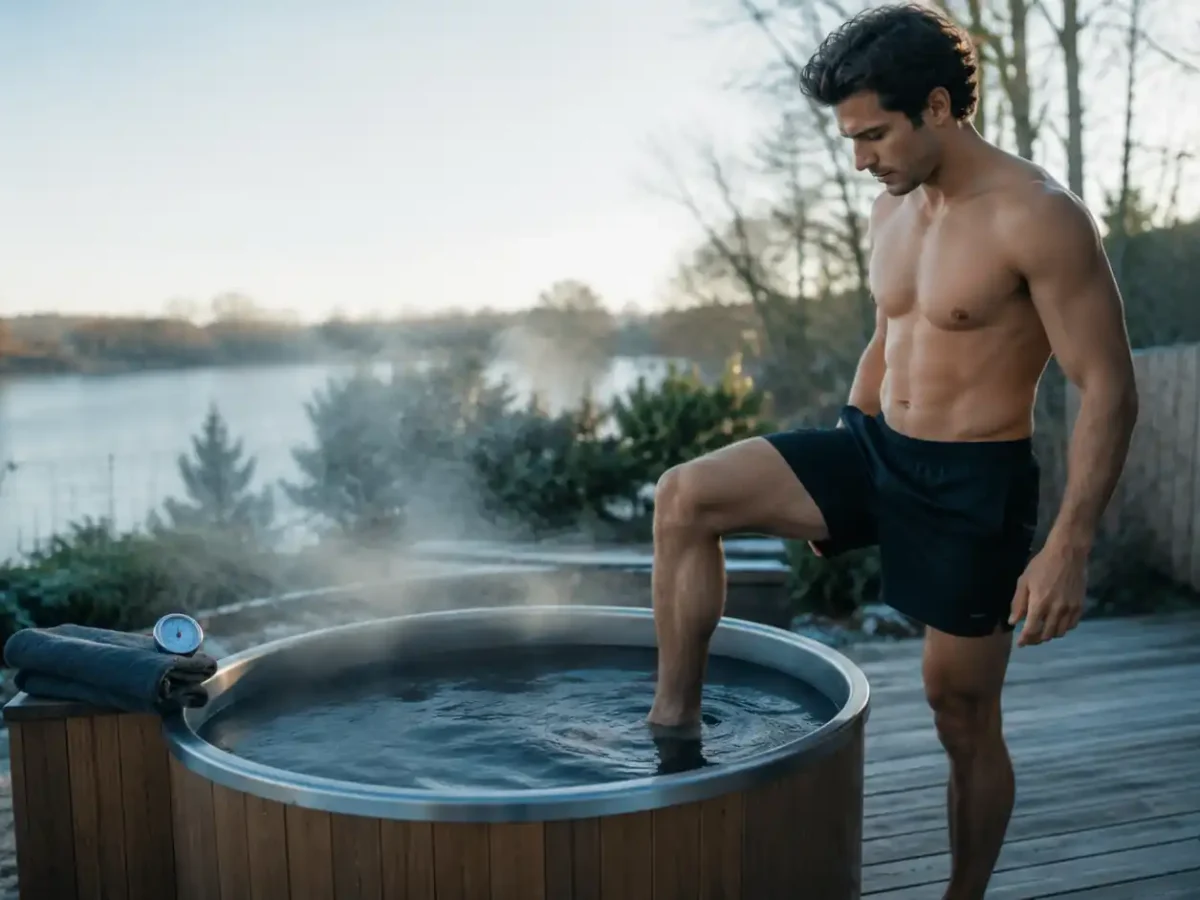
Most beginner advice about how to start cold plunging says the same thing: “just get in.” That advice isn’t wrong exactly — it’s just incomplete, and it’s why so many people try cold plunging once, hate it, and never go back.
The Myth That Ruins Most People’s First Attempt
There’s a persistent idea that cold exposure only “counts” if it’s brutal — the colder, the longer, the better. It’s not true, and it’s probably the single biggest reason beginners quit after one try.
A cold plunge doesn’t need to be shockingly cold to be worthwhile when you’re starting out. The best advice on how to start cold plunging is boring on purpose: start warmer and shorter than you think you need to, and focus on building a repeatable habit instead of proving a point to yourself in freezing water.
What Cold Plunging Actually Is
Cold plunge therapy means deliberate immersion in cold water — generally somewhere between 39°F and 59°F (4°C to 15°C) — for a short, controlled window. People often use “ice bath” interchangeably with cold plunge, though a true ice bath tends to run colder because ice is added directly to the water. Researchers have been studying cold water immersion for decades (PubMed) — useful context if you’re learning how to start cold plunging and want evidence over hype.
The setup matters less than people assume when you’re learning how to start cold plunging. A stock tank, a bathtub with cold tap water and a bag of ice, or a dedicated chiller-cooled tub can all serve as a legitimate starting point.
What to Do Before Your First Cold Plunge
Knowing what to do before your first cold plunge changes the entire experience. A few things worth having ready beforehand:
- A thermometer, so you’re working with a real number instead of a guess
- A visible timer or clock — time distorts fast once you’re in cold water
- A towel and warm, dry clothing set out within arm’s reach
- A plan for warming back up afterward, such as movement or a warm (not hot) shower
If you have a heart condition, uncontrolled blood pressure, or you’re pregnant, this is the moment to loop in a doctor — not after you’re already in the water. The American Heart Association has useful guidance on heart risk factors worth checking if any of these apply to you.
How to Start Cold Plunging for the First Time: A Simple Step-by-Step
This guide on how to start cold plunging keeps a first attempt deliberately simple:
- Check the water temperature and aim for the higher end of the cold range rather than the coldest option available.
- Enter gradually — feet, then legs, then torso. Jumping straight in tends to trigger a sharper shock response.
- Control your breathing with slow, longer exhales than inhales to keep the initial gasp reflex manageable.
- Hold a short, set duration — even 30 to 60 seconds is a completely legitimate starting point.
- Exit calmly and dry off immediately, then move gently to help your body rewarm on its own.
Ideal Temperature and Duration for Beginners
How cold should a cold plunge be for beginners is one of the most searched questions on this topic, and the honest answer sits in the middle: colder than an unpleasant shower, but nowhere near what experienced plungers eventually work up to. Around 55–59°F (13–15°C) is a sensible starting range for most healthy adults learning how to start cold plunging.
As for how long should a beginner cold plunge, most practical guidance lands between 30 seconds and two minutes for the first several sessions. Cold plunge duration for beginners isn’t something to rush past — there’s little indication that gritting out extra time early on adds meaningful benefit, and it noticeably increases the odds you’ll dread the next session.
Do’s and Don’ts for Building a Beginner Routine
If you’re learning how to start cold plunging, build your routine around consistency rather than intensity — that’s what holds up over time. This quick breakdown covers what actually helps versus what tends to backfire early on.
| Situation | Do | Don’t |
|---|---|---|
| Water temperature | Start around 55–59°F | Jump straight to the coldest setting |
| Session length | Begin with 30–60 seconds | Push past discomfort to “prove” toughness |
| Frequency | 2–3 sessions a week to start | Go daily before building any tolerance |
| Breathing | Slow, controlled exhales | Hold your breath through the shock |
| Afterward | Dry off and rewarm gradually | Jump into a hot shower immediately |
How to Start Cold Plunging and Build Tolerance Without Burning Out
Learning how to start cold plunging and build tolerance is a gradual process, not a single breakthrough session. Most people find it easier to ease in by adjusting one variable at a time — either temperature or duration, not both together.
A reasonable cold plunge progression for beginners looks less like a fixed schedule and more like stages: get comfortable at a manageable temperature first, build consistency at that same level, then nudge either the cold or the time slightly once the routine feels sustainable rather than dreaded.
Common Mistakes New Cold Plungers Make
Most cold plunge mistakes to avoid trace back to rushing the process rather than any single technical error:
- Choosing the coldest possible water on day one instead of easing in
- Holding the breath instead of breathing through the initial shock
- Skipping any plan for warming back up afterward
- Ignoring warning signs like numbness, confusion, or chest tightness
Basic cold plunge safety tips for beginners matter more than optimizing for extreme cold. It’s also worth being direct about this: who should not cold plunge includes anyone with certain heart conditions, uncontrolled blood pressure, or other significant risk factors — the cold plunge risks for beginners in those cases are real, not exaggerated caution. Our Medical Disclaimer covers this in more detail.
What Actually Changed After Trying This Myself
Trying this consistently for a few weeks didn’t produce anything dramatic or sudden. What changed was subtler: the water never got warmer, but the anticipation before getting in noticeably faded after the first handful of sessions.
That slow, unremarkable adjustment — rather than any single transformative moment — seems to be the more typical experience for people learning how to start cold plunging.
Cold Plunge FAQs for Beginners
Is cold plunging safe for beginners?
What temperature should a cold plunge be for beginners?
Can beginners cold plunge every day?
Is it normal to feel dizzy after a cold plunge?
How soon will I see cold plunge benefits as a beginner?
Safety first: Before your first plunge, read our cold plunge safety guide — who should avoid cold plunges, warning signs to watch for, and how to stay safe.
Where does that leave your first attempt?
Nobody starts out completely at ease in cold water — most people who learned how to start cold plunging weren’t comfortable in their first few sessions either. What feels like the bigger hurdle for you right now: the cold itself, or simply not knowing where to begin?

Related Articles
Cold Plunge in Winter: 7 Rules for Safe, Comfortable Outdoor Plunging
Winter Guide · Outdoor Plunging The water doesn’t care that it’s January. Everything around it does. A cold…
Read Guide
Cold Plunge vs Cold Shower: Is a Shower Really Enough?
A quick note before you read on: This article compares two wellness practices for general informational purposes and…
Read Guide
Cold Plunge vs Cryotherapy: Which One Is Actually Right for You?
A quick note before you read on: This article compares two wellness practices for general informational purposes and…
Read Guide