
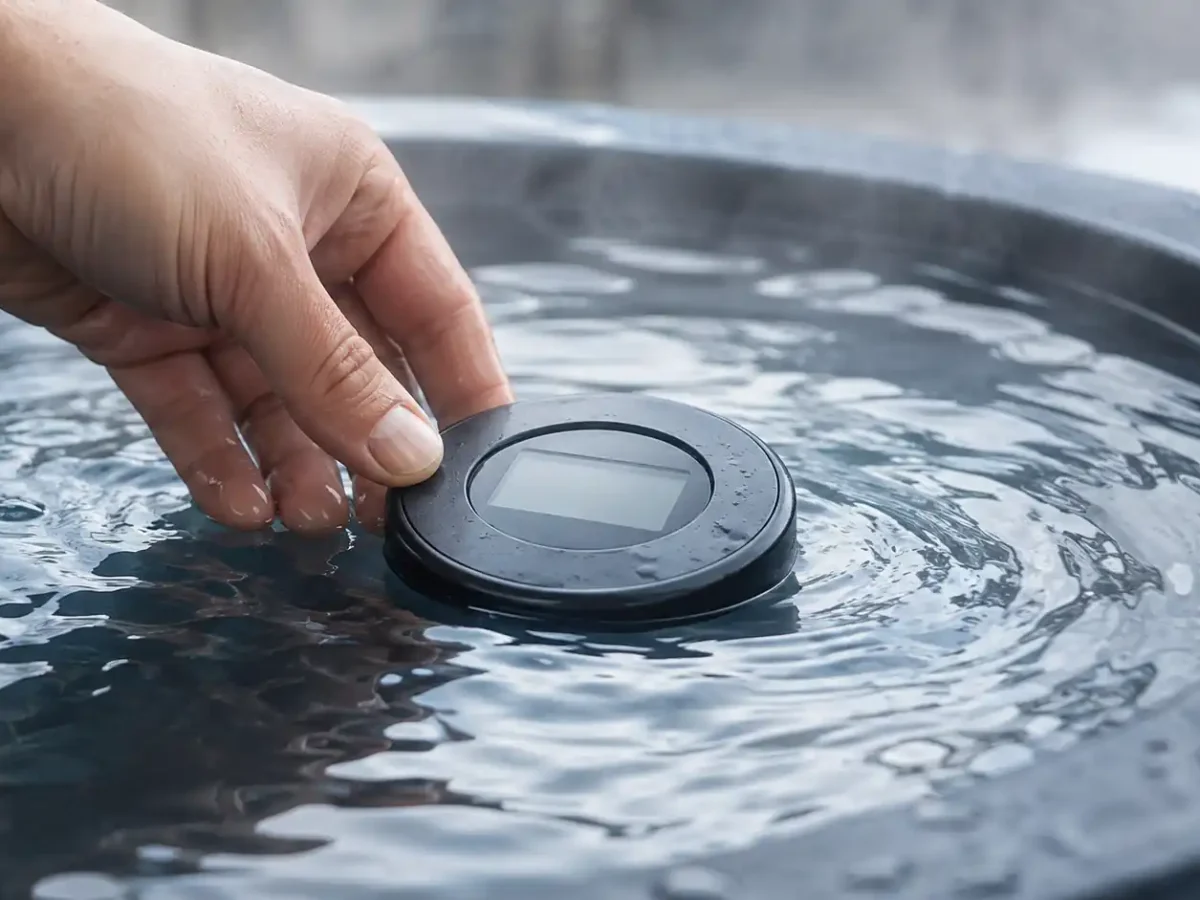
What temperature should your cold plunge actually be? Search for an answer and you’ll get numbers ranging from a mild 60°F to an extreme 34°F, often with no explanation of why — this cold plunge temperature chart is an attempt to actually answer that, based on what the range is used for rather than a single “correct” number.
Why a Single Number Doesn’t Work
Ideal cold plunge temperature isn’t one fixed figure, because “ideal” depends entirely on what you’re trying to get out of the session. A beginner easing into their first few weeks and someone who’s been plunging daily for two years aren’t working with the same starting point, and treating them as if they are is where a lot of generic advice goes wrong.
Cold plunge temperature guide content that gives a single number without context tends to either scare beginners away with an unnecessarily extreme figure, or undersell what’s needed for someone chasing a specific outcome like cold tolerance training.
There’s also a physiological reason a range makes more sense than a single number: the body’s response to cold exists on a spectrum, not a switch that flips at one specific degree. Vasoconstriction and the cold shock response both scale with how cold the water actually is, which means small differences within the same general zone often matter less than which zone you’re in to begin with.
The Temperature Range at a Glance
Cold water immersion temperature range for general cold plunging typically spans from around 39°F up to 59°F (roughly 4°C to 15°C). Where you sit within that range depends on experience and goal, not just personal preference.
Advanced
39–46°F — used by experienced plungers, shorter durations.
Moderate
46–54°F — common middle-ground for regular practice.
Beginner
54–59°F — a manageable starting point for first sessions.
What Changes the Number for Your Setup
Optimal cold plunge temperature on paper doesn’t always match what’s practical at home, and a few real-world factors explain why:
- Climate and season — tap water in winter can already sit close to the lower end of the range without any ice added, while summer tap water often needs significant ice to reach even a moderate zone.
- Tub insulation — insulated tubs hold temperature far longer than an uninsulated stock tank, which loses cold quickly once ambient air is warm.
- Chiller vs ice — a chiller maintains a consistent number automatically, while ice-based setups drift warmer over the course of a session unless topped up.
- Body size and composition — this doesn’t change the water temperature itself, but it does affect how the same reading actually feels and how quickly core temperature responds.
None of this means the chart is wrong — it means the same target number can require different amounts of effort to reach and hold, depending entirely on the setup behind it.
Best Temperature by Goal
Cold plunge temperature by goal is more useful than a single recommended cold plunge temperature, since different outcomes call for different approaches:
12–15°C
Best cold plunge temperature for beginners
Cold enough to trigger the full physiological response without being so extreme it discourages a second session.
10–13°C
Cold plunge temperature for muscle recovery
A common range for post-workout sessions, balancing effectiveness with a duration most people can sustain comfortably.
4–9°C
Cold plunge temperature for mental toughness
Colder ranges favored by people specifically training stress tolerance and breath control, usually for shorter time.
4–7°C
Cold plunge temperature for advanced users
Reserved for those with months of consistent practice behind them, not a starting point for anyone new.
Cold plunge temperature vs duration is worth understanding as a trade-off rather than two separate variables: colder water generally means a shorter safe duration, and milder water allows a longer, more relaxed session. Neither approach is objectively superior — they’re suited to different goals.
Common myth: Does colder water mean better results? Not necessarily. Past a certain point, going colder mainly shortens how long you can safely stay in, without adding proportional benefit — it often just makes the session harder to complete consistently, which matters more for long-term results than the number on the thermometer.
Fahrenheit, Celsius, and Getting the Reading Right
Best cold plunge temperature in Fahrenheit and best cold plunge temperature in Celsius come up as separate searches constantly, mostly because thermometers and product listings aren’t consistent about which unit they use. Here’s a quick reference:
| Fahrenheit | Celsius | General Feel |
|---|---|---|
| 59°F | 15°C | Cold, manageable for most beginners |
| 54°F | 12°C | Noticeably cold, common working range |
| 50°F | 10°C | Cold enough that duration should shorten |
| 45°F | 7°C | Advanced range, requires experience |
| 39°F | 4°C | Near the lower end most home setups reach |
How to measure cold plunge water temperature accurately matters more than people expect — a cheap floating thermometer left in the water for a few seconds before reading it tends to be reliable enough, while guessing by feel is notoriously inconsistent, especially once your body starts adapting to cold exposure over time.
Common Mistakes People Make With Temperature
A few recurring mistakes show up across most of the confusion people have about cold plunge temperature:
- Checking the temperature once and assuming it holds — water warms steadily during a session, especially without a chiller, so a reading taken at the start can be a few degrees off by the time you’re getting out.
- Copying an advanced range as a beginner — seeing an experienced plunger’s number and assuming that’s the target skips over months of gradual adaptation that made that range tolerable for them.
- Ignoring seasonal drift — a setup that reliably hits a moderate range in winter may need significantly more ice or chiller time in summer to reach the same number.
- Confusing air temperature with water temperature — a cold morning doesn’t mean the water in an uninsulated tub is actually any colder than it was the day before.
Most of these aren’t dangerous mistakes, just inconsistencies that make it harder to know whether a routine is actually working the way it’s intended to.
When Water Is Too Cold
What temperature is too cold for a cold plunge isn’t just about the number — it’s about the combination of temperature, duration, and experience. Water significantly below 39°F without medical supervision or specialized cold-water training is where risk starts climbing faster than benefit, particularly for anyone newer to the practice.
Safe cold plunge temperature range guidance generally agrees that going colder should be a gradual adjustment over weeks or months, not a decision made in a single session because a chart online listed a lower number. Rushing this progression is one of the more common reasons people end up quitting cold plunging altogether — not because the practice didn’t work for them, but because they made it harder than it needed to be too early on.
If you’re still working out timing and technique alongside temperature, our guide to starting cold plunging covers that groundwork in more depth, and our safety guide covers the warning signs worth knowing regardless of which temperature range you choose.
Adjusting Temperature as You Progress
Cold plunge temperature chart by experience level works best as a loose guide for progression, not a strict timeline. A reasonable approach looks like starting at the higher end of the range for the first several sessions, staying there until entry feels routine rather than dreaded, and only then considering a small downward adjustment — a few degrees at a time rather than jumping zones.
Recommended cold plunge temperature for someone six months in looks very different from someone on their third session, and that’s exactly the point of using a range instead of a fixed number. Two people using the same chart at different stages of experience should reasonably expect to land in different parts of it.
It’s also worth noting that plateauing at a moderate temperature isn’t a sign of failure or a lack of progress. Plenty of long-term plungers settle into a consistent range and simply stay there indefinitely, because the outcome they actually care about — better recovery, a calmer stress response, or just a dependable routine — doesn’t require continuously chasing colder water over time.
Why Online Charts Rarely Agree With Each Other
Comparing temperature recommendations across different sources during research for this piece made one thing obvious: there’s no single authoritative number, because the “right” temperature depends on variables most charts leave out entirely — climate, water source, tub insulation, and individual cold tolerance all shift what a reasonable range actually looks like in practice.
A chart built around a gym in a cold climate with well-insulated tubs will naturally suggest different numbers than one built around a portable inflatable tub in a warm region, even if both are technically accurate for their own setup. That’s part of why this cold plunge temperature chart leans on ranges tied to goals and experience level rather than pretending one universal number applies everywhere. If your setup runs warmer than expected even with ice added, it’s also worth checking whether your contrast therapy routine or general setup needs adjusting rather than assuming the thermometer is wrong.
Cold Plunge Temperature: Frequently Asked Questions
What is the ideal cold plunge temperature?
Is 50 degrees cold enough for a cold plunge?
What temperature is a cold plunge vs an ice bath?
Does the water need to be freezing to work?
How do I know if my cold plunge is cold enough?
Can cold plunge water be too cold?
What temperature should beginners start at?
Does temperature matter more than duration?
Before you check the thermometer again
Think about what you’re actually trying to get out of your sessions right now — recovery, tolerance, or just building a habit — and whether the temperature you’ve been defaulting to actually matches that goal, or if it’s just the number you started with out of habit.

Related Articles
Cold Plunge in Winter: 7 Rules for Safe, Comfortable Outdoor Plunging
Winter Guide · Outdoor Plunging The water doesn’t care that it’s January. Everything around it does. A cold…
Read Guide
Cold Plunge vs Cold Shower: Is a Shower Really Enough?
A quick note before you read on: This article compares two wellness practices for general informational purposes and…
Read Guide
Cold Plunge vs Cryotherapy: Which One Is Actually Right for You?
A quick note before you read on: This article compares two wellness practices for general informational purposes and…
Read Guide