
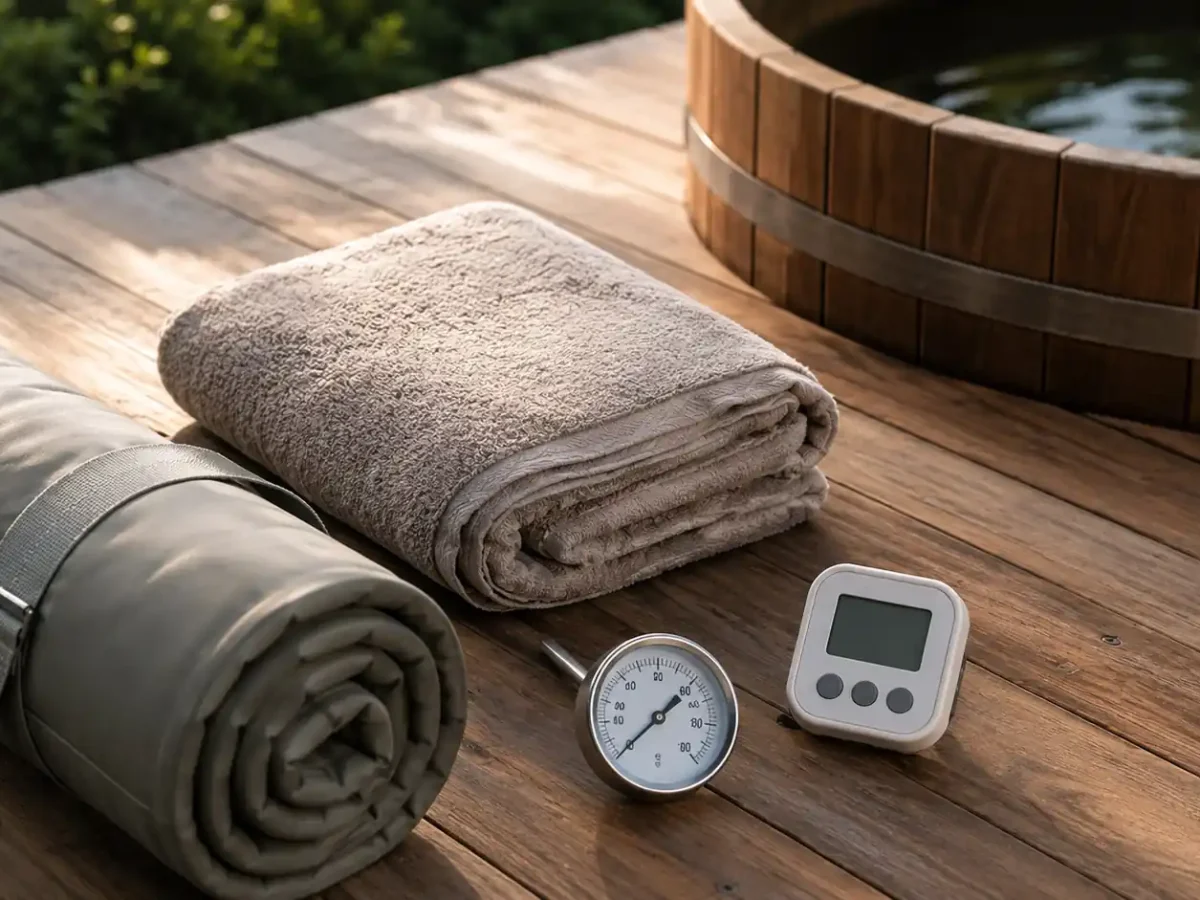
Most cold plunge gear guides fall into one of two traps: they either push an expensive full setup as if it’s mandatory, or they oversimplify to “just use ice and a bucket.” Neither is especially useful. This is a straightforward look at the best cold plunge gear — what actually matters, what’s optional, and where people commonly overspend.
Best Cold Plunge Gear: What You Actually Need to Start
Sorting out the best cold plunge gear for beginners doesn’t need to be complicated. If you’re still working out the basics of getting in the water safely, it’s worth reading our beginner’s guide to starting cold plunging alongside this one — but before comparing tubs and chillers, it helps to separate the best cold plunge gear essentials from things that are genuinely optional at the start:
- A container that holds cold water — this can be a dedicated tub, a large stock tank, or even a bathtub to begin with.
- A reliable thermometer — guessing water temperature leads to inconsistent, sometimes unsafe sessions.
- A timer — time distorts quickly in cold water, so a visible clock or phone timer matters more than people expect.
- A towel and warm, dry clothing set out before you get in, not after.
Everything past this point is about comfort, convenience, and long-term consistency — not a strict requirement to get started.
Choosing a Tub: Budget, Mid-Range, and Premium
This is usually where the best cold plunge gear question gets complicated when it comes to tubs, mostly because “best” depends heavily on budget and how often you plan to use it.
Stock Tank or Inflatable Tub
The most affordable entry point. A galvanized stock tank or an inflatable cold plunge tub works well for testing whether cold plunging is something you’ll stick with, without a large upfront cost.
Best Portable Cold Plunge Tub
Purpose-built portable tubs add better insulation and durability over a stock tank, and are usually the best cold plunge tub for home setups where space or permanence is a concern.
Insulated Tub With Filtration
Higher-end setups add insulation, built-in filtration, and sometimes seating. Worth it mainly for frequent, long-term daily use rather than occasional sessions.
Chillers: Do You Actually Need One?
When evaluating the best cold plunge gear, a chiller isn’t strictly necessary if you have consistent access to cold tap water or ice, but for anyone using a tub daily, a cold plunge chiller for home use solves two real problems: constantly buying ice, and maintaining a stable temperature session after session.
Chillers are generally the single most expensive piece of cold plunge equipment, so it’s worth confirming you’ll actually use the tub consistently before investing in one — buying ice for the first month is a reasonable, low-cost way to test that. The U.S. Department of Energy offers guidance on estimating appliance energy costs that can help you budget for a chiller’s running expenses.
Small Accessories That Actually Matter
Beyond the tub itself, the best cold plunge gear often comes down to a handful of accessories that make a noticeable practical difference without adding much cost. The best cold plunge gear accessories worth prioritizing include:
- A floating or clip-on thermometer, so temperature checks don’t require guesswork — cold plunge thermometer recommendations generally favor ones with a wide, easy-to-read display
- A combined cold plunge timer and thermometer unit, which cuts down on fumbling with two separate devices
- A best cold plunge cover, both for keeping debris out between sessions and for basic safety around children or pets
- Non-slip mat or step, especially for taller tubs
DIY vs. Ready-Made: What to Consider
The cold plunge tub vs stock tank decision comes up constantly, and it largely comes down to how much you value setup simplicity versus cost savings.
DIY Setup (Stock Tank)
- Lower upfront cost
- Requires more manual ice or cold-water refilling
- Less insulated, loses cold faster
- Good for testing commitment first
Ready-Made Tub
- Higher upfront cost
- Better insulation and durability
- Easier to pair with a chiller later
- Better long-term value for frequent use
DIY additions to your best cold plunge gear — like a basic thermometer, a wooden lid, or a simple step stool — can bridge the gap either way, regardless of which tub route you choose.
Cost Breakdown: What Gear Actually Runs
Rather than naming specific products, here’s a general cost range for best cold plunge gear by category, since prices shift often and vary by region:
| Item | Typical Range | Necessity |
|---|---|---|
| Stock tank or basic tub | Low | Essential |
| Dedicated portable cold plunge tub | Moderate | Recommended |
| Insulated tub with filtration | High | Optional |
| Cold plunge chiller | High | Optional, useful for frequent use |
| Thermometer / timer combo | Low | Essential |
| Tub cover | Low | Recommended |
What I Noticed After Trying a Few Different Setups
Trying a basic stock tank before moving to a dedicated tub made the value of certain best cold plunge gear obvious pretty quickly — mainly the thermometer and a proper cover, neither of which felt necessary on paper but both of which got used constantly in practice.
The chiller, on the other hand, only started to feel worthwhile once sessions became a near-daily habit rather than a once-or-twice-a-week routine. That timing seems to matter more than most gear guides mention, and it tracks with why so many of the research-backed benefits of cold plunging tend to show up with consistency rather than occasional use — the gear you need really does depend on how often you actually plan to get in.
Keeping Your Setup Working Properly
The best cold plunge gear for maintenance doesn’t need to be extensive, but a few basics go a long way: a simple water testing kit, a mesh skimmer for debris, and periodic water changes if you’re not running filtration. Stagnant, unfiltered water is a bigger issue than most new owners expect, especially with shared or frequent use. The CDC’s healthy swimming guidance covers water treatment basics that apply to home cold plunge tubs as well.
Best Cold Plunge Gear: Frequently Asked Questions
What gear do I need to start cold plunging?
Is a chiller necessary for cold plunging?
How much does a cold plunge tub cost?
Can I use a regular bathtub instead of a cold plunge tub?
What is the best material for a cold plunge tub?
Do I need a cover for my cold plunge tub?
How do I maintain a cold plunge tub?
What temperature range does a cold plunge chiller provide?
Which situation sounds more like you?
Are you still testing whether cold plunging is something you’ll actually stick with — and which best cold plunge gear to buy first — or are you already consistent and just deciding what upgrade is worth the money next?

Related Articles
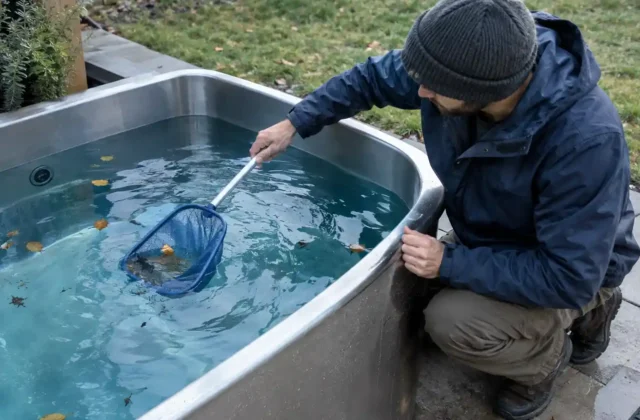
Cold Plunge Water Treatment: 5 Ways to Keep Your Water Clean and Safe
Safety note before you read on: This guide covers general cold plunge water treatment options, including filters, UV…
Read Guide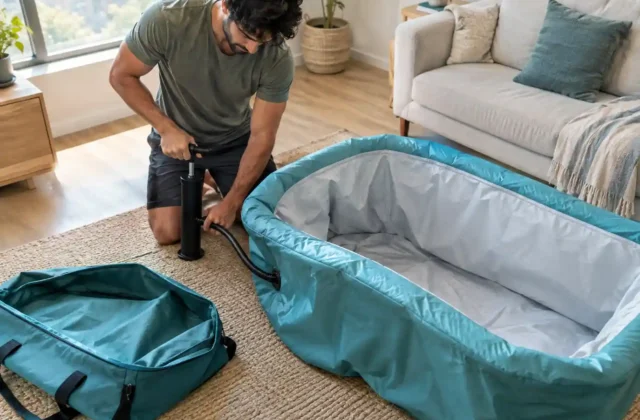
Best Portable Cold Plunge: What to Look for Before You Buy
A quick note before you read on: This guide covers what to look for and general expectations when…
Read GuideCold Plunge Maintenance Tips: How to Keep Your Tub Clean and Safe
A quick note before you read on: This article is for general educational purposes and reflects common maintenance…
Read Guide