
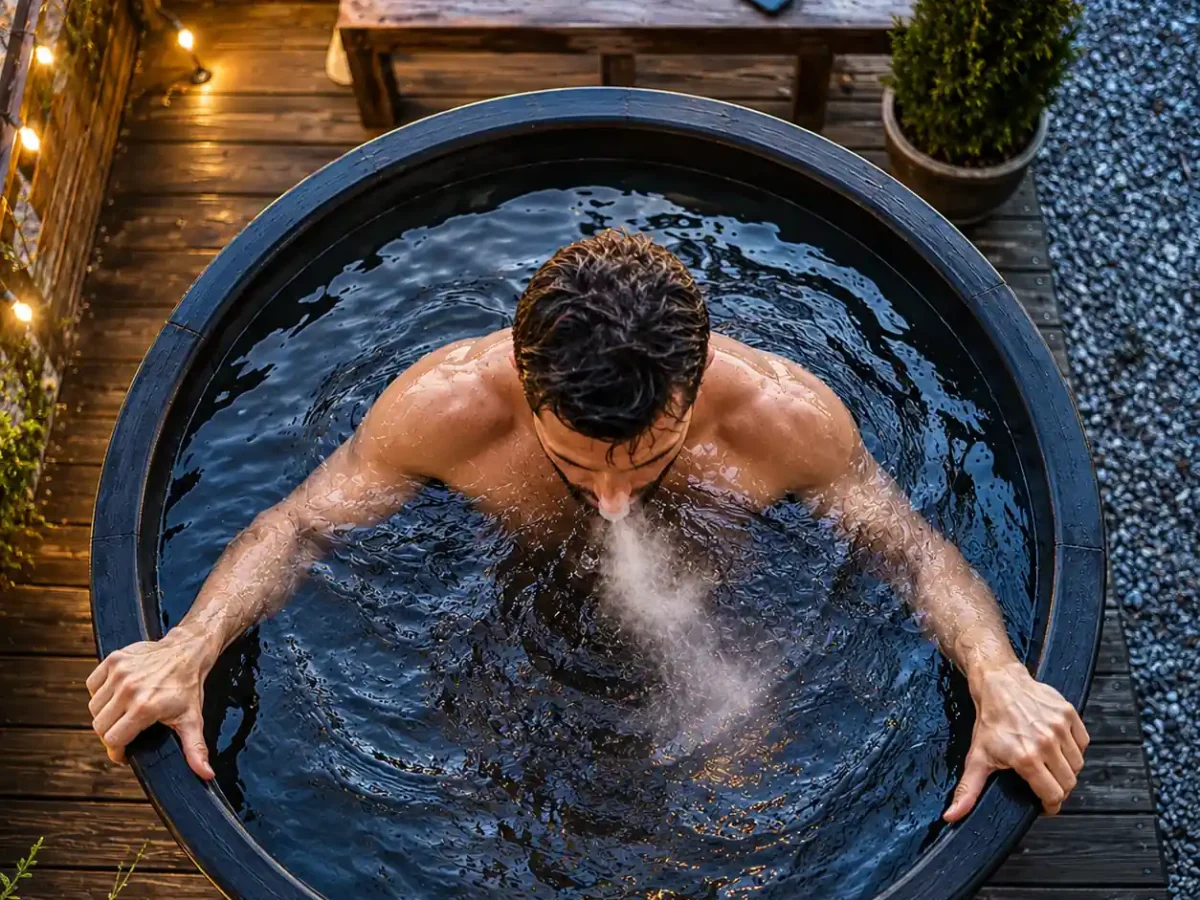
The first time I sat down in a cold plunge tub, I did almost everything wrong — freezing water, no plan, no idea how long to stay in. Most of the cold plunge mistakes to avoid aren’t dramatic; they’re small, easy-to-miss habits that quietly cancel out the benefits you’re chasing. The good news is that once you know what they are, fixing them takes almost no effort at all.
This isn’t a list of extreme warnings about cold plunge mistakes to avoid — it’s the practical stuff that separates a plunge that actually helps from one that just leaves you cold and cranky. Let’s go through the ones that trip up almost everyone at some point.
Cold Plunge Mistakes to Avoid: Starting Too Cold, Too Fast
This is, hands down, the first of the cold plunge mistakes to avoid that trips up beginners. Seeing experienced plungers sit calmly in water around 40°F makes it tempting to jump straight in at the same temperature — but their tolerance took weeks or months to build, not one afternoon of enthusiasm.
When the water is far colder than your nervous system is prepared for, the “cold shock response” takes over almost instantly: your breathing turns fast and shallow, your heart rate spikes, and your muscles tense up defensively. Instead of a controlled, beneficial stressor, the session becomes pure survival mode — and that’s not where the real benefits of cold exposure come from.
There’s also a mental cost to starting too aggressively. A brutal first session can leave you dreading the next one, which is often how people quit cold plunging within the first two weeks. Among all the cold plunge mistakes to avoid, rushing the temperature is the one that kills motivation fastest — easing in protects both your body’s adaptation curve and your willingness to keep showing up.
Staying In Longer Than Your Body Can Handle
More time in the water doesn’t mean more benefit. When it comes to cold plunge mistakes to avoid, staying in a cold plunge too long just adds unnecessary stress. Most of the physiological response happens within the first couple of minutes; after that, you’re mostly just testing your willpower rather than gaining anything extra.
Pushing duration too early is one of the sneakier mistakes because it often feels like progress. Sitting in freezing water for eight or ten minutes can feel like an achievement, but for someone still building tolerance, it usually just increases the risk of excessive shivering, numbness, or a sluggish, disoriented feeling once you get out — none of which are signs of a “better” session.
A simple rule that works for most beginners: aim for 1–3 minutes early on, and treat anything past 5 minutes as advanced territory that needs real experience behind it. It’s one of the easiest cold plunge mistakes to avoid once you set a timer — duration should increase gradually, the same way temperature does, not in one dramatic jump because you felt strong one day.
Plunging Completely Alone
It sounds harmless until you consider what cold shock actually does to the body — rapid breathing, a spike in heart rate, and temporarily reduced grip strength and coordination. On any serious list of cold plunge mistakes to avoid, plunging completely alone deserves a prominent spot: cold plunging alone means that if something goes wrong, there’s no one to notice, and no one to help.
Most of the time, nothing happens. That’s exactly why this mistake is so easy to overlook — it rarely causes a problem until the one time it does. Dizziness, disorientation, or a sudden inability to grip the edge of the tub can escalate quickly in cold water, especially in the first few minutes when the shock response is strongest.
This is one of the core reasons safety planning matters so much with cold exposure. If you haven’t already, it’s worth reading our full guide on cold plunge safety before you build a solo routine, especially if you fall into any higher-risk category. The American Red Cross similarly advises never swimming alone, and cold water deserves at least the same caution. Even just keeping your phone within reach and letting someone know you’re about to plunge closes most of the gap.
Jumping In Right After an Intense Workout
Timing matters more than most people realize, which is why post-workout plunging ranks high among cold plunge mistakes to avoid. Plunging immediately after strength training can blunt some of the muscle-building signal your body is trying to send — the same inflammation you just triggered on purpose is part of what a cold plunge partially shuts down.
For general recovery, that trade-off might not matter much. But if hypertrophy or strength gains are the priority, cooling the muscle down right away can work against the adaptation you just trained for. This is one of those cold plunge mistakes to avoid that doesn’t show up immediately; it shows up weeks later as slower progress that’s hard to trace back to a single cause.
If recovery is the goal rather than pure numbness relief, waiting a few hours after lifting — or plunging on a separate day entirely — tends to work better. This is also where a lot of people ask about combining cold with heat. If that’s you, our breakdown of cold plunge vs sauna covers how order and timing change the effect, since stacking both incorrectly can compound this same mistake.
Fighting the Cold Instead of Breathing Through It
Gasping, holding your breath, or tensing up are all normal first reactions — but they’re also among the cold plunge mistakes to avoid that make the experience harder than it needs to be. Fighting the shock response keeps your heart rate elevated and your mind in panic mode long after your body has actually started adjusting.
It helps to know this reaction has a name: the involuntary gasp reflex. It’s automatic, not a sign of weakness, and everyone experiences some version of it. Feeling the gasp isn’t one of the cold plunge mistakes to avoid — staying stuck in that reactive state instead of consciously steering out of it is.
Slow, controlled nasal breathing — long exhales in particular — signals your nervous system to calm down. It’s a skill, not a personality trait, and it genuinely gets easier within a few sessions. Some people find it helps to count exhales, or simply focus on keeping their shoulders relaxed instead of hunched toward their ears.
Being Inconsistent With Temperature and Schedule
Random swings between a freezing session one day and a lukewarm one the next are classic cold plunge mistakes to avoid — they confuse your body’s adaptation process. Consistency, not intensity, is what actually builds tolerance over time; the body adapts to a pattern it can predict, not to the occasional extreme session mixed in with easier ones.
This mistake often comes from chasing a personal record instead of following a plan. Dropping the temperature dramatically because yesterday’s session felt “too easy” skips the gradual signal your nervous system actually needs, and can undo weeks of steady progress in a single sitting.
If you’re not sure what range to aim for based on your specific goal, our cold plunge temperature chart breaks it down by experience level and objective, so you’re not just guessing. Picking one target range and sticking with it for a couple of weeks before adjusting tends to beat constant experimentation.
Skipping the Warm-Up Afterward
Among the cold plunge mistakes to avoid after you get out, rushing straight to heat ranks high. Stepping out of cold water and immediately jumping into a hot shower or piling on heavy layers can actually make you feel worse, not better. Your body needs a short window to rewarm naturally — this is normal and doesn’t mean anything went wrong.
There’s also a phenomenon worth knowing about here: your core temperature can keep dropping for a few minutes even after you’re out of the water, as colder blood from your extremities circulates back in. Rushing to blast yourself with heat doesn’t stop this — it just masks how you’re feeling in the moment.
Light movement, dry clothes, and a few minutes of patience usually work better than rushing straight to a heat source. Once the initial shivering settles, a warm (not scalding) shower or a hot drink is a much smoother way to finish the session than shocking your system a second time.
Ignoring the Warning Signs Your Body Is Sending
Learning to read your body is one of the most important cold plunge mistakes to avoid getting wrong. Cold plunging is supposed to feel challenging, not alarming — and the line between the two is something a lot of people learn to ignore instead of respect. Numbness that spreads beyond your hands and feet, real confusion, or a loss of coordination are your body’s way of saying the session needs to end now, not in another thirty seconds.
Part of the problem is cultural: cold plunging communities sometimes frame pushing through discomfort as the whole point. There’s a real difference between the manageable discomfort of cold exposure and your body flagging an actual problem, and mixing the two up is how a normal practice turns into a genuinely risky one.
Treat any of these signals as a hard stop, not a challenge to push through: dizziness, chest tightness, disorientation, or skin that goes numb in a way that doesn’t ease off shortly after you get out. None of these are things to “tough out” — they’re your cue to exit and warm up. If you’re unsure whether cold plunging is safe with a health condition, the Cleveland Clinic offers guidance on cold exposure risks worth reviewing before your next session.
| Don’t | Do Instead |
|---|---|
| Start at extreme temperatures | Ease in around 55–60°F first |
| Push past 5 minutes as a beginner | Cap early sessions at 1–3 minutes |
| Plunge with no one nearby | Keep someone within earshot |
| Plunge right after heavy lifting | Space it out by a few hours |
| Hold your breath through the shock | Practice slow, controlled exhales |
| Skip the warm-up afterward | Let your body rewarm gradually |
| Push through dizziness or confusion | Exit immediately and warm up |
What I Learned the Hard Way
When I first started, I made almost every one of the cold plunge mistakes to avoid in the same week — too cold, too long, and straight back into a hot shower afterward. It didn’t feel dangerous, just miserable, and I nearly gave up on cold plunging entirely before realizing the problem wasn’t the practice itself, it was how I was doing it.
What actually changed things wasn’t a better tub or a fancier chiller — it was slowing everything down. Warmer water, shorter sessions, and paying attention to how I actually felt instead of what I thought a “real” cold plunge was supposed to look like. A few weeks later, the same water that used to feel unbearable started feeling almost calm, which is the whole point most people miss while they’re busy rushing the process.
Cold Plunge Mistakes to Avoid: Frequently Asked Questions
Starting too cold, too soon tops almost every list of cold plunge mistakes to avoid. It makes the experience needlessly harsh and often discourages people before their body has had a chance to adapt gradually.
Not necessarily, but it depends on how your body responds. Some people do well with daily short sessions, while others benefit more from 2–4 sessions a week with proper recovery in between.
It carries more risk than plunging with someone nearby, which is why solo plunging features on every serious list of cold plunge mistakes to avoid. Cold shock can briefly affect coordination and breathing, so having another person within earshot is a simple safeguard worth building into your routine.
If muscle growth is your priority, it’s usually better to wait a few hours after strength training rather than plunging immediately. For general recovery or mental reset, timing is more flexible.
Mild lightheadedness can happen as your body adjusts to changes in breathing and blood flow. If it’s frequent, intense, or paired with other symptoms, it’s worth easing back on duration or temperature and checking in with a doctor.
Which of These Mistakes Sounds Familiar?
Most people who stick with cold plunging long-term aren’t the ones who pushed the hardest — they’re the ones who worked through the cold plunge mistakes to avoid one small fix at a time. Which one are you going to work on first?

Related Articles
Cold Plunge When Sick? 6 Rules for Illness, Immunity and a Faster Recovery
Last month I woke up with that unmistakable scratch in the back of my throat — the kind…
Read Guide
Who Should Avoid Cold Plunge? A Complete Safety Checklist
A quick note before you read on: This article shares general safety information, not medical advice. Always talk…
Read Guide
Is Cold Plunge Safe? What the Research Actually Says
A quick note before you read on: This article shares general safety information and isn’t medical advice. Always…
Read Guide