
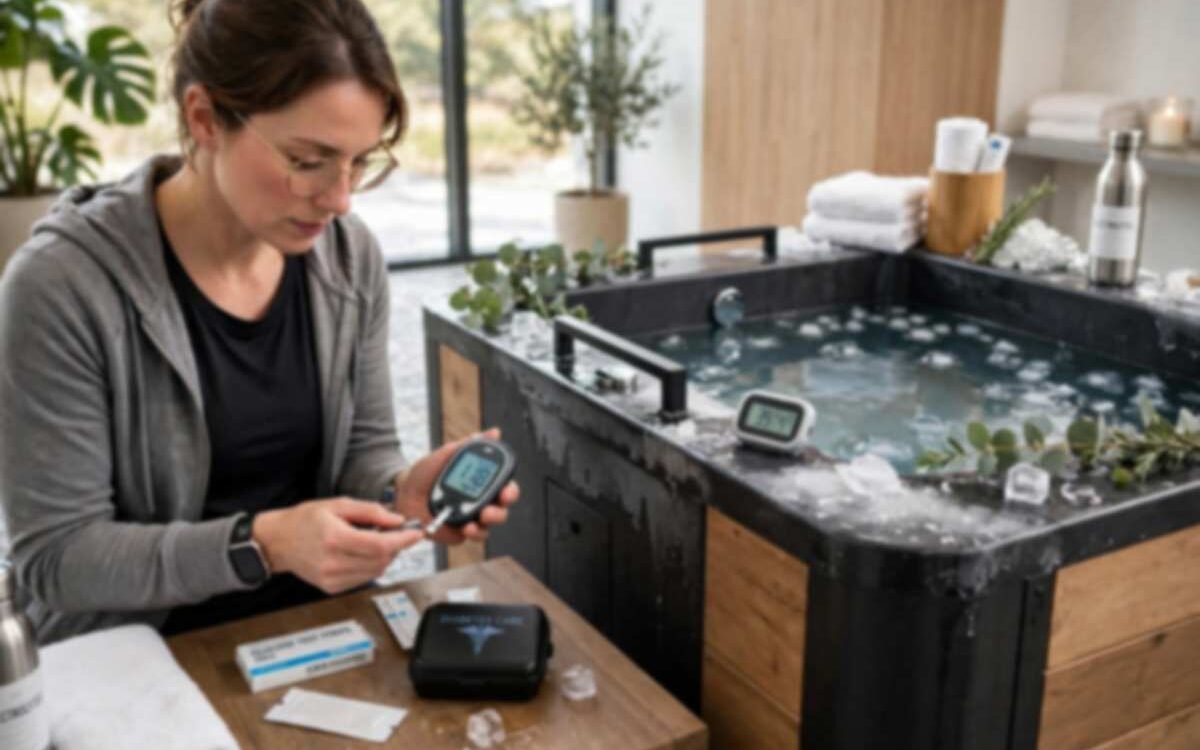
Medical disclaimer: This article is for general information only and is not medical advice. Diabetes affects everyone differently, so talk to a qualified healthcare provider before starting cold therapy, especially if you use insulin or have any diabetes complications.
Cold Plunge and Diabetes: Is It Safe?
Cold water and blood sugar do not always get along. Here is what the research really shows, where the risks hide, and how to try a plunge the careful way.
Is cold plunge and diabetes a safe combination? For many people with well-controlled diabetes and no complications, a short, careful cold plunge can be OK. But it is not safe for everyone, and it is never a treatment for blood sugar. Diabetes changes how the body handles cold, stress, and blood sugar, so the same ice bath that feels refreshing to a healthy person can carry extra risks when diabetes is in the picture. The honest answer is: maybe, with a doctor’s OK, a glucose check, and a much gentler approach than the one you see online.
That “maybe” is doing a lot of work, so this guide breaks it down properly. You will learn how cold water affects blood sugar, what the small amount of real research actually found, which diabetes complications change the rules, and a simple step-by-step routine for a safer first plunge. No miracle claims, no scare stories — just practical guidance you can take to your doctor and decide together.
Cold plunge and diabetes is not a yes-or-no question. It depends on the type of diabetes, how well blood sugar is controlled, and whether there are complications such as nerve damage or heart disease.
Check sugar before and after. A quick glucose check before getting in and again after getting out is the single most useful habit for anyone plunging with diabetes.
Nerve damage changes the rules. If you cannot feel your feet well, you may not feel how cold the water really is — and that is when cold injury happens unnoticed.
Talk to your doctor first. This matters most if you use insulin, have heart disease, high blood pressure, or any diabetes complication.
The Short Answer: Is Cold Plunge and Diabetes a Safe Mix?
The question people really ask is three questions at once. Will a cold plunge help blood sugar? Will it hurt? And is it worth trying? The answers are different, so they are worth separating.
On helping blood sugar: there is no good evidence that a cold plunge treats diabetes or reliably lowers blood sugar. One small, well-known study found that mild cold exposure improved insulin sensitivity in people with type 2 diabetes, but that study used hours of mild cold air, not a two-minute ice bath — and later research in healthy adults pointed the other way. Cold plunging is not a diabetes treatment, and it should never replace medication, food choices, or movement.
On safety: for many people with diabetes, a short plunge in mild cold water is likely low risk once a doctor has said it is OK. The key words are “many” and “likely.” Diabetes can quietly affect nerves, circulation, and the heart, and each of those changes what cold water does to the body. A person with well-controlled type 2 diabetes and no complications is in a very different position from a person with nerve damage in their feet, heart disease, or frequent low blood sugar. That is why the general safety advice in our guide to whether cold plunging is safe is only a starting point — diabetes adds its own layer of questions.
On whether to try it: if you have diabetes and you want to cold plunge, the sensible path is a short conversation with your doctor, a glucose check before and after, and a gentle first session. The rest of this guide explains why each of those steps matters, so the conversation with your doctor is an informed one.
How Diabetes Changes the Cold Plunge Equation
A cold plunge is a stress test for the body. The moment you step into icy water, your breathing changes, your heart rate jumps, your blood pressure rises, and blood vessels near the skin tighten. In a healthy body, that stress passes quickly. Diabetes changes several of the systems that handle that stress, which is why cold plunge and diabetes need more thought than cold plunging alone.
Blood sugar can swing both ways
Cold water triggers the release of stress hormones such as adrenaline and cortisol. Those hormones tell the liver to release stored glucose into the blood, which can push blood sugar up. At the same time, shivering burns glucose for heat, which can push blood sugar down. Which effect wins is not predictable from one person to the next, or even from one session to the next. A small 2023 study of people with type 1 diabetes found that blood sugar stayed fairly stable during an hour in cool water, then rose during the recovery period after getting out — a reminder that the hour after the plunge matters as much as the plunge itself. That unpredictability is the main reason checking glucose before and after is so important.
Nerve damage dulls the warning system
Diabetic peripheral neuropathy — nerve damage caused by high blood sugar over time — is one of the biggest concerns with cold plunge and diabetes. According to the American Diabetes Association, around half of people with diabetes develop some form of this nerve damage, and up to half of those cases may have no obvious symptoms. Numb or tingling feet may not feel how cold the water really is, so a person can stay in too long or in water that is too cold without realising it. Cold injury to the feet is a genuine risk, and diabetes already slows healing, so a small blister or cut from a cold session can take far longer to heal than expected. Anyone with reduced feeling in their feet or hands should be especially careful, and should check their feet closely after every session.
Circulation and slow healing
Diabetes can narrow blood vessels and reduce blood flow, particularly to the feet and legs. Cold water makes blood vessels tighten even further, which means less warm blood reaches the skin and toes during a plunge. For a healthy person, that is a temporary effect. For a person with poor circulation, it can mean cold hands and feet that stay cold and numb long after getting out. Combined with slower wound healing, this is why foot care matters so much around cold water: check for cuts, blisters, or sore spots after every plunge, and keep feet warm and dry afterwards.
Heart and blood pressure
Diabetes raises the long-term risk of heart disease and high blood pressure, and cold water puts a sudden load on the heart. The first minute of immersion causes a sharp rise in heart rate and blood pressure — the cold shock response, which our guide to the cold shock response explains in detail. For most healthy hearts, that spike is brief and manageable. For a heart that already has disease, or blood pressure that is already high, the spike is a bigger ask. This is also why our guide on cold plunging with heart conditions is essential reading alongside this one — the two risks overlap, and a doctor should weigh them together.
Insulin, pumps and glucose monitors
Cold affects diabetes equipment as well as the body. Insulin can be damaged by extreme cold, so insulin pens, vials, and pumps should stay out of the water. Continuous glucose monitors and sensors can also read oddly when they get very cold, and a reading taken with a cold sensor may not reflect what is really happening. Temperature can also change how quickly insulin is absorbed from an injection site. The practical rule is simple: keep all diabetes kit warm and dry, keep it out of the tub, and double-check any surprising reading with a finger-prick test once you are warm again.
What the Research Actually Says About Cold Plunge and Diabetes
Here is the honest picture: very little research has studied actual ice baths in people with diabetes. Most of what exists is about mild cold exposure — sitting in a cool room, not plunging into an ice bath. That difference matters, because a two-minute plunge and six hours in a cool room are not the same thing. Anyone who tells you the science is settled on cold plunge and diabetes is overstating it. What follows is what the best small studies actually found, with their limits stated plainly.
The most cited study comes from Maastricht University in the Netherlands. In 2015, researchers led by Mark Hanssen published a study in Nature Medicine in which eight people with type 2 diabetes spent ten days in a room kept at 14–15°C (57–59°F) for up to six hours a day, wearing light clothing. After ten days, their peripheral insulin sensitivity had improved by about 43%. The improvement seemed to come mainly from skeletal muscle taking up more glucose, rather than from brown fat, which is the tissue cold therapy is usually marketed around. The study was small — eight people, no separate control group — and the “cold” was mild air for hours, not an ice bath for minutes. Still, it is the strongest piece of evidence that cold exposure can change how the body handles glucose in type 2 diabetes, and it is worth reading in full on Nature’s website if you want the details.
A second, smaller study looked at the other side of diabetes. In 2023, researchers in the Journal of the Endocrine Society put eight people with type 1 diabetes through an hour of neck-deep immersion in cool water at 23°C (73°F), and compared it with warm water and with sitting in air. Blood glucose stayed fairly stable during the cool-water immersion itself. The change came afterwards: during the recovery hour on land, blood sugar rose, and the researchers linked that rise to a drop in plasma insulin during the cold exposure, along with reduced blood flow under the skin. The lesson is practical rather than scary — the risky window may not be the plunge itself, but the hour after it, when most people have stopped paying attention to their glucose.
Not every study points the same way. A small 2025 study of healthy adults found that sixteen days of daily ten-minute immersions in 14°C water temporarily reduced insulin sensitivity and glucose tolerance, with both returning to normal within a week of stopping. That study was in people without diabetes, so it does not directly answer the question for people with diabetes — but it is a useful warning against assuming that more cold always means better blood sugar. The evidence is mixed, the studies are tiny, and none of them tested the short, very cold plunges that most people actually do.
| Study | Who took part | What they did | What happened |
|---|---|---|---|
| Hanssen, 2015 Nature Medicine | 8 people with type 2 diabetes | 10 days in a 14–15°C room, up to 6 hours a day | Insulin sensitivity rose by about 43%, mainly through muscle glucose uptake |
| 2023 study Journal of the Endocrine Society | 8 people with type 1 diabetes | 60 minutes neck-deep in 23°C water | Blood sugar stable during immersion, then rose during the recovery hour |
| 2025 study Healthy adults | 12 healthy adults without diabetes | 16 daily 10-minute immersions in 14°C water | Insulin sensitivity dipped temporarily, then returned to normal within a week |
The fair summary is this: cold exposure seems able to change glucose handling, but the direction and size of the effect depend on the person, the temperature, and the length of exposure — and nobody has shown that a regular ice bath improves long-term blood sugar control. Cold plunge and diabetes is a promising research question, not a proven therapy. Established approaches such as regular movement, balanced eating, and weight management where appropriate have far stronger evidence for blood sugar control.
The one-line version: a cold plunge might change your blood sugar, but no study has shown that it reliably improves it — and no study has shown that a quick ice bath is a substitute for diabetes care. Treat the plunge as a personal habit to enjoy carefully, not as a treatment.
Type 1 vs Type 2: The Risks Are Not the Same
Diabetes is not one condition, and cold plunge and diabetes looks different depending on which type you have. The table below gives the broad picture, but it is a starting point for a conversation with your doctor, not a personal verdict.
| Type 1 diabetes | Type 2 diabetes | |
|---|---|---|
| What is different | The body makes little or no insulin, so insulin must be injected or pumped | The body resists its own insulin, or does not make enough of it |
| Main cold plunge worry | Glucose swings and insulin dosing — cold can mask low blood sugar symptoms, and insulin needs may shift after a plunge | Complications — nerve damage, poor circulation, heart disease, and high blood pressure matter more than the glucose swing itself |
| Equipment risk | Higher — insulin pumps and glucose sensors must stay out of the water and can read oddly when cold | Lower for most, unless insulin or a sensor is used |
| Who needs the most caution | Anyone with frequent lows, or who cannot feel a low coming on | Anyone with nerve damage, foot problems, heart disease, or poorly controlled blood sugar |
| First step | Ask your doctor about insulin timing and glucose checks around the plunge | Ask your doctor to check for nerve damage and circulation problems first |
People with type 1 diabetes face the trickier glucose puzzle, because cold can hide the warning signs of low blood sugar — shivering and a racing heart feel a lot like a low. People with type 2 diabetes more often face the complication puzzle, because nerve damage and circulation problems build up quietly over years. Either way, the answer is the same: get checked, start gently, and watch what your own body does.
Who Should Be Extra Careful — or Skip It for Now
Most people with well-controlled diabetes and no complications can consider a careful cold plunge. But cold plunge and diabetes becomes a different decision when any of the following apply. If one or more of these sounds like you, talk to your doctor before getting in — and be ready for the answer to be “not yet.”
- Nerve damage in your feet or hands — reduced feeling means you may not notice water that is dangerously cold, and small injuries can go unnoticed.
- Foot ulcers, or wounds that heal slowly — cold water and poor healing are a bad combination.
- Heart disease, a previous heart attack or stroke, or high blood pressure — the sudden spike in heart rate and blood pressure is a real load.
- Autonomic neuropathy — nerve damage that affects heart rate, blood pressure, or sweating makes the body’s response to cold less predictable.
- Kidney disease or eye disease related to diabetes — both suggest that complications are already advanced.
- Frequent low blood sugar, or lows you cannot feel coming — cold can mask the warning signs further.
- Being unwell, having a fever, or recovering from illness — our guide on cold plunging when sick explains why illness and cold water do not mix.
- Being told by a doctor to avoid cold exposure — this one needs no further discussion.
If you are unsure whether any of these apply to you, that uncertainty is itself a reason to ask. Our guide on who should avoid cold plunging covers the wider list of conditions that call for extra care, and diabetes sits firmly on it.
The Safe-Session Playbook for Cold Plunge and Diabetes
If your doctor has said a cold plunge is reasonable for you, these five steps are the careful way to do it. They are deliberately boring — checking, warming up slowly, and keeping sessions short. Boring is the point. A safe routine you can repeat is worth far more than one brave session.
Check your sugar first — and keep fast carbs nearby
Test your blood sugar before you get in. If it is low, treat the low first and skip the plunge. Keep glucose tablets or juice within arm’s reach of the tub, not in another room. A low during or after a plunge is much easier to handle when the fix is already beside you.
Never plunge alone the first few times
Have someone nearby for your first sessions — a family member, a friend, or at least someone in the house who knows you are in the tub. Tell them you have diabetes and where your glucose tablets are. If you feel faint or confused, you may not be able to get out on your own.
Start mild and short
Begin with water around 15°C (59°F) for one to two minutes — not the coldest tub you can find, and not five minutes. Your body needs time to learn the cold shock response, and a gentle start gives you a much clearer picture of how you react. Our cold plunge temperature chart shows sensible starting points, and our guide to breathing during a cold plunge helps with the first minute, when the gasp reflex is strongest.
Check again after — the hour after matters most
Test your blood sugar again once you are out and warming up, and once more about an hour later if you can. Research suggests blood sugar can shift during recovery rather than during the plunge, so the after-check is not optional. Keep a short note of the numbers for your first few sessions — it is the fastest way to learn your own pattern.
Warm up slowly
Dry off, put on warm layers, and warm up gradually. Avoid jumping straight into a very hot shower or bath, which can drop your blood pressure suddenly. A warm drink and a few minutes indoors are enough. Check your feet as you dry them — look for redness, blisters, or sore spots, and warm them gently if they feel numb.
Blood Sugar Before and After: A Practical Routine
There is no official “safe number” for cold plunging with diabetes, and anyone who quotes one as a rule is inventing it. What does exist is general guidance for exercise: diabetes guidance often suggests pausing strenuous activity when blood sugar is below about 70 mg/dL (3.9 mmol/L), or above about 250 mg/dL (13.9 mmol/L) when ketones are present. A cold plunge is not exercise, so those numbers are only a rough reference — but they are a useful starting point for the conversation with your doctor about your own personal range.
For your first few sessions, a simple routine works well. Check before the plunge and write the number down. Plunge short and mild. Check again within fifteen minutes of getting out, and once more about an hour later. Note how you felt at each point. After three or four sessions, you will have a small log that shows whether your blood sugar tends to rise, fall, or stay steady — and that log is genuinely useful information for your doctor. If you notice a consistent pattern of lows after plunging, stop and discuss it before continuing.
Insulin, Pumps and Glucose Monitors in Cold Water
If you use insulin, keep every part of your kit out of the tub: pens, vials, pumps, and spare supplies stay warm and dry. Extreme cold can damage insulin itself, and a pump that gets soaked or frozen may not deliver properly. Continuous glucose monitor sensors should also stay out of the water where possible, and their readings should be treated with caution while you are still cold — a sensor on cold skin can lag behind your real blood sugar. If a reading looks wrong, confirm it with a finger-prick test once you are warm. And remember that temperature can change how quickly insulin is absorbed, so do not change your dose based on one unusual reading after a plunge — ask your doctor instead.
Eating, Timing and Your Plunge
Food timing matters with cold plunge and diabetes just as it does for everyone else — and a little more. Plunging on a very full stomach can cause cramps and nausea, while plunging after many hours without food can leave you shaky, especially if your blood sugar is already drifting low. The comfortable middle is a light snack or small meal one to two hours before your session. Our guide on cold plunging after eating covers the timing in detail, including how long to wait after different kinds of meals. If you take insulin or medication with meals, keep your normal routine around the plunge rather than changing doses to fit it — and if you are unsure, your doctor or diabetes nurse can help you plan the timing.
Warning Signs: Get Out Right Away
Most cold plunges end with nothing more than shivering and a warm towel. But some signs mean the session is over immediately, and a few mean you should seek medical help. Learn them before you get in, not during.
Get out of the tub immediately if you feel: chest pain or pressure, trouble breathing, confusion or unusual drowsiness, severe shivering that will not stop, numbness that does not fade as you warm up, skin turning white, waxy, or blistered, or feeling faint. Dry off, warm up slowly, and check your blood sugar.
Seek medical help promptly if chest pain or breathing trouble continues after getting out, or if you cannot think clearly. These are not “wait and see” symptoms.
One more sign deserves a special mention for people with diabetes: feeling shaky, sweaty, or confused after a plunge can be low blood sugar, not just cold. If you feel that way, treat it as a possible low first — check your glucose and take fast-acting carbs if needed — rather than assuming it is only the cold.
Myth vs Fact: Cold Plunge and Diabetes
“Cold plunges cure diabetes.”
No study has shown that cold plunging cures or treats diabetes. It is not a replacement for medication, food choices, or movement.
“A study found 43% better insulin sensitivity, so a daily ice bath will fix blood sugar.”
That study used mild cold air for hours a day in eight people — not ice baths. A later small study found the opposite short-term effect.
“Cold water always lowers blood sugar.”
Stress hormones can raise blood sugar, while shivering can lower it. Responses vary — which is why checking before and after matters.
“If you cannot feel the cold, the water must be fine.”
Numbness from nerve damage hides danger. If you cannot feel your feet well, use a thermometer and a timer, not your senses.
Frequently Asked Questions
Is cold plunge safe for people with diabetes?
It can be, for many people with well-controlled diabetes and no complications — but it is not safe for everyone. The main risks are blood sugar swings, nerve damage that dulls the feeling of cold, poor circulation, and the extra load on the heart. Anyone with diabetes should talk to a doctor before starting, check blood sugar before and after, and begin with short, mild sessions.
Can a cold plunge lower blood sugar?
Not reliably. Cold exposure can push blood sugar in either direction: stress hormones can raise it, while shivering can lower it. A small study of people with type 1 diabetes found blood sugar stayed stable during cool-water immersion and then rose during recovery. A cold plunge should never be used to treat high or low blood sugar.
Does cold water improve insulin sensitivity?
One small 2015 study found that ten days of mild cold air exposure improved insulin sensitivity by about 43% in eight people with type 2 diabetes — but that was hours of mild cold, not ice baths, and the study had no control group. A later small study in healthy adults found a temporary dip in insulin sensitivity after daily cold immersions. The evidence is mixed and far too thin to call cold plunging a way to improve insulin sensitivity.
Can people with type 1 diabetes cold plunge?
Some can, with a doctor’s OK and extra care. The main concerns are glucose swings, insulin dosing, and keeping pumps and glucose sensors out of the water. Cold can also mask the warning signs of low blood sugar, since shivering and a racing heart feel similar. Check glucose before and after, never plunge alone the first few times, and keep fast-acting carbs beside the tub.
Can people with type 2 diabetes cold plunge?
Often yes, if blood sugar is well controlled and there are no complications — many people with type 2 diabetes are in the lower-risk group for this. The key step is to get checked for nerve damage and circulation problems first, since those are the complications that change the safety of cold water most. If complications are present, a doctor should decide.
What blood sugar level is safe before a cold plunge?
There is no official safe blood sugar number for cold plunging. As a rough reference, general diabetes guidance for exercise suggests pausing when blood sugar is below about 70 mg/dL (3.9 mmol/L) or above about 250 mg/dL (13.9 mmol/L) with ketones — but a cold plunge is not exercise, so do not treat those as plunge rules. Never plunge when your blood sugar is low, and ask your doctor for your own personal safe range.
The bottom line: cold plunge and diabetes is a careful “maybe,” not a yes and not a no. The research is small and mixed, the risks are real but manageable for many people, and the deciding factors are your type of diabetes, your complications, and your doctor’s advice. If you get the all-clear, start mild, check your sugar before and after, and let your own numbers — not an online trend — decide whether the plunge stays in your routine.
Disclaimer: This article is for general information only and is not medical advice. It does not replace guidance from your doctor, diabetes nurse, or other qualified healthcare provider. Always consult a healthcare professional before starting cold water immersion, especially if you have diabetes, use insulin, or have any diabetes complications. If you feel unwell during or after a cold plunge, get out of the water and seek medical help.

Related Articles
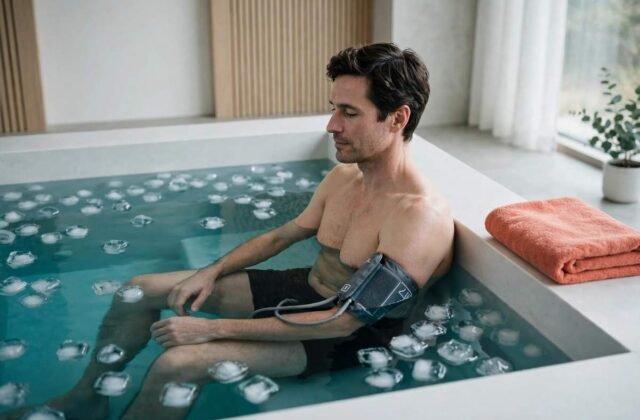
Cold Plunge and High Blood Pressure: Is It Safe?
This article is for general information only and is not medical advice. Blood pressure and heart health are…
Read Guide
Cold Plunge After Eating: Is It Safe? (And How Long Should You Wait)
Medical disclaimer: This article is for general information only and is not medical advice. Talk to a qualified…
Read Guide
Should You Dunk Your Head in a Cold Plunge? 7 Facts About Benefits and Risks
Dunking your head in a cold plunge is optional — and riskier than it looks. Here are 7…
Read Guide