
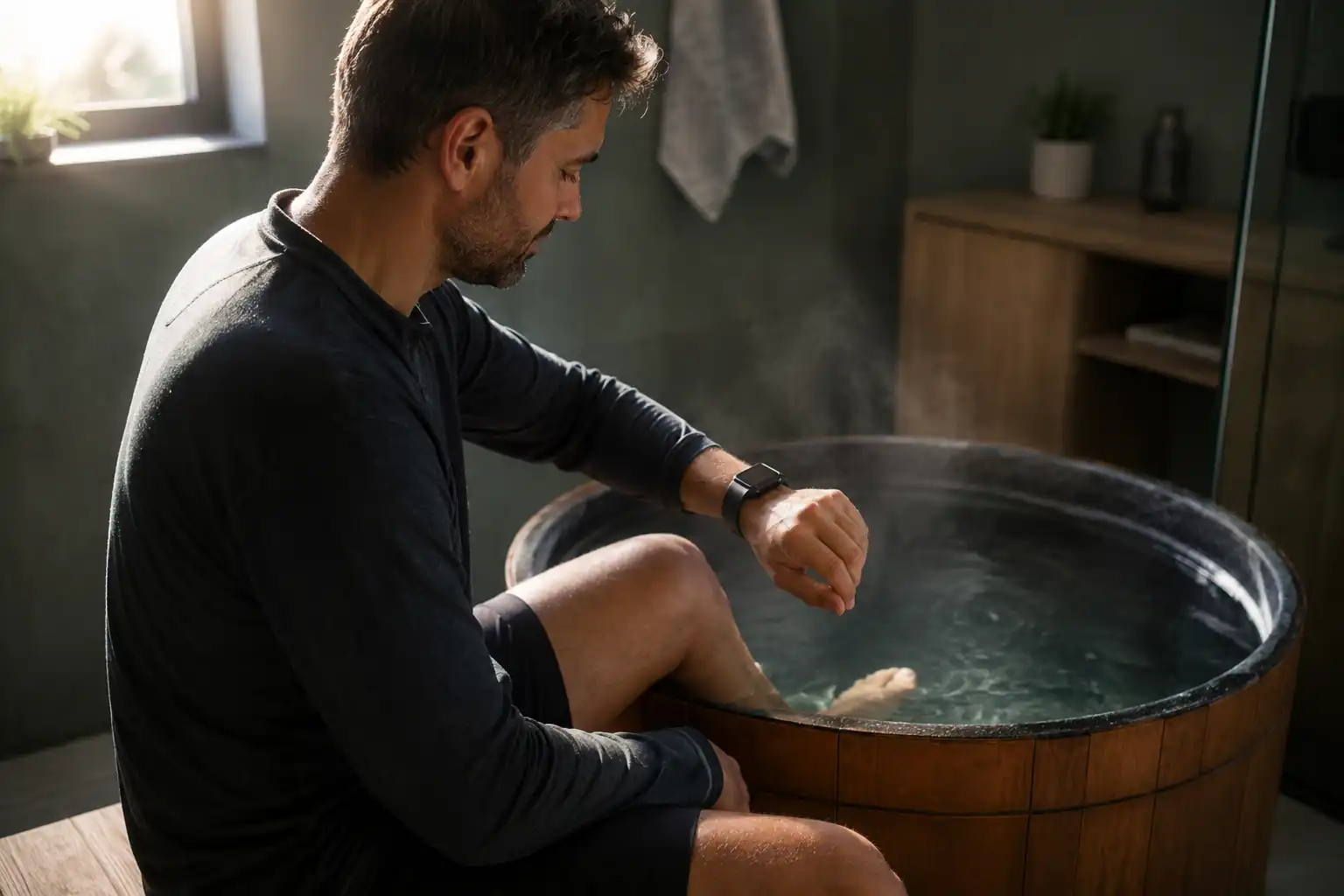
Cold water hits your skin and, within seconds, your heart is already reacting — that’s the honest starting point for understanding cold plunge and heart conditions. For most healthy people, that reaction is brief and harmless. But if you already carry any cardiac risk, the same seconds can mean something very different, and it’s worth knowing exactly why before you get in.
What Happens to Your Heart in the First Minute
The moment cold water touches your skin, your body triggers what’s known as the cold shock response — a rush of adrenaline that makes you gasp, breathe faster, and pushes your heart rate and blood pressure up quickly. In a healthy cardiovascular system, this is a short, manageable stress that passes within a minute or two.
The mechanism behind it is straightforward: blood vessels near the skin constrict to protect your core temperature, and your heart has to work harder to push blood through those narrowed vessels. That’s a normal, if intense, physiological event — but it’s also exactly why cold plunge heart disease risk is a real consideration for some people, not just internet caution.
There’s a second reflex layered on top of this that makes the picture more complicated. When your face is submerged in cold water, a separate response — sometimes called the diving reflex — tries to slow your heart rate down at almost the same moment the cold shock response is trying to speed it up. In a healthy heart, these two signals settle into a manageable balance. In a heart with an existing rhythm problem, that push-pull can occasionally create the kind of electrical confusion that leads to a genuinely irregular heartbeat, rather than just a fast one.
None of this is meant to sound alarmist — it’s simply the physiology, and understanding it is what makes the rest of this guide useful instead of just cautionary.
Who Actually Needs to Be Careful
Not everyone faces the same risk here, and it’s worth being specific instead of vague. People with existing heart disease, a history of arrhythmia, uncontrolled high blood pressure, or coronary artery disease are generally advised to be far more cautious — or to skip cold plunging until they’ve talked to a doctor.
None of this means cold exposure is automatically off-limits for these groups forever — it means the starting point needs to be medical clearance, not a YouTube video. Age and general fitness level matter too; someone in their sixties with borderline blood pressure carries a different risk profile than someone in their twenties with no history of cardiac issues, even if both are doing the exact same plunge.
This is also worth thinking about alongside training load in general. Combining cold exposure with intense exercise means asking your cardiovascular system to handle two demanding events close together instead of one — the workout raises heart rate and blood pressure on its own, and stacking a cold plunge on top of that compounds the load rather than simply adding a recovery step. If you’re combining cold plunging with hard workouts, our guide on cold plunge before or after workout looks at how timing changes that equation, which matters even more if your heart is already working with less margin than usual.
Cold Plunge and High Blood Pressure, Specifically
Cold plunge high blood pressure concerns come up constantly, and for good reason — the vasoconstriction that happens during immersion is exactly the kind of response that can push already-elevated blood pressure higher, at least temporarily. Some research on cold-air and cold-water exposure has recorded meaningful jumps in systolic pressure within minutes of immersion.
For people with well-controlled blood pressure, this spike is usually brief and tends to settle once the session ends. For people with hypertension that isn’t well managed, that same spike is riskier, since it’s adding stress on top of a system that’s already working harder than it should be.
There’s also a longer-term angle worth mentioning honestly: some people who cold plunge regularly report that their blood pressure response becomes less dramatic over months of consistent practice, as the body partially adapts to the stimulus. That’s not a guarantee, and it’s not a substitute for actually managing hypertension through the usual channels — but it does explain why a single scary-sounding number from one session doesn’t automatically mean cold exposure is permanently off the table for everyone with elevated blood pressure.
Medications Change the Picture
This is one of the clearest reasons a blanket “just start slow” isn’t enough advice for everyone. If you’re on any cardiovascular medication, the honest first step isn’t a colder tub — it’s a conversation with whoever prescribed it. Bring the specifics: how cold, how long, how often you’re planning to go, so the advice you get back is actually useful instead of a generic yes or no.
It’s also worth mentioning that this isn’t limited to heart medication specifically. Anything that affects blood vessel tone, heart rate, or your body’s ability to regulate temperature — including some blood pressure drugs unrelated to heart disease itself — can change how a cold plunge feels and how your body copes with it. If you take any regular prescription and you’re unsure whether it applies here, that’s a five-minute question worth asking rather than guessing.
Warning Signs to Never Push Through
Most cold plunge discomfort is just discomfort. But there’s a specific category of symptoms that should end a session immediately, no matter how “close to done” you feel.
Stop and exit the water if you notice:
- Chest pain, tightness, or pressure of any kind
- A racing, fluttering, or noticeably irregular heartbeat
- Sudden dizziness, confusion, or lightheadedness
- Shortness of breath that doesn’t ease as you calm your breathing
Treating these as optional or “part of the process” is one of the more serious versions of a mistake we’ve covered before — if you haven’t read it yet, our guide on cold plunge mistakes to avoid goes deeper into why ignoring warning signs is one habit worth breaking early.
A More Sensible Way to Approach This
If you don’t have any known heart risk factors, this doesn’t need to be an anxious process — it just means paying attention rather than chasing extremes. Starting with milder water, keeping sessions short, and building up gradually gives your cardiovascular system time to adapt instead of being caught off guard.
Consistency also matters more than intensity here. A predictable, moderate session three times a week does more for safe adaptation than one extreme session followed by two weeks off — your cardiovascular system responds to a pattern it can adjust to, not to a single dramatic data point.
If you’re weighing whether to set up a home cold plunge specifically because of a heart-conscious, controlled approach — being able to set and hold a mild, consistent temperature rather than relying on unpredictable natural water — it’s worth seeing what that actually costs before committing. A tub with an adjustable chiller gives you precision that a lake or an ice-filled tub simply can’t, which matters more when you’re managing a real risk factor rather than just chasing a personal record. Our full cold plunge cost breakdown covers realistic price ranges for exactly that kind of setup.
A Story That Changed How I Think About This
A relative of mine got into cold plunging after seeing it all over social media, without mentioning it to his cardiologist first — he’d had a mild heart rhythm issue for years that was well managed with medication. A few sessions in, he described a strange fluttering feeling in his chest that scared him enough to finally bring it up at his next appointment. Nothing catastrophic happened, but his doctor was clear that the medication he was on made his body respond differently to cold stress than it would in someone without that history.
What stuck with me afterward wasn’t fear of cold plunging itself — it was how easily that step got skipped in the first place. He wasn’t being reckless; he just assumed that because he felt fine day-to-day, his condition wasn’t relevant to a wellness trend. It wasn’t a reason to never try it again — just a reason to loop in the person who already knew his heart best before, not after, the fluttering started.
Frequently Asked Questions
Some can, with medical clearance and a cautious approach, while others are advised to avoid it entirely depending on the specific condition. This is a decision that should involve a doctor who knows your full history, not a general rule of thumb.
It can be riskier for people whose blood pressure isn’t well controlled, since cold exposure tends to raise blood pressure temporarily. Well-managed hypertension carries a different risk profile than uncontrolled hypertension.
Some studies have recorded systolic blood pressure rising by roughly 10 to 20 mmHg or more during cold immersion, though the exact amount varies by person, water temperature, and duration.
Yes — medications like beta blockers can change how your heart rate and blood pressure respond to cold stress, which is why anyone on cardiovascular medication should check with their prescriber first.
Conditions most commonly flagged include diagnosed heart disease, arrhythmias, coronary artery disease, and uncontrolled high blood pressure. Anyone in these categories should get individual medical guidance rather than following general wellness advice.
Have You Actually Checked This Off Your List?
If you fall into any of the risk categories above, has that conversation with your doctor happened yet — or is it still something you’ve been meaning to get to?

Related Articles
Cold Plunge When Sick? 6 Rules for Illness, Immunity and a Faster Recovery
Last month I woke up with that unmistakable scratch in the back of my throat — the kind…
Read Guide
Who Should Avoid Cold Plunge? A Complete Safety Checklist
A quick note before you read on: This article shares general safety information, not medical advice. Always talk…
Read Guide
Is Cold Plunge Safe? What the Research Actually Says
A quick note before you read on: This article shares general safety information and isn’t medical advice. Always…
Read Guide