
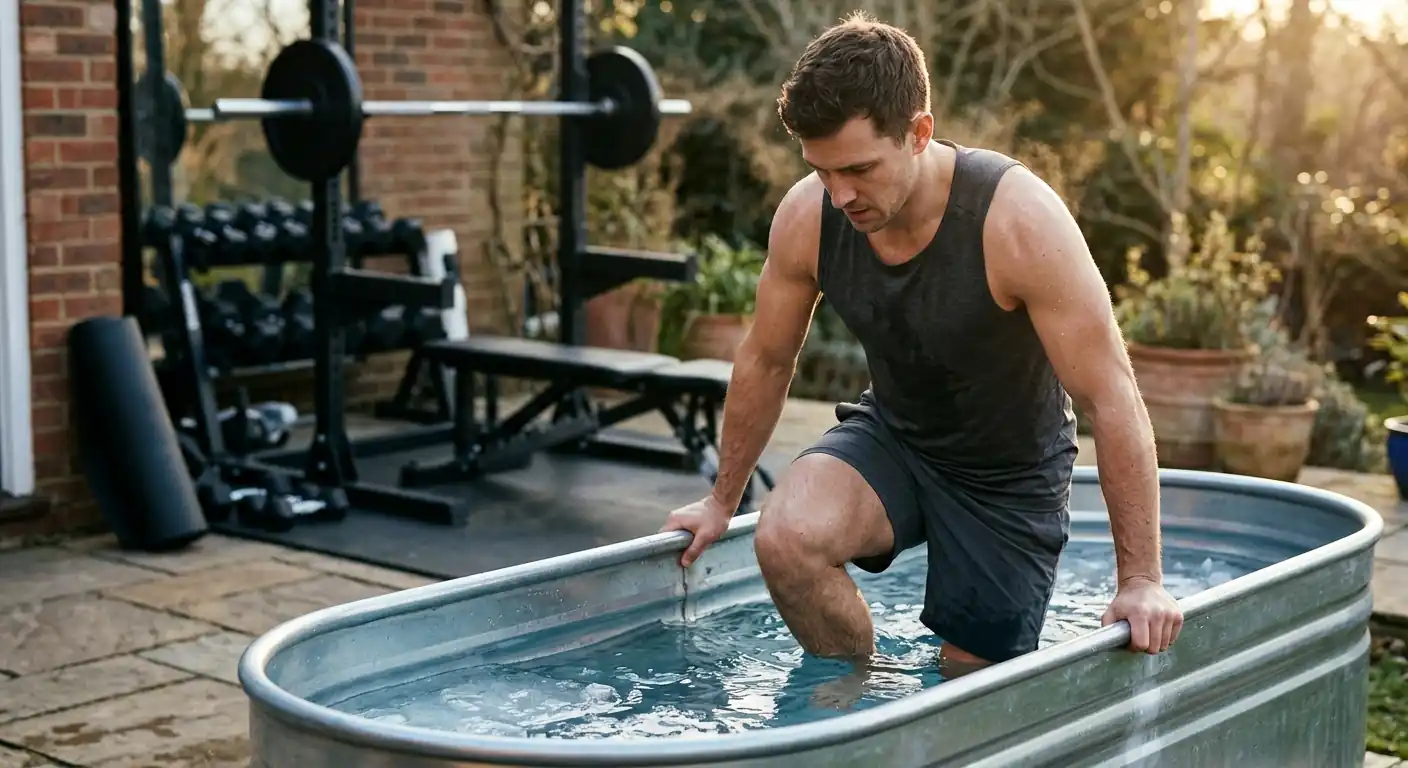
Should you cold plunge before or after workout, or does the order even matter? It’s one of the most common questions we get from readers who already own a tub and are simply trying to slot it into their training week without wasting the effort. The honest answer to cold plunge before or after workout depends less on a strict rule and more on what you’re training for that day.
Cold Plunge Before Workout: What Happens to Your Body
When weighing cold plunge before or after workout, know that jumping into a cold plunge before workout sessions cools your core and skin temperature, and that has a direct effect on how your muscles perform. Cold exposure tends to reduce muscle elasticity and nerve conduction speed for a short window afterward, which is the opposite of what you want before lifting heavy or sprinting.
That doesn’t mean pre-training cold exposure is always a bad idea. Some athletes use a brief, mild plunge before endurance sessions in hot climates purely to lower body temperature before heat exposure, not as a performance booster. If your goal is strength, power, or speed work, though, most people report feeling stiffer and less explosive right after a cold plunge before workout, so a short walk or light dynamic warm-up afterward becomes important. For strength days, the cold plunge before or after workout decision usually favors after.
Cold Plunge After Workout Benefits: The Recovery Angle
This is where the “after” side of cold plunge before or after workout gets most of the attention, and for good reason. Cold water immersion after training is commonly linked to reduced perceived soreness, a calmer nervous system, and a mental “reset” that many people find genuinely useful after a hard session.
Some of this is physiological, some of it is simply the psychological relief of finishing a tough workout with a controlled, deliberate cool-down. Either way, it’s a large part of why cold plunging after gym sessions has become such a routine habit for recreational lifters and endurance athletes alike. For a broader look at what the research actually supports, our guide on cold plunge benefits breaks down the evidence in more depth, and Healthline’s overview of cold water therapy offers additional context.
Cold Plunge Timing for Recovery: Finding the Right Window
Getting the timing right in the cold plunge before or after workout debate matters more than most people assume. Jumping in the moment you rack the last weight isn’t necessarily the smartest move, especially after strength training. Your body needs a short period of natural inflammation to actually build muscle, and flooding that process with cold water too early may blunt part of it.
A commonly suggested middle ground is waiting roughly four to six hours after a heavy strength session before plunging, while cardio or general conditioning sessions are more forgiving and can usually be followed by a plunge much sooner. This isn’t a rigid rule, just a reasonable starting point to adjust based on how your body responds.
Cold Plunge Before or After Workout: Should You Plunge Before Training?
So in the cold plunge before or after workout question, should you plunge before exercise at all? For most strength or power-focused training, it’s generally better to skip it and save the cold exposure for afterward. A cooled-down muscle simply doesn’t fire as efficiently, and warming back up properly can eat into training time you’d rather spend actually working out.
- Heavy lifting or sprint days: cold plunge is usually better saved for after, not before.
- Long, easy cardio in hot weather: a brief pre-session cool-down can occasionally help with heat management.
- Mobility or technique-focused sessions: timing matters less since explosive output isn’t the priority.
Cold Plunge and Muscle Growth: What the Research Suggests
If hypertrophy is your main goal, the cold plunge before or after workout decision deserves careful thought where muscle growth is concerned. Several studies on cold water immersion after resistance training (PubMed) have observed a smaller strength and size adaptation in the muscles that were cooled compared to muscles that recovered without immersion, particularly when the plunge happened immediately post-lift.
This doesn’t mean cold plunging “ruins” gains for casual lifters chasing general fitness. But if you’re specifically chasing maximum muscle growth, spacing your cold plunge out by several hours, or saving it for rest days, is a reasonable, low-risk adjustment. It’s also worth avoiding the more common timing mistakes covered in our cold plunge mistakes to avoid guide.
Cold Plunge After Cardio vs After Weights
The cold plunge before or after workout question gets more nuanced when you split the training type — cold plunge after cardio vs after weights isn’t really the same conversation. Cardio-based training doesn’t rely as heavily on the same short-term inflammatory signaling that drives muscle growth, so plunging soon after a run, row, or bike session is generally considered lower-risk and can help with the “legs feel heavy” sensation many endurance athletes deal with.
Strength training, especially anything aimed at building size or maximal strength, is the scenario where timing deserves more thought. If your split includes both in one day, it’s worth mentally separating the two: treat the cardio portion as plunge-friendly and give the lifting portion a longer buffer.
Best Time to Cold Plunge After Training: Building a Routine
The best answer to cold plunge before or after workout ultimately comes down to your specific goal that week, not a universal number. Someone training purely for recovery and mental clarity can plunge almost immediately with little downside. Someone chasing a strength or size goal is usually better off treating the plunge as a separate recovery ritual, done later in the day or even the next morning.
A simple way to think about it: the more your goal depends on adaptation (getting stronger, bigger, faster), the more space you probably want between the workout and the cold. The more your goal is about feeling good and recovering mentally, the more flexible that timing can be.
| Stage | What’s Happening | General Guidance |
|---|---|---|
| Before workout | Muscles cool, nerve firing slows temporarily | Best avoided before strength or power work |
| 0–30 min after | Inflammatory recovery process begins | Fine after cardio; use caution after heavy lifting |
| 2–6 hours after | Early adaptation signaling window | Reasonable middle ground for most strength training |
| Next day / rest day | Adaptation window largely complete | Lowest-risk option if muscle growth is the priority |
What I Noticed Tracking My Own Timing
While researching cold plunge before or after workout, I spent a few weeks deliberately experimenting with plunge timing around my own strength sessions, moving from plunging right after lifting to waiting until later in the evening instead. The difference wasn’t dramatic, but it was noticeable: sessions where I waited a few hours left my legs feeling less “flat” the next day compared to plunging immediately. That’s obviously a sample size of one, not a controlled study, but it lined up closely with what the broader research on timing suggests, and it’s a big part of why we recommend testing your own response rather than copying someone else’s routine exactly.
Bringing It Back to Your Own Routine
There’s no single correct answer to cold plunge before or after workout that applies to every person and every goal. What matters is matching the timing to what you’re actually training for that day, whether that’s raw recovery, muscle growth, or simply feeling more clear-headed after a hard session. Pay attention to how your own body responds over a few weeks rather than locking into one rule permanently.
Frequently Asked Questions
Is it better to cold plunge before or after workout?
For most people, the cold plunge before or after workout debate settles on “after” as the more practical choice, since cold exposure before training can temporarily reduce muscle power output. Before a workout is really only worth considering for heat management before long cardio sessions.
Does cold plunge hurt muscle gains?
It can slightly blunt the adaptation process if done immediately after resistance training, based on current research into cold plunge before or after workout timing. Spacing the plunge out by a few hours, or saving it for a rest day, is a simple way to reduce that concern.
How long should you wait to cold plunge after lifting weights?
A commonly suggested window is around four to six hours after heavy strength training, though this isn’t a strict rule. If your main goal is recovery rather than maximal muscle growth, waiting isn’t as critical.
Can you cold plunge right after cardio?
Generally yes. Cardio sessions don’t rely as heavily on the same short-term muscle-building signaling, so plunging soon after running, cycling, or rowing is usually considered lower-risk than doing so after heavy lifting.
Does cold plunge before a workout help performance?
Not typically. Cooling muscles before training can reduce explosiveness and strength output in the short term, so it’s generally better reserved for after training rather than before, outside of specific heat management situations.
Where Does Your Own Routine Fall?
Think about your last few weeks of training and where you land on cold plunge before or after workout. Have you been plunging out of habit at the same time every session, or actually adjusting based on what that day’s workout demanded?

Related Articles

Cold Plunge in Winter: 7 Rules for Safe, Comfortable Outdoor Plunging
Winter Guide · Outdoor Plunging The water doesn’t care that it’s January. Everything around it does. A cold…
Read Guide
Cold Plunge vs Cold Shower: Is a Shower Really Enough?
A quick note before you read on: This article compares two wellness practices for general informational purposes and…
Read Guide
Cold Plunge vs Cryotherapy: Which One Is Actually Right for You?
A quick note before you read on: This article compares two wellness practices for general informational purposes and…
Read Guide