
Do you actually need special breathing to get anything out of cold water? That’s the real question hiding behind most wim hof method vs cold plunge searches, and the honest answer is no — but understanding why makes the difference between using this practice well and using it in a way that’s genuinely risky.
The two get lumped together constantly online, partly because Wim Hof himself made cold exposure famous in the first place. But conflating the branded, three-part method with the simple act of getting into cold water leads to real confusion about what’s actually necessary, and in one specific case, what’s actually dangerous.
01 What the Wim Hof Method Actually Is
The Wim Hof Method is a specific, named system built around three deliberate components working together, not just “cold exposure with extra steps.”
Breathing
Rounds of deep, controlled hyperventilation followed by breath-holds
Cold Exposure
Progressive exposure, typically starting with cold showers before ice baths
Mindset
Commitment and focus treated as a core, non-optional part of the method
Wim hof method three pillars explained this way matters because most people online only talk about the cold part, skipping the breathing and mindset components that Wim Hof himself considers equally essential to the system.
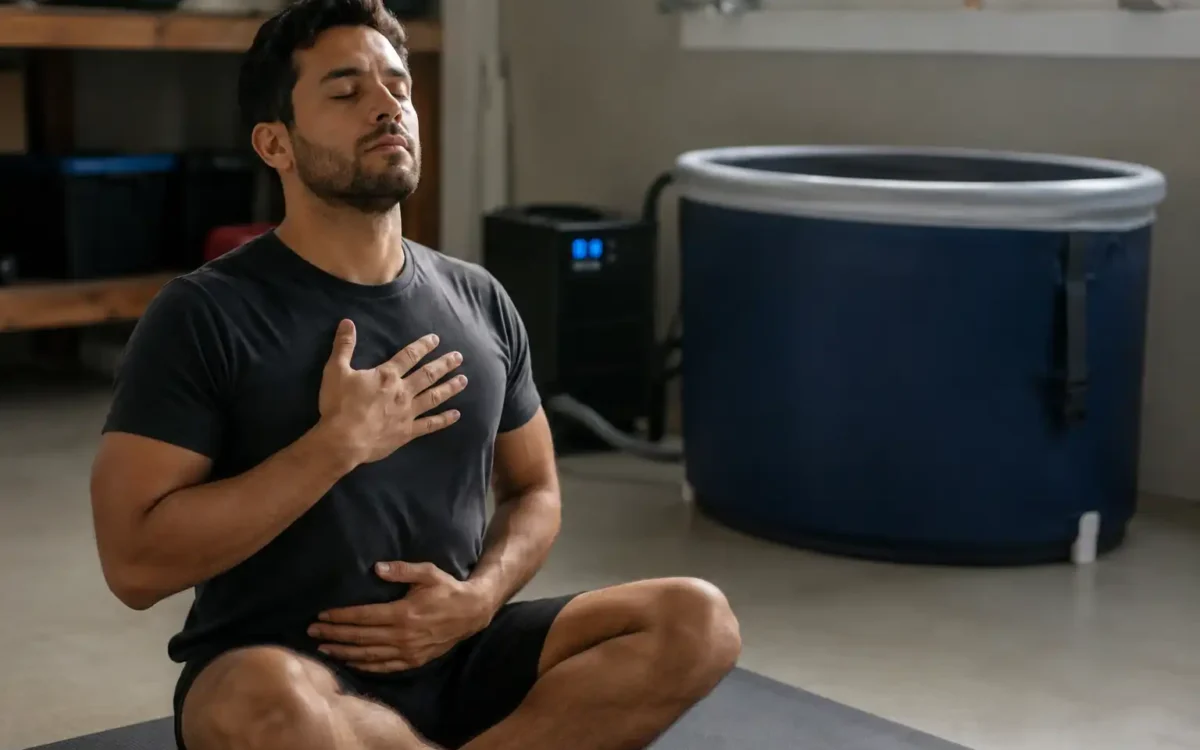
A typical breathing round looks like 30 to 40 deep, controlled breaths, followed by exhaling fully and holding at empty lungs for roughly one to two minutes, then a shorter recovery hold. This gets repeated for three or four rounds, and it’s meant to be practiced seated, on dry land, well before any cold exposure happens.
The specific numbers vary somewhat between different guides and instructors, but the general shape — rapid breathing, extended hold, brief recovery, repeat — stays consistent across most descriptions of the technique.
02 What Pure Cold Plunging Is, By Comparison
A standard cold plunge is simpler by design: get in cold water, breathe calmly, get out. There’s no required breathing protocol beforehand, no mandatory mindset framework — just the cold exposure itself as the entire practice.
That simplicity is part of the appeal for a lot of people. It’s easier to explain to a friend, easier to fit into a five-minute morning routine, and easier to try without committing to learning an entire named system before you’ve even decided whether cold exposure is something you enjoy in the first place.
This is an important distinction for difference between wim hof and cold plunge searches specifically, because plenty of people benefit from cold plunging without ever learning or practicing Wim Hof breathing at all.
Researchers who study cold exposure independently of the Wim Hof brand, including cold-exposure protocols popularized by other researchers, generally recommend calm, ordinary breathing during the actual plunge rather than any specialized technique. The cold itself is doing the physiological work; the breathing method is a separate, optional layer on top of it.
03 How the Two Get Combined in Practice
Wim hof breathing and cold plunge routines often get merged because the breathing exercises are frequently taught as pre-plunge preparation — done on dry land, before entering the water, to calm the nervous system and increase focus.
Combining wim hof breathing with cold plunge this way, as a before-the-plunge warm-up rather than something done during immersion, is how most structured programs actually recommend using the two together.
Proponents describe the sequence as complementary: the breathing rounds are said to sharpen focus and settle nerves beforehand, and the person then enters the cold water already in a calmer state than they would be jumping in cold, so to speak, without any preparation at all.
Whether that pre-plunge calm genuinely changes the physical benefits of the cold exposure itself, or simply makes the experience feel more intentional, isn’t something current research has clearly separated out yet.
04 The Serious Safety Risk Worth Understanding
This is the single most important part of this entire article
Is wim hof breathing safe while submerged has a clear answer from safety-focused experts: no, not without direct supervision. The hyperventilation phase drops carbon dioxide levels sharply, and combined with breath-holding, this can cause a sudden blackout with little to no warning.
On dry land, fainting is a fall risk. In water, especially alone, it’s a drowning risk. This is exactly why well-known cold exposure researchers explicitly recommend calm, normal breathing during actual submersion, saving any breathwork for before you get in.
This isn’t a theoretical concern raised for the sake of caution — documented incidents involving breath-hold practices in water, including fatalities, are part of why this specific combination gets flagged so consistently by safety-focused sources rather than being treated as an acceptable variation of the method.
Take this warning at face value, even if you consider yourself experienced with cold exposure or breathwork individually — experience with one doesn’t cancel out the physiological risk of combining both while submerged.
Our guide on cold plunge safety covers broader precautions worth knowing regardless of which method you follow, and our piece on cold plunge mistakes to avoid goes deeper into breathing-related mistakes people make even without attempting anything as intense as Wim Hof-style breath-holds.
If you want to practice the breathing rounds at all, doing so seated, in a safe space, with nothing nearby you could fall onto if lightheadedness hits, is the baseline precaution worth taking regardless of how experienced you already feel with the technique.
05 What the Research Actually Shows
Reviews of Wim Hof Method research generally describe the evidence as promising but limited — some studies suggest effects on inflammatory markers and immune response, but sample sizes tend to be small and results don’t always replicate consistently.
One frequently cited small study found participants trained in the method could voluntarily influence markers typically considered part of the involuntary immune response. It’s a genuinely interesting finding, but a single small study isn’t the same as an established, repeatable effect across the general population.
Wim hof method benefits and risks deserve equal billing in any honest summary. The benefits some studies point to are real enough to take seriously, but they don’t erase the very real breathing-related risks that come with the method’s more intense practices.
It’s also worth separating the cold-exposure benefits, which have broader independent research support, from the breathing-specific claims, which rest on a smaller and more mixed body of evidence. Lumping both into one blanket “it works” or “it’s all hype” verdict oversimplifies a more nuanced picture that deserves better than a single-sentence verdict either way.
06 Which Approach Actually Fits You
If you’re drawn to structure, discipline, and a full mind-body framework, the complete Wim Hof system might genuinely suit how you like to build habits. If you just want the physical benefits of cold exposure without extra steps, plain cold plunging accomplishes that on its own.
Cost and time investment differ too — the full method typically involves courses, guided programs, or at least dedicated practice time for the breathing portion, while cold plunging alone can start with nothing more than a cold shower tomorrow morning, with no course or app required.
The mindset piece in particular overlaps with why people plunge for stress relief in the first place — our guide on cold plunge for anxiety covers that connection in more depth if that’s your main motivation either way.
There’s also a middle ground worth mentioning: some people adopt the breathing exercises purely as a standalone practice, separate from cold exposure entirely, and only plunge with calm, ordinary breathing. Nothing about the two practices requires you to treat them as a package deal.
What Trying the Breathing Protocol Taught Me
I tried the full breathing rounds on dry land before ever attempting them near water, mostly out of caution after reading about the blackout risk. Even sitting safely on my living room floor, the lightheadedness during the hold phase was strong enough that I understood immediately why doing this submerged, alone, would be a genuinely bad idea. That firsthand dizziness did more to convince me of the warning than any article had.
What surprised me was how separate the two experiences actually felt once I tried them independently. The breathing rounds gave a strange, almost floaty sensation entirely on their own, while the cold plunge itself felt like a completely different kind of intensity. Combining them clearly wasn’t necessary to get something meaningful out of either one.
07 Frequently Asked Questions
The Wim Hof Method is a structured system combining specific breathing, progressive cold exposure, and mindset training, while a cold plunge on its own is simply the act of immersing in cold water without any required breathing protocol.
Doing the hyperventilation and breath-hold portions while submerged is widely discouraged due to blackout risk. Breathing exercises are generally recommended before entering the water, not during immersion.
No — cold exposure benefits can occur without any specific breathing protocol. The breathing component is a separate practice that some people choose to add, not a requirement for cold plunging to work.
The main risk is fainting or blackout from the breathing exercises, particularly dangerous if done in or near water without supervision. General cold exposure risks also still apply.
Beginners can start with the breathing exercises seated and away from water, and with mild cold exposure like cold showers, progressing gradually rather than starting with ice baths or intense breath-holds.
Want Structure and a Full System?
The complete Wim Hof Method, practiced safely on dry land for the breathing portion, gives you a defined framework to follow and build a habit around.
Just Want the Cold Exposure Benefits?
A plain cold plunge routine, with calm breathing throughout, gets you there without any extra protocol to learn or remember.

Related Articles
Cold Plunge in Winter: 7 Rules for Safe, Comfortable Outdoor Plunging
Winter Guide · Outdoor Plunging The water doesn’t care that it’s January. Everything around it does. A cold…
Read Guide
Cold Plunge vs Cold Shower: Is a Shower Really Enough?
A quick note before you read on: This article compares two wellness practices for general informational purposes and…
Read Guide
Cold Plunge vs Cryotherapy: Which One Is Actually Right for You?
A quick note before you read on: This article compares two wellness practices for general informational purposes and…
Read Guide