
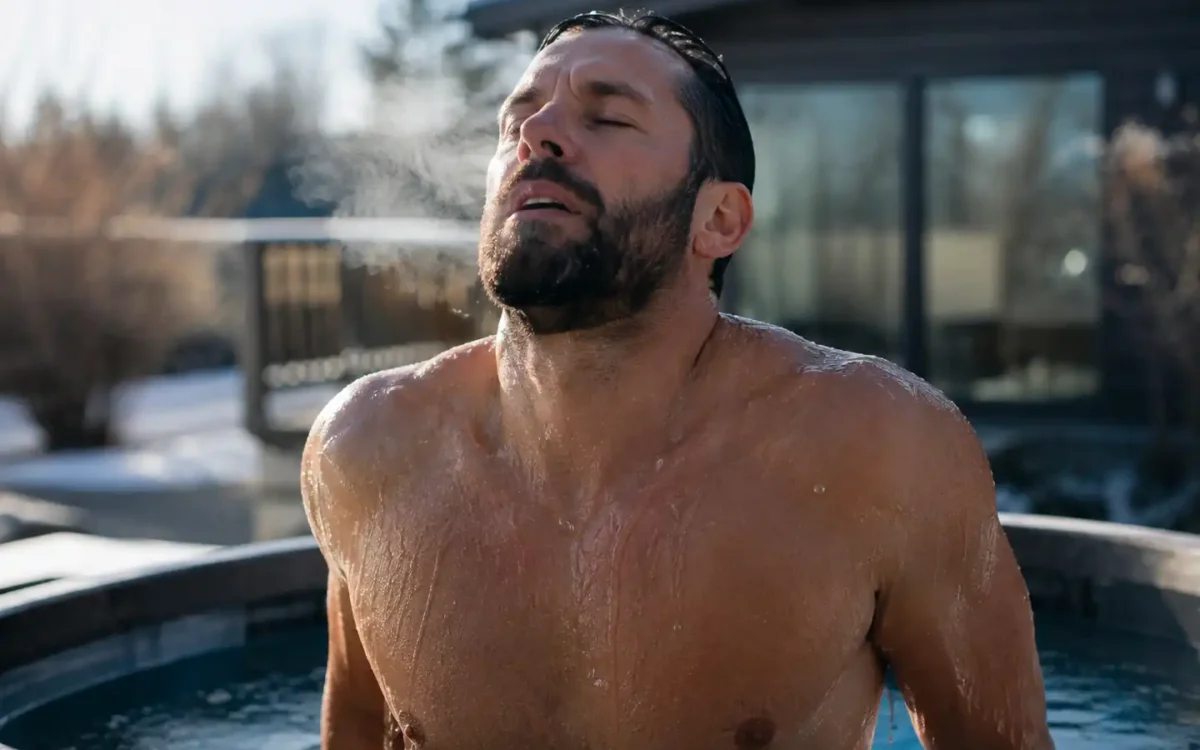
Ten minutes before a presentation I was dreading, I stood in front of my bathroom sink splashing cold water on my face like it might actually help — and oddly, it did, just a little. That small, half-desperate habit turned out to be a rough version of something with real science behind it: cold plunge for anxiety isn’t a wellness myth, it’s a specific, studied response your nervous system is already wired for.
What Actually Happens to Your Brain When You Plunge
The moment cold water hits your skin, your brain floods your system with norepinephrine and dopamine — two chemicals directly tied to alertness, mood, and motivation. This isn’t a vague “feel good” effect; it’s a measurable neurochemical shift researchers have tracked directly.
This is also the foundation for cold plunge and dopamine conversations you’ll see everywhere in this space. The mechanism is real, even if some of the numbers attached to it online get repeated without enough context.
That framing matters because it separates a genuine physiological tool from a purely psychological placebo effect, even if placebo plays some role too. Both can be true at once without undermining either one.
What makes this different from most quick mood tricks is that it doesn’t rely on distraction or willpower alone — it’s an actual physiological event your body produces on its own, triggered by something as simple as temperature. That distinction is part of why it holds up better under scrutiny than most one-line wellness claims.
The Study Everyone Quotes (and What It Actually Says)
A frequently cited study found that immersion in 57°F water raised dopamine levels by roughly 250 percent and norepinephrine by around 530 percent. Those numbers get repeated constantly, but it’s worth being precise: this reflects circulating levels measured in blood, not a direct measurement of brain activity, and results like this vary across individuals and conditions.
Cold plunge dopamine increase percentage claims this dramatic are genuinely supported by research, they just deserve the same careful framing any single study deserves — real, notable, and not the whole story on its own.
It’s also worth remembering that one study, however widely cited, is a starting point rather than a settled conclusion. Individual responses vary based on temperature, duration, and personal physiology, which is part of why treating any single percentage as a guaranteed personal result oversells what the science actually promises.
How Long the Calm Actually Lasts
Unlike a quick dopamine hit that spikes and crashes, the response from cold exposure tends to build gradually, peak after you’re already out of the water, and stay elevated for a couple of hours rather than fading in minutes.
That slower, sustained curve is part of why how long does cold plunge dopamine last matters more than the peak number itself — a durable, gradual lift is a very different experience than a sharp spike that disappears just as fast.
This also explains why the timing of a cold plunge can matter almost as much as the plunge itself. Scheduling one before a stressful stretch of the day — rather than only after — lines up with when that sustained lift is actually working in your favor.
Cortisol: The Other Half of the Anxiety Equation
Cold plunge and cortisol anxiety is often framed as purely negative because cortisol spikes immediately during immersion. But that spike tends to resolve quickly, and with regular practice, baseline cortisol over time can trend lower — the opposite of what chronic, unmanaged stress does to your system.
This is less about avoiding stress altogether and more about practicing a controlled, short version of it on your own terms, which is a very different experience than stress that shows up uninvited.
The distinction between chosen and unchosen stress turns out to matter a lot physiologically, not just psychologically — a body that has some say in when a stressor happens tends to recover from it differently than one caught off guard.
Think of it as a kind of rehearsal. A body that’s practiced recovering quickly from a brief, chosen stressor tends to handle unexpected ones with a bit more composure, simply because the recovery pathway has been exercised before.
Training Your Nervous System Over Time
Cold plunge nervous system training is the part that explains why people who plunge regularly often describe feeling calmer in unrelated stressful situations, not just after a session. Repeated, controlled exposure to discomfort appears to build a kind of stress tolerance that carries over.
This overlaps meaningfully with sleep quality, since better sleep and lower baseline anxiety tend to reinforce each other. If stress is affecting your sleep specifically, our guide on cold plunge for better sleep covers that connection in more depth.
It’s a two-way relationship worth taking seriously: poor sleep makes anxiety harder to manage, and unmanaged anxiety makes good sleep harder to get. Addressing both at once, rather than treating them as separate problems, tends to produce better results than tackling either alone.
It’s worth noting this kind of training takes weeks, not days. Expecting a single session to permanently rewire how you respond to stress sets an unrealistic bar; the actual benefit compounds gradually, the same way physical fitness does with consistent training rather than one hard workout.
What This Means (and Doesn’t Mean) for Diagnosed Anxiety
Does cold plunge help anxiety that’s clinically diagnosed is a more careful question than general stress relief. The honest answer: cold exposure may be a helpful supplement alongside therapy or medication, not a replacement for either.
Finding Your Starting Temperature and Routine
For mood and stress-focused use, most research points toward a moderate range — roughly 50–59°F — rather than the most extreme cold available. Best temperature cold plunge for anxiety isn’t about maximizing discomfort; it’s about a dose your nervous system can actually adapt to consistently.
Duration matters less than people assume here too. A short, controlled session of one to three minutes tends to be plenty for the neurochemical response to kick in — pushing for a longer session in the name of a bigger benefit usually just adds unnecessary stress on top of the intended kind.
Breathing control matters here more than in almost any other use case, since panic-like gasping can mimic or worsen anxious feelings rather than easing them. Our guide on cold plunge mistakes to avoid covers this exact pattern in more detail, and it’s worth reading before building an anxiety-focused routine specifically.
A simple starting routine looks less like a strict protocol and more like a repeatable ritual: same rough time of day, same modest temperature, same short duration, for at least two weeks before judging whether it’s making a real difference. Consistency does more of the actual work here than intensity ever will.
Journaling a quick one-line mood note right after each session, even something as simple as “calmer” or “no different,” can make the pattern easier to spot than relying on memory alone after a few weeks have passed.
None of this needs to feel clinical or over-engineered — a sticky note on the bathroom mirror works just as well as an app.
What Reading the Research Actually Changed
Before looking into the science, I assumed the calm I felt after a cold shower was mostly placebo — a story I was telling myself because I wanted it to work. Learning that the dopamine and norepinephrine response is real and measurable didn’t make the anxiety disappear, but it did make the practice feel less like a coping trick and more like something worth taking seriously enough to actually stick with.
That shift in perspective mattered more than any single session did. Once I stopped treating it as a placebo I half-believed in, showing up consistently got a lot easier — it’s hard to stay committed to something you secretly suspect is just in your head.
Understanding the mechanism, even at a basic level, seemed to matter for follow-through in a way I didn’t expect going in. It turned an abstract wellness habit into something closer to a small, deliberate experiment I actually wanted to keep running, rather than another item on a list of things I meant to stick with.
Frequently Asked Questions
Research supports several pathways — dopamine and norepinephrine release, stress-response training over time, and improved sleep — that together can meaningfully ease anxious feelings for many people, though results vary individually.
Cold exposure triggers a measurable release of mood-related neurotransmitters and, with repeated practice, appears to train the nervous system to handle stress more effectively over time.
The mood-related effects tend to build gradually and can remain elevated for roughly two to three hours after a session, rather than spiking and fading immediately.
It can be a helpful supplement for some people, but it isn’t a substitute for therapy or medication with a diagnosed anxiety disorder. Checking with a healthcare provider first is the safer approach.
Most people build stress resilience through consistent, moderate sessions several times a week rather than one extreme session followed by long gaps.
Would a Few Minutes of Cold Water Actually Fit Your Morning?
Not as a miracle fix, but as one small, repeatable tool — is that worth testing for a week before deciding whether it belongs in your routine? The only way to actually know is to try it long enough to find out, rather than judging it off a single uncomfortable first attempt.

Related Articles
Cold Plunge and Cortisol: 7 Science-Backed Facts About Stress Hormones
Stress Hormones · Benefits & Science Is your ice bath calming you down — or secretly stressing you…
Read Guide
Cold Plunge and Brown Fat: The Honest Science on Weight Loss and Metabolism
Medical Disclaimer: This article is for general information only and is not medical advice. Talk to a qualified…
Read Guide
Cold Plunge for Athletes: Recovery, Timing, and Performance Guide
A quick note before you read on: This article shares general training and recovery guidance and isn’t medical…
Read Guide