
A few years ago, a cold plunge tub was basically a livestock trough with a marketing budget. Now walking through a good cold plunge tub buying guide means comparing filtration systems, insulation ratings, and chiller compatibility across dozens of legitimate options — the category has matured fast, and so has the number of ways to make the wrong purchase.
Decide Your “Why” Before You Look at Any Tub
The single biggest mistake in this process happens before anyone even opens a product page: buying based on what looks impressive rather than what actually matches how you’ll use it. Someone plunging daily as a core habit has completely different priorities than someone testing the waters occasionally.
If you’re still deciding between a dedicated tub and a simpler setup entirely, it’s worth reading our ice bath vs cold plunge tub comparison first — plenty of people spend money solving a problem a $30 stock tank would have handled just fine.
Writing down your actual goal — recovery after training, general stress relief, better sleep, or just curiosity — before comparing a single product page tends to eliminate half the options on its own. Most buyer’s remorse in this category traces back to skipping this step entirely.
Size and Space: What to Measure Before You Buy
Cold plunge tub size guide considerations start with a simple measurement most people skip: the actual space where the tub will live, not just the tub’s listed dimensions. Doorways, stairwells, and tight corners have ended more than one delivery-day plan.
It’s also worth thinking about drainage and ground surface, not just floor space. A tub sitting on grass or gravel behaves very differently over time than one on a level concrete pad, and water runoff from regular refills or draining needs somewhere sensible to go.
Height matters more than people expect too. Taller users routinely find themselves limited to a handful of models, since many tubs are designed around average adult proportions rather than a full range of body sizes.
It’s worth measuring twice in the literal sense — once for the tub’s footprint, and once for the path it needs to travel to actually reach its final spot. A tub that fits perfectly in the backyard can still be impossible to get through a narrow gate or hallway.
If more than one person in the household plans to use the same tub, add extra room to that measurement rather than sizing strictly for one body. What feels spacious solo can feel cramped fast once you’re accounting for a second or third regular user.
Material Matters More Than You’d Think
Cold plunge tub material comparison is where a lot of the real price difference comes from. Stainless steel and ceramic hold cold longest and last for years, but carry the highest price tag. Multi-layer PVC and inflatable options cost far less and pack away easily, at the expense of long-term durability.
Wood sits in an interesting middle ground — moderate insulation and a look that a lot of people find more appealing for an outdoor setup, though it typically needs more upkeep than steel or ceramic to avoid warping or wear over time.
| Material | Durability | Insulation | Typical Price Range |
|---|---|---|---|
| Stainless Steel | Excellent | Very good | High |
| Ceramic | Very good | Very good | High |
| Wood | Good | Moderate | Mid-range |
| Multi-Layer PVC / Inflatable | Fair | Basic | Low |
None of these materials is objectively “wrong” — the table above is meant to set expectations, not rule anything out. Plenty of people get years of reliable use from a budget inflatable simply by treating it with reasonable care and replacing it when it eventually wears out, rather than expecting steel-level longevity from a plastic price tag.
Chiller vs Ice: The Decision That Shapes Everything Else
This choice affects your budget, your maintenance routine, and how often you’ll actually use the tub. A chiller-compatible tub costs more upfront but removes the daily ice run entirely, while an ice-only setup keeps costs low at the expense of consistency.
If you’re leaning toward skipping a commercial purchase altogether and building something yourself, our DIY cold plunge setup guide walks through exactly that path, often at a fraction of retail pricing.
Some tubs are sold “chiller-ready” without including one, which is worth checking carefully before assuming a lower price tag includes everything you’ll actually need. Buying a tub now and adding a chiller later is a completely reasonable approach, as long as you confirm compatibility upfront rather than discovering a mismatch after the fact.
Filtration and Safety Features Worth Paying For
Not every feature on a spec sheet is worth the upcharge, but a few genuinely matter. A reliable filtration system — cartridge, media, or UV-based — keeps water usable for longer between full changes, which matters far more with daily use than occasional use.
Warranty length is another quiet signal worth checking. A manufacturer willing to back a chiller or pump for two or three years is usually more confident in their own build quality than one offering only a 90-day window, and that difference tends to say more than the marketing copy ever will.
It’s also worth reading a few real owner reviews specifically looking for complaints about pump noise or filter clogging, since these are the kinds of everyday annoyances that rarely show up in official product descriptions but show up constantly in actual usage.
A quick way to sanity-check any listing: search specifically for that model’s filter replacement cost and availability before buying. A tub that’s cheap upfront but relies on a hard-to-find, expensive replacement filter often ends up costing more over a year than a pricier option with common, easily sourced parts.
Skipping these to save money upfront tends to cost more later, either in replacement parts or in avoidable slip risks that better design would have prevented from the start.
It’s easy to focus entirely on the water and forget the surrounding space, but the entry and exit points around a cold plunge are where most minor accidents actually happen — cold, wet skin and a hard surface are a bad combination, regardless of how well-built the tub itself is.
Matching Tub to Budget
Budget tiers in this category are wide enough that “cold plunge tub” can mean a $150 inflatable or a $6,000 fully integrated system, and both are legitimate depending on your goals. Rather than anchoring to a single number, it helps to know what you’re actually paying for at each tier.
For the full financial picture across every format — DIY, budget commercial, and premium — our cold plunge cost breakdown lays out real numbers so you’re comparing against your actual budget instead of a marketing price point.
A useful gut-check before spending near the top of your budget: could a mid-tier option get you 90% of the experience for half the price? For most people starting out, the answer is yes, and upgrading later once you know your actual habits is a far safer bet than overspending upfront on features you might not end up using.
What Seeing One in Person Changed for Me
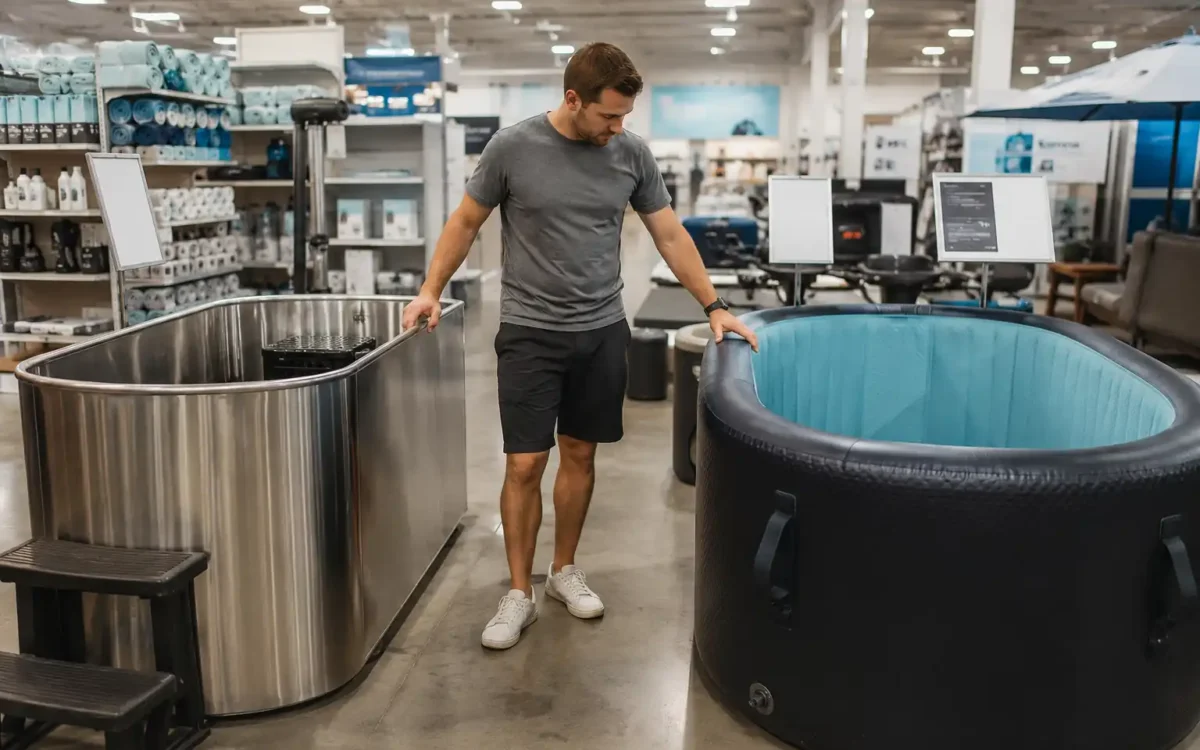
I’d spent weeks comparing spec sheets online before actually visiting a friend’s setup to see one in real life. The listed dimensions looked fine on screen, but standing next to the actual tub, it was smaller and lower to the ground than I’d pictured — something no product photo had made obvious. If you can see a model in person before buying, even a different size from the one you want, it’s worth the trip just to calibrate your expectations.
What struck me most was how differently the material felt in person compared to how it looked in photos. A finish that seemed premium in marketing images felt noticeably more plasticky in hand, while a plainer-looking model turned out to be sturdier than expected. Photos flatten a lot of texture and weight cues that actually matter once you’re deciding where your money goes.
That visit ended up saving me from a purchase I would have regretted, simply because a spec sheet can’t communicate how something actually feels to sit in or handle day to day.
Frequently Asked Questions
Enough to comfortably submerge to your target depth while seated, with a little extra room to avoid feeling cramped. Measuring your available space and your own height before shopping prevents most sizing mistakes.
Stainless steel and ceramic offer the best combination of durability and insulation, though they cost more. Multi-layer PVC and wood are reasonable middle-ground or budget options depending on your priorities.
Ice works fine for occasional use and keeps costs low. A chiller makes more sense for frequent or daily plunging, since it removes the ongoing effort and cost of manual ice runs.
This depends entirely on how often you’ll use it and which features matter to you — budget options start under $200, while fully integrated systems can run several thousand dollars.
Reliable filtration, a stable and non-slip build, and cooling method (chiller vs ice) tend to matter more day-to-day than cosmetic details like color or brand name.
However much research you’ve done, the right tub is ultimately the one that matches your actual routine, not the one with the longest feature list. If nothing else, walk away from this guide knowing your own answer to that one question before you spend a single dollar.
Tight on Space or Just Testing It Out?
A portable, ice-only tub keeps your investment low while you figure out if this is a habit worth keeping.
Already Committed to Daily Plunging?
A chiller-compatible tub in a durable material will likely save you money and hassle over the next few years.

Related Articles

Cold Plunge Water Treatment: 5 Ways to Keep Your Water Clean and Safe
Safety note before you read on: This guide covers general cold plunge water treatment options, including filters, UV…
Read Guide
Best Portable Cold Plunge: What to Look for Before You Buy
A quick note before you read on: This guide covers what to look for and general expectations when…
Read GuideCold Plunge Maintenance Tips: How to Keep Your Tub Clean and Safe
A quick note before you read on: This article is for general educational purposes and reflects common maintenance…
Read Guide