
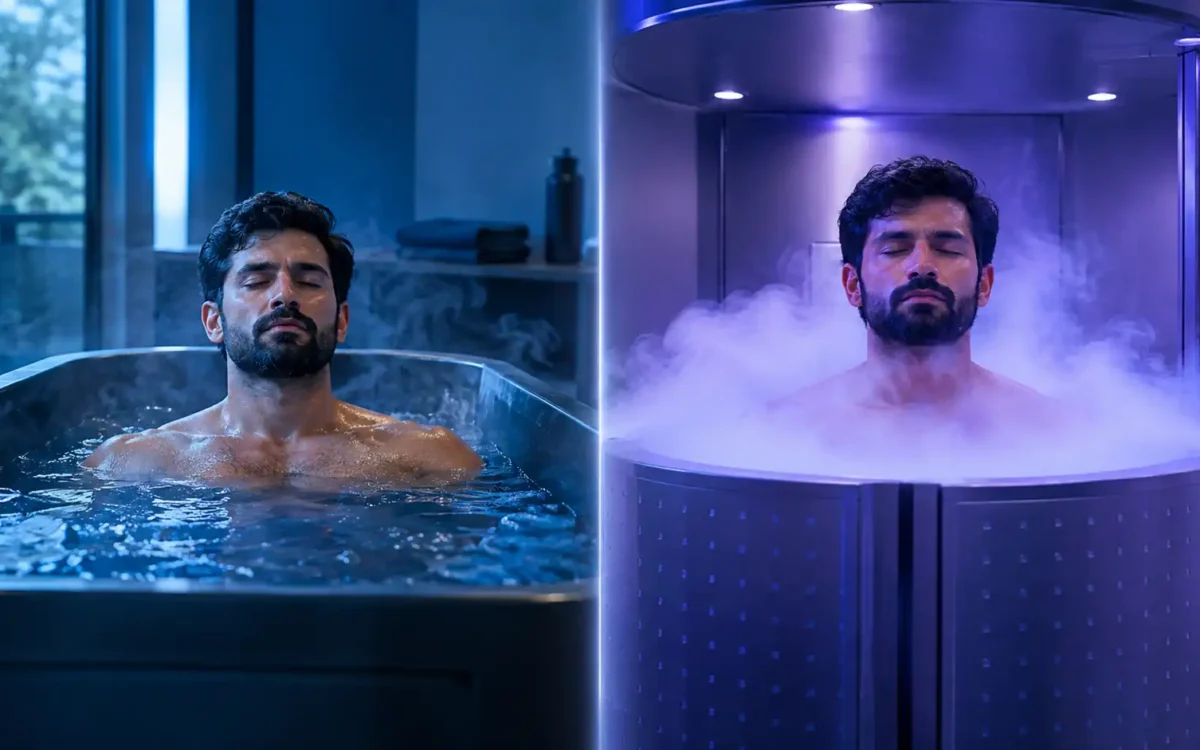
Not long ago, “cold therapy” meant one thing: a bathtub, a bag of ice, and whatever willpower you could muster. Today, the cold plunge vs cryotherapy decision is a genuinely different conversation, with a clinic-grade whole-body cryo chamber sitting as a real alternative to the water-and-ice approach that’s been around for generations. Both promise faster recovery, better mood, and reduced inflammation, but they get there through very different mechanisms, price points, and time commitments. This guide walks through exactly where they overlap, where they diverge, and which one actually fits your situation.
Cold water immersion itself dates back centuries — historical accounts describe cold bathing as a recovery and vitality practice long before any modern research existed to explain why it worked. Cryotherapy, by comparison, is a genuinely modern invention, developed in the late 1970s using specialized chambers that simply didn’t exist as a consumer option until fairly recently. That history matters practically: cold plunging has had generations to become a simple, low-tech home habit, while cryotherapy is still largely tied to clinics and specialized facilities, even as home-scale cryo devices slowly start to appear on the market.
Cold Plunge vs Cryotherapy: What’s Actually Different?
The core distinction in whole body cryotherapy vs cold plunge comes down to the medium: water versus air. A cold plunge submerges your body in water typically between 39-60°F for anywhere from thirty seconds to fifteen minutes. Cryotherapy exposes you to extremely cold, dry air — often well below -100°F — inside a chamber for a much shorter two to four minutes.
Cold Plunge
- Water immersion, 39-60°F
- Sessions: 30 sec – 15 min
- Full-body, hydrostatic pressure
- Lower ongoing cost once set up
Cryotherapy
- Cold dry air, often below -100°F
- Sessions: 2-4 min
- Skin-level cooling, no water contact
- Requires specialized chamber access
Neither approach is objectively “more extreme” — cryotherapy reaches a far lower air temperature, but cold plunge water conducts heat away from your body much faster than air does, which is why a cold plunge session can feel just as intense despite the warmer numbers on paper, even at a much less dramatic thermostat reading.
Cold Plunge vs Cryotherapy Cost: Which Is Cheaper?
For most people, this is the question that actually decides things. Which is cheaper cold plunge or cryotherapy comes down almost entirely to whether you’re paying per session or investing once.
| Factor | Cold Plunge | Cryotherapy |
|---|---|---|
| Typical cost | $1,000-$8,000 one-time (home setup) | $25-$100+ per clinic session |
| Ongoing cost | Minimal (electricity, occasional maintenance) | Adds up fast with regular use |
| Best for | Frequent, long-term home use | Occasional or trial use without commitment |
If you’re already weighing home cold plunge setup costs, our cold plunge cost breakdown goes deeper into the specific price ranges by setup type.
There’s a break-even point worth thinking through here rather than just comparing raw numbers. If you’d realistically use cryotherapy once or twice a month, the per-session model can actually work out cheaper than a home setup you barely use. If you’re aiming for two or three sessions a week, a home cold plunge typically pays for itself within the first year and keeps saving money every month after that, especially once you factor in travel time saved by not driving to a clinic.
Cold Plunge vs Cryotherapy for Muscle Recovery
Both modalities reduce delayed onset muscle soreness, and recent comparative research has found the two produce fairly comparable reductions in soreness overall — the real difference is time efficiency. Cryotherapy delivers its effect in a fraction of the session length that a cold plunge requires, which matters if you’re recovering multiple times a week and time is tight. Cold plunge, on the other hand, delivers its recovery benefit alongside a longer period of parasympathetic, “rest and digest” nervous system activation that a two-minute cryo session simply doesn’t have time to produce.
For someone training multiple times a day, like during a competition weekend, the time savings from cryotherapy can genuinely matter — squeezing in a four-minute session between events is far more realistic than a fifteen-minute plunge. For a standard single daily training session, the time difference matters far less, and the choice comes down more to personal preference and access than to any meaningful recovery gap between the two.
Cold Plunge vs Cryotherapy for Inflammation
Both are genuinely effective here, working through slightly different pathways — cold plunge relies partly on hydrostatic water pressure alongside the temperature drop, while cryotherapy relies purely on rapid skin-surface cooling. For localized inflammation, like a specific joint or muscle group, cryotherapy’s more targeted air exposure has a slight edge. For broader, whole-body inflammation after a hard training block, cold plunge’s full immersion tends to be the more practical option. Our deeper look at cold plunge and inflammation covers the water-based mechanism in more detail if that’s your main goal.
One nuance worth knowing: some clinical settings use cryotherapy specifically for post-surgical or injury-related localized swelling precisely because it can be directed more narrowly than a full-body water immersion. That’s a fairly specific use case though — for general post-workout inflammation from everyday training, either approach is a reasonable, well-supported choice.
Cryotherapy vs Cold Plunge for Anxiety and Depression
Both practices are associated with mood improvements and reduced anxiety symptoms in the people who use them regularly, largely through the same stress-hormone and nervous-system pathways. Where they tend to diverge is in the type of psychological benefit people report. Cryotherapy’s rapid, intense burst tends to produce a quick mental reset — in and out in a few minutes. Cold plunge’s longer immersion tends to build a different kind of benefit, often described as mental resilience or willpower, since you’re consciously staying present with discomfort for several minutes rather than a brief burst.
If your main goal is a fast mood lift before a busy day, cryotherapy’s speed is genuinely appealing. If you’re specifically working on building tolerance for discomfort or stress more broadly, the sustained nature of a cold plunge session gives your nervous system more time to practice staying regulated under pressure, which is a meaningfully different skill than a brief cold burst trains.
Home Cold Plunge vs Cryotherapy Clinic Sessions
This is really a question of access and lifestyle fit as much as effectiveness, and it’s worth thinking honestly about your own routine before deciding. Home cold plunge vs cryotherapy clinic sessions boils down to convenience: a home tub means no scheduling, no drive time, and unlimited use once it’s set up, while a clinic session means professional supervision and zero setup responsibility, at the cost of driving somewhere and paying every time. If your goal is a daily or near-daily habit, home cold plunge access removes the biggest barrier to consistency. If you just want to try cold therapy occasionally without commitment, a cryotherapy clinic session is the lower-friction starting point.
There’s also a supervision factor worth weighing. A cryotherapy clinic session comes with a trained operator monitoring exposure time, which can feel reassuring for a first-timer nervous about extreme cold. A home cold plunge puts that responsibility entirely on you, which is manageable once you understand basic safety guidelines, but it’s a real difference for someone who’s never tried either before.
I tried both approaches over the course of a few months out of genuine curiosity about which one I’d actually stick with. The cryo chamber sessions were oddly easy to show up for — in and out in under four minutes, almost no mental buildup required. The cold plunge sessions took more discipline to start each time, but the calm that followed lasted noticeably longer into the rest of my day. Neither one won outright; they just solved different problems depending on how much time and mental energy I had that particular morning.
By the end of that stretch, I’d settled into using cryotherapy on rushed mornings and saving the cold plunge for days when I actually had time to sit with it. That split ended up feeling far more sustainable than forcing myself to pick just one permanently.
Which One Should You Choose?
Want daily use at home
Cold plunge wins — lower ongoing cost and no scheduling barrier once it’s set up.
Want the fastest session
Cryotherapy wins — two to four minutes versus up to fifteen.
Targeting a specific joint or injury
Cryotherapy’s localized air exposure often has a slight practical edge.
Want the mental-resilience benefit
Cold plunge’s longer immersion tends to build this more directly.
Plenty of people who are serious about recovery end up using both strategically rather than picking one permanently — cryotherapy for a quick reset between training sessions, cold plunge for the deeper, longer recovery days. If you’re also comparing cold plunging against sauna-based heat therapy as part of a broader recovery stack, our cold plunge vs sauna comparison is a natural next read.
Frequently Asked Questions
Both produce fairly comparable reductions in muscle soreness. Cryotherapy is faster per session, while cold plunge adds a longer period of nervous-system recovery alongside the physical benefit.
For regular, long-term use, yes — a home cold plunge is a one-time investment with minimal ongoing cost, while cryotherapy typically charges per session, which adds up with frequent use.
For a specific, localized area, cryotherapy’s targeted air exposure has a slight edge. For broader, whole-body inflammation, cold plunge’s full immersion tends to be more practical.
Yes, many people use both strategically for different situations — there’s no established risk to using each on its own schedule, though it’s worth easing into either individually first.
Both are generally safe for healthy adults when used as directed. Cold plunge carries cold-shock and cardiac-strain considerations, while cryotherapy chambers require proper supervision to avoid frostbite from extended exposure — neither is inherently safer across the board.
If you had to pick just one for the next month, would it be the quick chamber reset or the slower water session?
There’s no universally correct answer in the cold plunge vs cryotherapy debate — just the one that fits your budget, your schedule, and the kind of recovery you’re actually chasing.

Related Articles

Cold Plunge in Winter: 7 Rules for Safe, Comfortable Outdoor Plunging
Winter Guide · Outdoor Plunging The water doesn’t care that it’s January. Everything around it does. A cold…
Read Guide
Cold Plunge vs Cold Shower: Is a Shower Really Enough?
A quick note before you read on: This article compares two wellness practices for general informational purposes and…
Read Guide
How Long Should You Cold Plunge? Duration Guide by Level and Temperature
A quick note before you read on: This article shares general, widely-used guidance on cold plunge duration for…
Read Guide