
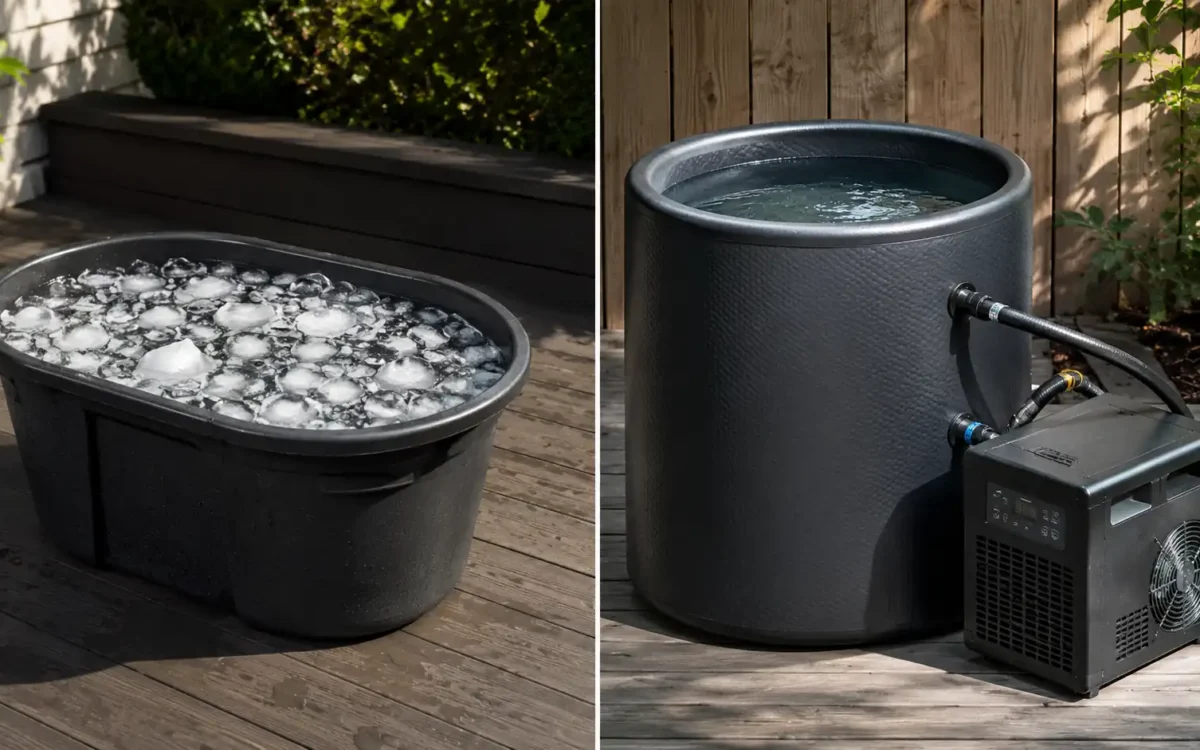
Filling a tub with tap water and dumping in a few bags of ice feels like the same thing as stepping into a purpose-built tank — so is it? The honest answer to ice bath vs cold plunge tub is that they overlap more than marketing suggests, but the differences that do exist are exactly the ones that decide whether you’ll actually keep using either one.
What Actually Separates Them
The difference between ice bath and cold plunge isn’t the water itself — it’s how that cold water is created and maintained. An ice bath is exactly what it sounds like: a container filled with water and ice, mixed by hand, used once, and drained or refreshed for the next session.
Both terms get used loosely enough in everyday conversation that people often mean the same thing without realizing it, which is exactly why a clear side-by-side comparison is more useful than another vague “which is better” debate.
A cold plunge tub, on the other hand, is a dedicated setup — usually with a built-in chiller, pump, and sometimes a filter — that holds a chosen temperature automatically, without you adding anything each time. Same underlying physiology, very different day-to-day experience.
Neither one is a shortcut or a “lesser” version of the other. They’re two different tools built around the same core idea, and the right one depends entirely on how you plan to use it.
It also helps to know that neither term is fully standardized across the industry. Some sellers use “cold plunge” loosely to describe any cold immersion practice, including a bathtub full of ice, while others reserve it strictly for a chiller-equipped tank. Knowing which one a product page actually means saves you from comparing apples to oranges when you’re shopping around.
Temperature: How Cold Is Each, Really
Ice bath vs cold plunge tub temperature is where the numbers genuinely diverge. An ice bath typically starts colder, sometimes dropping near 33–39°F right after the ice goes in, then climbs steadily as it melts. A cold plunge tub usually holds a steadier 39–55°F range the entire session.
So ice bath vs cold plunge tub which is colder depends on timing — an ice bath is often more extreme in the first few minutes, while a cold plunge stays more consistent from start to finish. That consistency matters more than the peak number for most people building a regular habit.
This is also why two people describing “the same” cold plunge experience can mean very different things. Someone comparing a five-minute ice bath to a fifteen-minute cold plunge tub session isn’t really comparing equivalent exposures, even if both technically qualify as cold water immersion.
Duration tolerance shifts with the setup too. Because an ice bath tends to start more extreme, most people naturally spend less time in it than they would in a milder, steadier cold plunge tub — which is worth remembering before assuming a shorter ice bath session is somehow “less effective.”
Location plays a role too, though it’s rarely mentioned. An ice bath left outdoors in winter can stay cold with far less added ice than the same setup in a warm garage, while a cold plunge tub’s chiller does that temperature-holding work regardless of the season or where it’s placed. That seasonal swing is one more reason people in colder climates sometimes stick with a simple ice bath year-round without ever feeling the need to upgrade.
Cost and Long-Term Maintenance
Cold plunge tub vs ice bath cost flips depending on how far out you look. An ice bath is nearly free to start — a tub and a few bags of ice — but that recurring ice cost adds up fast for anyone plunging several times a week.
A dedicated cold plunge tub costs more upfront, especially a commercial one, but running costs settle into a predictable monthly electricity bill instead of an ongoing grocery-store errand. If you’d rather build your own instead of buying either extreme, our DIY cold plunge setup guide walks through a middle-ground option that costs far less than a commercial tub. For the full financial picture across every option, our cold plunge cost breakdown lays out real numbers side by side.
| Factor | Ice Bath | Cold Plunge Tub |
|---|---|---|
| Starting Cost | Very low | Moderate to high |
| Temperature Stability | Drifts as ice melts | Holds steady automatically |
| Setup Effort Per Use | Ice needed every session | Ready anytime |
| Long-Term Cost | Adds up with frequent use | Predictable electricity cost |
| Beginner Intensity | Sharper initial shock | Slightly more moderate |
Which Is Actually Better for Recovery and Beginners
Is ice bath better than cold plunge isn’t really the right framing — both trigger the same core physiological response. The more useful question is which one you’ll actually use consistently, since ice bath vs cold plunge for recovery benefits depend far more on regular practice than on which container you chose.
For someone brand new to cold exposure, a cold plunge tub’s steadier, slightly milder range tends to be easier to start with. An ice bath’s sharper initial shock can be more intense than a first-timer expects, which sometimes turns one rough session into a reason to quit entirely.
This is worth taking seriously rather than treating as a minor detail. A single overwhelming first experience is one of the most common reasons people abandon cold exposure altogether, and starting with the gentler of the two options removes that risk almost entirely while you build confidence.
That said, plenty of experienced plungers actually prefer the sharper edge an ice bath provides once they’ve built up tolerance — it’s not a beginner-versus-expert hierarchy so much as a preference that can shift as your comfort with cold exposure grows.
It’s also worth separating personal preference from actual outcomes. Once someone is experienced enough to handle either option safely, the measurable recovery benefits tend to converge — the remaining differences come down to how each one feels, not which one works “better” in a lab sense.
Choose an Ice Bath If…
- You want to test cold exposure before investing more
- You plunge occasionally, not daily
- Budget matters more than convenience right now
Choose a Cold Plunge Tub If…
- You already know you’ll use it regularly
- Consistent temperature matters for your routine
- You’d rather not deal with ice every session
Hygiene and Upkeep Nobody Talks About
This is the part most comparisons skip. Ice bath vs cold plunge tub hygiene isn’t close — an ice bath with no filtration gets murky fast, especially with regular use, while many cold plunge tubs include filtration or can be upgraded with basic sanitizing systems.
Whichever one you choose, water sitting still for days without any treatment carries its own risks separate from the cold itself. Our guide on cold plunge safety covers the maintenance habits worth building into either setup, especially if you’re using homemade water rather than a filtered system.
Ice bath vs cold plunge tub maintenance really comes down to a simple trade: an ice bath needs less equipment but more attention each time you use it, while a cold plunge tub needs more upfront setup but far less thought once it’s running.
Water changes matter regardless of which side you land on. An ice bath is usually drained after one or two uses simply because it’s easy to, which accidentally solves part of the hygiene problem. A cold plunge tub holds the same water for weeks, which makes filtration and sanitizing a genuine requirement rather than an optional extra.
None of this is meant to talk anyone out of a cold plunge tub — it’s simply a maintenance responsibility that comes bundled with the convenience. Skipping it isn’t a minor oversight the way forgetting to add extra ice once might be; it’s the difference between clean, safe water and a tub you’d rather not think too hard about.
What My Neighbor’s Setup Taught Me
A neighbor of mine has been doing ice baths in an old horse trough for years, refilling it with bags from the gas station every other day. Watching him, I assumed he’d eventually “upgrade” to a proper tub — he never did, and honestly, his consistency put a lot of fancier setups I’ve seen to shame. It reframed the whole decision for me: the container matters less than whether you actually show up to use it.
What stuck with me most was how little the equipment mattered to his results. He’d been doing this longer and more consistently than most people I know with expensive commercial tubs sitting half-used in their garages. Consistency, not the price tag, was doing all the actual work.
Frequently Asked Questions
They rely on the same core mechanism — cold water immersion — but an ice bath is typically a manual, one-off setup, while a cold plunge usually refers to a dedicated tub with automated temperature control.
An ice bath is often colder immediately after adding ice, but the temperature rises as it melts. A cold plunge tub holds a steadier, sometimes slightly milder temperature throughout the entire session.
Upfront, yes — an ice bath costs very little to start. Over time, frequent ice purchases can approach or exceed the running cost of a chiller-equipped cold plunge tub.
Yes — an ice bath can deliver the same core benefits as a cold plunge tub. The main trade-offs are less temperature consistency and more manual effort per session.
A cold plunge tub’s milder, more consistent temperature range is generally easier for beginners than the sharper, more variable shock of a freshly iced bath.
So Which One Actually Fits Your Routine?
Before buying anything, ask yourself honestly: will you keep hauling ice every session, or would a steady, always-ready setup be the difference between doing this daily and doing it never? Either answer is a good one, as long as it’s the one you’ll actually stick with.

Related Articles

Cold Plunge in Winter: 7 Rules for Safe, Comfortable Outdoor Plunging
Winter Guide · Outdoor Plunging The water doesn’t care that it’s January. Everything around it does. A cold…
Read Guide
Cold Plunge vs Cold Shower: Is a Shower Really Enough?
A quick note before you read on: This article compares two wellness practices for general informational purposes and…
Read Guide
Cold Plunge vs Cryotherapy: Which One Is Actually Right for You?
A quick note before you read on: This article compares two wellness practices for general informational purposes and…
Read Guide