
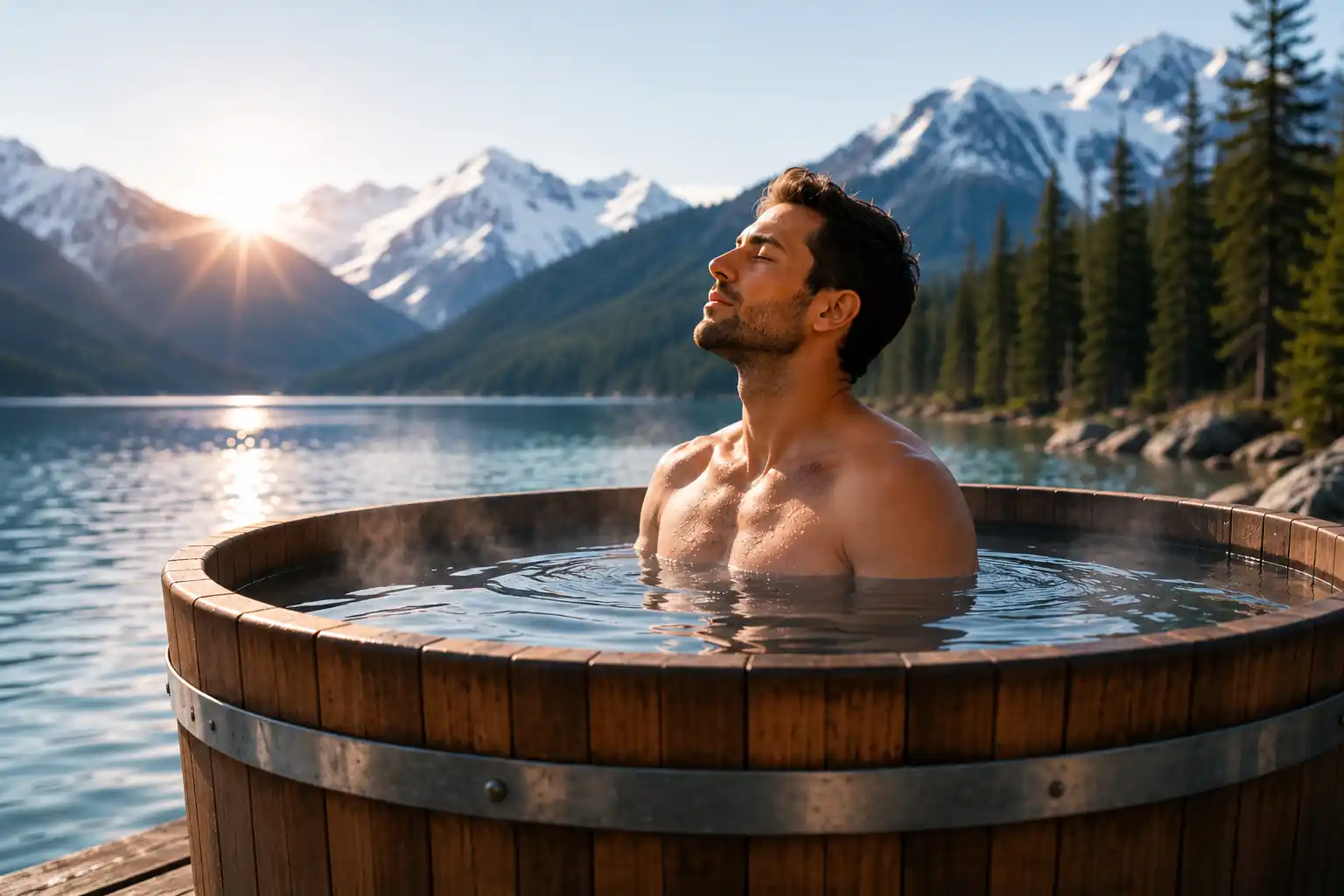
Your ice bath isn’t lying to you. The internet is.
I’ll confess something: my first year of cold plunging, I believed almost every one of these cold plunge myths. I thought colder was better, so I kept dumping ice into the tub until the thermometer read a macho 39°F. I thought longer was better, so I sat there for twelve minutes, teeth chattering, quietly proud of myself. I even told a friend my ice bath was “basically cardio.”
None of that was true. And some of it was actively working against me.
Cold plunge culture has a myth problem. The practice itself is solid — there’s real physiology behind cold water immersion, and I’ve felt the benefits in my own body for years now. But somewhere between the science and the social media, a game of telephone happened. Modest findings became miracle claims. Sensible guidelines became extreme dares. And beginners are left trying to follow rules that were never rules in the first place.
So this is my myth-busting session: nine claims I hear constantly — in comments, in DMs, at the gym — tested against actual physiology and published research. Some are harmless exaggerations. A few are genuinely counterproductive. And one or two could actually get someone hurt, which is why I’m writing this.
The short version, for the skimmers
- Colder isn’t better — 50–59°F is the sweet spot for most goals.
- Longer isn’t better — 2–5 minutes covers it; benefits plateau fast.
- Ice baths don’t melt fat or meaningfully raise testosterone.
- The gasp reflex is normal physiology, not a warning sign.
- You don’t need to plunge daily — 2–4 sessions a week is plenty.
- Shivering afterward is fine. Shivering that stops while you’re still cold is not.
- Cold plunges are safe for most people — but genuinely not for everyone.
- Myth 01 — Colder water is always better
- Myth 02 — You need 10+ minutes
- Myth 03 — Cold plunges melt fat
- Myth 04 — They massively boost testosterone
- Myth 05 — You should plunge every day
- Myth 06 — Hard shivering means it’s working
- Myth 07 — The gasp reflex means something’s wrong
- Myth 08 — Hot shower right after: required or forbidden
- Myth 09 — Cold plunges are safe for everyone
- Busted or confirmed? Your questions
MYTH 01 Colder water is always better
The logic feels airtight: if cold is good, colder must be better. This is the myth that had me dumping bag after bag of ice into my tub, chasing single digits like it was a high score.
Here’s the problem: the relationship between water temperature and benefit has sharp diminishing returns — and the costs keep climbing. Drop from 60°F to 50°F and you get a meaningfully stronger cold stimulus. Drop from 50°F to 40°F and you get… mostly just more stress. More gasping, a bigger blood pressure spike, harder shivering, and a much shorter safe window before your body starts protesting in ways that aren’t productive.
The research on cold exposure consistently points to a boring middle ground: water in the 50–59°F range, for a few minutes, done regularly. That’s cold enough to trigger the norepinephrine release, the alertness, the mood lift — the stuff people actually plunge for — without turning every session into a survival exercise. My guide on how long to cold plunge breaks down the temperature-duration tradeoff in detail, but the short version is this: the people getting the most out of cold plunging are usually the ones in the least dramatic water.
There’s also a safety angle the “colder is better” crowd skips. Very cold water dramatically amplifies the cold shock response — the gasp, the heart rate spike, the blood pressure surge. For a healthy person that’s uncomfortable; for someone with an undiagnosed heart issue, it’s a genuine risk. Chasing the coldest possible number isn’t brave. It’s just arithmetic with worse odds.
MYTH 02 You need to stay in 10 minutes or more
This one usually arrives as a humble-brag: “I do fifteen minutes at 45 degrees.” And look — if you enjoy long sessions and you’ve built up to them safely, that’s your business. But the idea that benefits only kick in after some double-digit minute mark? Not supported.
The physiological responses people plunge for — the norepinephrine spike, the dopamine lift, the alertness — begin within the first couple of minutes. The cold receptors in your skin don’t need ten minutes to file their report; they start screaming immediately. What longer durations mostly add is more shivering, more discomfort, and a bigger afterdrop to deal with when you climb out.
Think about it practically: the difference between a 3-minute plunge and a 12-minute plunge isn’t four times the benefit. It’s roughly the same core stimulus, plus nine extra minutes of your body spending energy just to stay functional. The consistent finding across cold exposure research is that regularity beats duration — three short sessions a week will do more for you than one heroic monthly ice marathon. Science communicator Andrew Huberman makes a similar point in his summary of the deliberate-cold literature: the deliberate-cold literature keeps landing on brief, repeatable exposures rather than endurance feats.
If you’re new, 2–3 minutes in 50–59°F water is a complete session. Full stop. You don’t need to earn the benefits with suffering; the cold does its work quickly.
MYTH 03 Cold plunges melt fat — “500 calories a session!”
I dedicated an entire article to cold plunge for weight loss because this myth needed the full treatment — but here’s the condensed version.
Yes, cold exposure activates brown fat, and yes, brown fat burns calories to produce heat. The mechanism is real. What’s not real is the math people attach to it. A typical short plunge burns somewhere in the tens of calories — maybe up to a couple hundred in a longer, colder, shiver-heavy session. That’s a brisk walk, not a workout. Nobody in the published literature is finding that cold water alone creates meaningful fat loss.
The “500 calories a session” figure you’ll see on social media appears to be sourced from vibes, not studies. And there’s a cruel twist the marketing never mentions: cold exposure can make you hungrier afterward. Your body spent energy defending its temperature and would very much like those calories back. If a plunge reliably leads to an extra snack, the modest burn gets wiped out fast — possibly with interest.
None of this makes plunging useless for body composition. Better recovery and better mood can support training consistency, which is what actually changes bodies. But as a fat-loss tool on its own? The tub is a supporting actor, not the lead.
MYTH 04 Cold plunges massively boost testosterone
This myth has incredible staying power, probably because it promises something people desperately want to believe: that suffering in cold water is basically legal steroids.
The reality, which I dug into in my testosterone deep-dive: cold exposure does cause a small, acute bump in certain hormones — but it’s transient, modest, and there’s no good evidence it translates into meaningfully higher baseline testosterone or any of the downstream effects people imagine (muscle growth, libido, energy). The studies that get cited are usually measuring short-term hormonal fluctuations after cold stress, not long-term hormonal profiles.
Here’s the uncomfortable truth: if cold water raised testosterone the way the memes claim, endocrinologists would be prescribing ice baths instead of TRT. They’re not.
Does that mean plunging does nothing for how you feel? Not at all — the dopamine and norepinephrine response is real, and feeling alert and capable can absolutely change your day. But that’s neurochemistry, not endocrinology. Enjoy the buzz for what it is instead of crediting it to a hormone it barely moves.
MYTH 05 You should plunge every day — more is always better
Consistency is good. Daily extremes are not the same thing as consistency.
Cold water immersion is a stressor — a hormetic one, meaning a small dose triggers beneficial adaptation, but the dose still matters. Plunging every single day, especially at aggressive temperatures and durations, doesn’t give your body the recovery window that adaptation requires. It’s like training the same muscle to failure daily and wondering why it won’t grow.
There’s also a specific, well-documented tradeoff: plunging immediately after strength training can blunt muscle and strength adaptations. The cold dampens some of the inflammatory signaling that’s part of how muscles rebuild bigger and stronger. If you’re lifting for growth and then jumping straight into the tub every day, you’re taxing the exact adaptations you’re training for.
What actually works: 2–4 sessions per week, separated from heavy lifting by several hours (or done on rest days). That’s enough to get the mood, alertness, and recovery benefits without turning a useful stressor into a chronic one. Rest isn’t laziness — it’s when the adaptation happens.
MYTH 06 If you’re shivering hard, it means it’s working
Shivering has become a weird badge of honor in plunge culture — proof you went hard enough. I used to think this way too: no shivers, no gains.
But shivering isn’t the mechanism of benefit; it’s your body’s emergency furnace. It means your core temperature has dropped enough that your muscles are contracting involuntarily to generate heat. Some shivering after a plunge is completely normal and expected — I shiver for 10–20 minutes after most sessions, and my rewarming routine is built around handling it.
The myth part is the “harder is better” framing. Violent, prolonged, uncontrollable shivering usually means you stayed in too long or went too cold for your current tolerance. It’s a signal to recalibrate, not a trophy. And there’s a genuinely important distinction: shivering that stops while you still feel cold — or shivering paired with confusion and clumsiness — isn’t “working.” It’s a warning sign that your core temperature has dropped further than your body can self-correct.
Reframe it: mild to moderate shivering after a plunge is normal physiology doing its job. Extreme shivering is feedback. Learn to tell the difference.
MYTH 07 The gasp reflex means something is wrong with you
Your first plunge: you sink to your shoulders, and your body betrays you — a huge involuntary gasp, heart hammering, every instinct screaming get out. It feels like a medical emergency. So people conclude something must be wrong with them.
Nothing is wrong with you. That’s the cold shock response, and it’s one of the most well-documented reflexes in human physiology. Cold receptors in your skin trigger an involuntary gasp, a spike in heart rate and blood pressure, and a surge of stress hormones. It’s your mammalian dive reflex’s dramatic cousin, and it happens to everyone — including experienced plungers, though it mellows with repeated exposure.
Understanding this matters because fear of the gasp keeps a lot of people out of the water unnecessarily, while misunderstanding it gets others into trouble. The gasp is normal — but it’s also why you never plunge alone in open water, and why you ease in rather than jumping. The danger isn’t the reflex itself; it’s gasping with your face underwater, or that blood pressure spike hitting a vulnerable cardiovascular system.
I wrote a full breakdown of the cold shock response if you want the physiology in detail. The takeaway: respect the gasp, don’t fear it.
MYTH 08 Hot shower right after: required or forbidden
Two opposite myths live here, and they’re both wrong. Camp one sprints from tub to scalding shower, believing aggressive rewarming “locks in” the benefits. Camp two insists any warm water afterward “cancels” the plunge entirely.
The physiology says: rewarm gradually. When you exit, your vessels are constricted and your core temperature is about to keep dropping (the afterdrop) for 10–15 minutes. Blasting yourself with very hot water causes rapid, widespread vasodilation — blood pools in the periphery, blood pressure dips, and that’s when people end up dizzy and nauseous on the shower floor. Ask me how I know.
On the other hand, the idea that a warm shower “erases” your plunge is purist nonsense. The hormonal and neurological responses happened during the immersion; a comfortable shower fifteen minutes later doesn’t reach back in time and undo them. There’s a reasonable school of thought that letting your body rewarm itself has additional adaptive value — and I do let my furnace do most of the work — but a normal warm shower after you’ve dried off and had your tea isn’t sabotage. It’s hygiene.
The actual play, from my rewarming routine: dry off immediately, change into dry clothes, move gently, have something warm to drink, and give it 10–15 minutes before the shower — starting lukewarm.
MYTH 09 Cold plunges are safe for everyone
This is the myth I take most seriously, because it’s the one that can genuinely hurt someone.
Cold water immersion is safe for most healthy people. But it is a real cardiovascular stressor: on immersion, heart rate and blood pressure spike sharply. For someone with a heart condition, uncontrolled high blood pressure, or certain other conditions, that spike isn’t a fun challenge — it’s a medical risk. There are documented cases of cardiac events triggered by cold water immersion in vulnerable individuals.
The “talk to your doctor first” list isn’t short: heart conditions, uncontrolled hypertension, Raynaud’s disease, pregnancy, epilepsy, and anyone with a history of fainting or arrhythmia. This isn’t me being alarmist — it’s the standard guidance, and the Cleveland Clinic’s overview of cold plunge safety covers it from the clinical side.
The wellness internet loves to flatten everything into “natural = safe for all.” Cold water is natural. So are lightning strikes. “Have you checked with your doctor?” is the least exciting sentence in wellness, and possibly the most important one in this article. If you’re in any risk category, my full breakdown of whether cold plunging is safe walks through the specifics — read it before you get in, not after.
🚩 The 3 myths that cost people the most
- “Colder is always better” — the injury myth. This is the one that sends people to dangerously cold water chasing a number. More cold shock, more cardiovascular strain, shorter safe windows — all for benefits that plateaued ten degrees ago. (See Myth 01.)
- “Safe for everyone” — the medical myth. The only myth on this list with genuine worst-case consequences. If you have a heart condition, high blood pressure, or any of the other risk factors, the bravado version of this myth isn’t just wrong — it’s dangerous. (See Myth 09.)
- “It melts fat / spikes testosterone” — the expectation myth. This one doesn’t injure anyone, but it quietly kills more plunge habits than anything else. People plunge for a month expecting a transformed body, see nothing, and quit — missing the real benefits (mood, alertness, recovery, discipline) that were there all along. (See Myths 03 & 04.)
Busted or confirmed? Your questions, answered
Do I really only need 2–3 minutes per plunge?
For most goals, yes. The key cold-exposure responses — norepinephrine release, alertness, mood lift — kick in within the first couple of minutes. Longer sessions add mostly discomfort and a bigger afterdrop, not proportionally more benefit. Consistency (2–4 times a week) matters far more than any single session’s duration.
Is it better to plunge in the morning or the evening?
Morning is the popular choice — the alertness effect pairs well with starting your day, and an evening plunge too close to bed can leave some people wired. That said, the “best” time is the one you’ll actually stick with. Regularity beats optimization.
Will a cold shower give me the same benefits as a plunge?
Not quite. Full immersion cools the body faster and more completely than a shower, so the physiological stimulus is stronger. A cold shower is still a legitimate (and free) starting point — it’s just a smaller dose of the same medicine.
I barely shiver after plunging — am I doing it wrong?
Not at all. Shivering varies hugely between people and depends on temperature, duration, body composition, and how adapted you are. No shivering doesn’t mean no benefit — remember, shivering is a side effect of cooling, not the mechanism of benefit. If anything, minimal shivering after a consistent routine can mean you’re adapting well.
Can I plunge twice in one day?
You can, but there’s rarely a reason to. One well-run session delivers the stimulus; a second one the same day mostly adds stress without adding adaptation. If you’re tempted to double up because the first felt “too easy,” that’s usually a sign to adjust temperature or duration slightly — not to double the dose.
What’s the single biggest mistake beginners make?
Going too cold, too long, too soon — usually all three at once, driven by Myths 01 and 02. Start at 55–60°F for 2–3 minutes, get comfortable, then adjust one variable at a time. The tortoise wins this race.
What busting these cold plunge myths changed for me
Letting go of the myths didn’t make plunging less exciting — it made it sustainable. I stopped chasing 39°F water and started enjoying 54°F water. I stopped timing twelve-minute suffer-fests and started doing crisp three-minute sessions I actually look forward to. I stopped expecting my tub to do my diet’s job and started appreciating what it genuinely gives me: the morning alertness, the mood lift, the strange satisfaction of doing something hard before breakfast.
There’s a deeper point here too. Myths persist because they flatter us — they turn a simple, effective practice into an extreme identity. But the boring version of cold plunging is the one backed by physiology: moderate cold, brief exposure, done regularly, with respect for your body’s limits. It’s less impressive on social media. It’s considerably more impressive in its actual effects.
So here’s my challenge: pick the myth you believed most strongly — be honest, we all had one — and plunge once this week as if it were false. A little warmer. A little shorter. A little less heroic. I suspect you’ll feel just as good afterward. I know I did.
Keep building your routine
→ How Long Should You Cold Plunge?Duration by level and temperature — the sensible numbers behind Myths 01 and 02.
→ Is Cold Plunge Safe?What the research actually says — the full story behind Myth 09.
→ Cold Plunge for Weight LossThe honest brown-fat science behind Myth 03.
I’m a cold plunge enthusiast who writes about this every day — not a doctor, and this isn’t medical advice. Cold water immersion is a genuine physiological stressor: it spikes blood pressure, loads the cardiovascular system, and isn’t appropriate for everyone. Heart conditions, pregnancy, Raynaud’s, and several other conditions warrant a doctor’s sign-off before you plunge. Everything here reflects my personal experience and published research as I understand it. If something feels wrong — dizziness, chest pain, confusion — get warm and get medical help rather than consulting a blog. Listen to your body first, and your favorite internet plunge guy second.

Related Articles

Cold Plunge for Face: 7 Benefits of Face Icing (What Science Actually Says)
Benefits & Science · Skin Edition Your face is about to meet its coldest friend. Face icing is…
Read Guide
Cold Plunge and Cortisol: 7 Science-Backed Facts About Stress Hormones
Stress Hormones · Benefits & Science Is your ice bath calming you down — or secretly stressing you…
Read Guide
Cold Plunge and Brown Fat: The Honest Science on Weight Loss and Metabolism
Medical Disclaimer: This article is for general information only and is not medical advice. Talk to a qualified…
Read Guide