
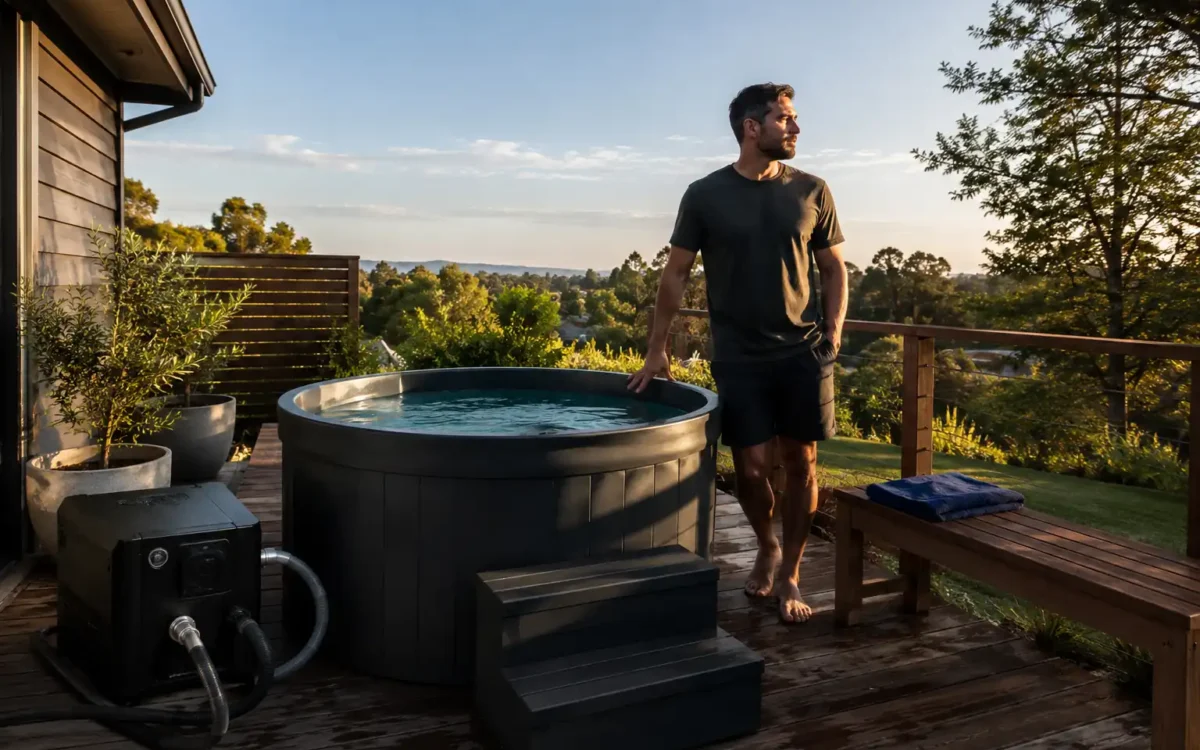
Somewhere between a viral wellness trend and a genuinely studied recovery practice sits cold plunge therapy — and most guides only cover one narrow slice of it. This cold plunge therapy guide is meant to be the opposite: a single, complete resource that walks through what it actually is, how it works, how to start safely, and where to go next depending on what you’re trying to get out of it.
What’s in this guide
- What Is Cold Plunge Therapy?
- How It Works on the Body
- Getting Started Safely
- Ideal Temperature and Duration
- Who Should Be Cautious or Avoid It
- Gear: Ready-Made vs. DIY
- Common Mistakes to Avoid
- Cold Plunge vs. Other Recovery Methods
- Cost Breakdown Overview
- Building a Sustainable Routine
- Frequently Asked Questions
What Is Cold Plunge Therapy?
What is cold plunge therapy, in plain terms? It’s the practice of deliberately immersing your body in cold water — usually somewhere between 39°F and 59°F — for a short, controlled period of time, done specifically to trigger the body’s cold-shock and recovery responses rather than as an accident of weather or circumstance.
The practice itself isn’t new. Cultures around the world have used cold water immersion for centuries, from traditional Nordic and Russian bathing customs to modern athletic recovery protocols. What’s changed recently isn’t the core idea — it’s the accessibility. Dedicated tubs, home chillers, and a much larger body of casual research coverage have turned something that used to require a frozen lake into something you can do in a converted stock tank in your garage.
It’s worth being precise about terminology here too, since “cold plunge,” “ice bath,” and “cold water immersion therapy” get used almost interchangeably online. They all describe the same underlying mechanism — cold water triggering a physiological response — even though the specific setup, temperature, and duration can vary quite a bit between them.
It also helps to separate cold plunging from related but distinct practices like cryotherapy chambers, which use cold air rather than water, and localized ice application, which targets a specific injury rather than the whole body. All of these fall under the broader “cold therapy” umbrella, but the full-body water immersion version is what most people mean when they talk about cold plunging specifically, and it’s the version this guide focuses on.
A reasonable way to think about where cold plunging fits into a broader wellness picture: it’s neither a cure-all nor a gimmick, but a specific, physical stressor that the body responds to in fairly predictable ways. Understanding those responses — rather than just following whatever routine looks impressive online — is what turns cold plunging from a novelty into something genuinely useful.
How It Works on the Body
How does cold plunge therapy work, physiologically? The short version: cold water on your skin triggers rapid vasoconstriction, a spike in stress hormones like norepinephrine, and an activation of your sympathetic nervous system — the same “alert” system responsible for the classic fight-or-flight response, just triggered on your own terms rather than by an actual threat.
That controlled stress response is the entire mechanism behind most of what people report from the practice: sharper alertness, a mood lift, and — with consistent practice over time — a nervous system that appears to handle everyday stress a little more smoothly. Some research also points to short-term reductions in inflammatory markers and muscle soreness following exercise, though results vary across studies and individuals.
This article intentionally keeps the science at a summary level, since a full breakdown deserves its own space — what the science says about cold plunge benefits goes much deeper into the specific studies, numbers, and caveats behind these claims, including where the evidence is strong and where it’s still developing.
It’s worth understanding that not all of this response happens during the plunge itself. A meaningful portion of what people notice — the mood lift, the alertness, the sense of calm afterward — actually unfolds in the minutes and hours following a session, as your body works to rewarm and your nervous system settles back down from the acute stress response. This is part of why judging a single session too quickly, before that full arc has played out, can lead to an incomplete picture of what the practice actually does.
There’s also a training effect worth mentioning. Repeated, controlled exposure to a stressor your body can recover from relatively quickly appears to build a kind of resilience that some researchers describe as stress inoculation — practicing a manageable version of stress on your own terms, which may make unrelated, unavoidable stressors easier to handle over time. The evidence for this is still developing, but it’s a genuinely interesting area of ongoing research.
Getting Started Safely
For cold plunge for beginners, the single biggest predictor of a good first experience is starting far milder than you think you need to. A common mistake is copying an experienced plunger’s routine on day one — sitting in near-freezing water for several minutes — when their tolerance took weeks or months to build.
A more realistic starting point looks like a brief session, somewhere in a moderate range, focused on staying calm and breathing steadily rather than gritting your teeth through discomfort. Progress from there gradually: a little colder or a little longer every week or two, not both at once.
We’ve written a full walkthrough of this exact process — how to start cold plunging covers the step-by-step version of everything summarized here, including breathing technique, session length, and how to know when you’re ready to progress.
Breathing deserves a specific mention here, since it’s one of the most common places beginners struggle. The instinct when cold water hits is to gasp and breathe fast and shallow — which is completely normal, but also exactly what makes the experience feel more overwhelming than it needs to. Slowing your exhale, even deliberately extending it longer than your inhale, tends to calm that instinctive panic response faster than trying to power through it.
It’s also worth having a plan for your very first session rather than improvising once you’re already in the water. Deciding in advance roughly how long you’ll stay, having a towel and warm clothes ready before you get in, and telling someone you’re doing it are all small steps that make the first attempt noticeably less stressful.
Ideal Temperature and Duration
There’s no single universal number here, since ideal cold plunge temperature depends heavily on your experience level and your specific goal — general wellness, athletic recovery, or building tolerance over time all point toward slightly different ranges.
These ranges are starting reference points, not fixed rules — individual tolerance varies quite a bit. For a full breakdown by goal and experience level, the right temperature for your goals covers this in much more detail, including how duration and temperature trade off against each other.
Temperature and duration work together rather than independently — a slightly warmer session held a bit longer can produce a fairly similar experience to a colder, shorter one. This gives you more flexibility than a single fixed number might suggest, especially if you’re working with whatever water temperature your setup happens to produce on a given day rather than a precisely controlled chiller.
It’s also worth resisting the urge to chase the coldest possible number as some kind of achievement. Past a certain point, additional cold adds more risk than benefit without meaningfully improving the outcome, which is part of why even experienced plungers often settle into a moderate, sustainable range rather than constantly pushing colder.
Who Should Be Cautious or Avoid It
Cold plunging isn’t universally appropriate, and being upfront about that is part of doing this responsibly. People with certain heart conditions, uncontrolled high blood pressure, Raynaud’s disease, or who are pregnant are generally advised to be significantly more cautious, and in some cases to avoid it entirely without direct medical clearance.
We’ve covered specific risk groups in dedicated detail elsewhere on the site — who should avoid cold plunging walks through the complete list of risk factors and warning signs worth knowing before you start, regardless of how healthy you currently feel.
Beyond diagnosed conditions, there are situational reasons to skip a session too — being significantly sleep-deprived, having consumed alcohol, or feeling unusually unwell all change how your body handles the cold-shock response, and none of them are permanent disqualifiers, just reasons to wait for a better day.
Age is worth a brief mention as well. Older adults aren’t automatically excluded from cold plunging, but age-related changes in cardiovascular function mean the same general caution that applies to anyone with heart-related risk factors applies here too — starting milder, progressing more slowly, and getting medical input beforehand is simply good practice rather than an overreaction.
Gear: Ready-Made vs. DIY
You don’t need much to start — a large enough container, cold water, and a way to make it colder if you want more than what your tap provides. From there, options range from simple to elaborate.
Ready-made tubs offer convenience: built-in insulation, sometimes a chiller, and no assembly required beyond filling them with water. The gear you actually need breaks down what’s genuinely useful versus what’s just upsell, if you’re leaning toward buying rather than building.
On the other end, a growing number of people build their own setup using a stock tank, a pump, and either ice or a dedicated chiller — often for a fraction of the cost of a commercial unit. Building a DIY cold plunge setup walks through exactly how that process works, from choosing a base to wiring in temperature control.
Neither path is inherently better — it genuinely comes down to how much you value convenience versus cost savings, and how comfortable you are with a bit of hands-on assembly. Someone testing whether cold plunging is even a habit they’ll keep might reasonably start with the cheapest possible option, while someone already certain they’ll use it daily might find the upfront cost of a ready-made unit worth the reduced ongoing effort.
Whichever path you choose, a few features matter more than the rest: reliable filtration, a stable non-slip base, and some form of temperature control you can actually count on session to session. Everything beyond that — app connectivity, premium finishes, elaborate lighting — is convenience layered on top of the core function, not something the practice actually requires.
Common Mistakes to Avoid
Most cold plunging setbacks aren’t dramatic — they’re small, repeated habits that quietly undermine the practice. Starting too cold too fast, staying in far longer than necessary, plunging completely alone, and ignoring genuine warning signs like dizziness or numbness are among the most common.
Common mistakes beginners make also include poor timing — jumping in immediately after an intense workout when muscle-building is the actual goal, or plunging right before bed and ending up too alert to sleep. Our dedicated breakdown, common mistakes beginners make, goes through each of these in more depth, along with the simple fixes for each one.
Breathing mistakes deserve a second mention here too, since they compound so many of the others. Gasping, holding your breath, or tensing up in response to the cold keeps your body locked in a heightened stress state rather than letting it settle, which makes an otherwise manageable session feel far more overwhelming than it needs to.
Perhaps the most overlooked mistake is inconsistency — going all-in for a week, stopping for a month, then starting over from scratch. The nervous system adapts to a repeated, predictable pattern far better than it does to sporadic extreme sessions, which is part of why a modest routine sustained over months tends to outperform an intense one abandoned after a few weeks.
Cold Plunge vs. Other Recovery Methods
Cold plunging doesn’t exist in isolation — it’s often compared to, or combined with, several related practices, and knowing the actual differences helps avoid some common confusion.
| Practice | Core Difference From Cold Plunging |
|---|---|
| Sauna / Contrast Therapy | Uses heat instead of (or alongside) cold; different physiological pathway |
| Ice Bath | Same mechanism, typically less temperature-stable than a dedicated tub |
| Wim Hof Method | Adds a specific breathing protocol and mindset framework on top of cold exposure |
If you’re deciding whether to combine cold plunging with heat exposure, how it compares to sauna and contrast therapy covers the sequencing and timing considerations in detail. If you’re weighing a simple ice-filled tub against a dedicated, temperature-controlled unit, ice bath versus a dedicated cold plunge tub breaks down that decision. And if you’ve heard about pairing cold exposure with specific breathing exercises, how it differs from the Wim Hof Method covers exactly where the two overlap — and one important safety distinction worth knowing before combining them.
None of these practices are strictly competitive with one another — plenty of people rotate between a sauna session one day and a cold plunge the next, or use a simple ice bath most of the week while saving a dedicated tub session for when consistency really matters. Treating these as complementary tools rather than rival methods tends to be the more useful mindset, since the right choice often depends on the day, the goal, and what’s actually available to you rather than which practice is objectively “best.”
Cost Breakdown Overview
Budgets in this space vary enormously, from essentially free — a bathtub and a few bags of ice — up to several thousand dollars for a fully integrated, chiller-equipped system. Neither extreme is objectively “correct”; the right choice depends on how often you’ll actually use it and what convenience is worth to you.
Rather than repeat the full numbers here, what it actually costs to get started lays out real pricing across every tier — DIY, budget commercial, and premium — so you can compare against your own situation instead of a single marketing price point.
It’s worth remembering that upfront cost isn’t the whole picture either. Ongoing expenses — ice, electricity for a chiller, water treatment supplies, or the occasional replacement part — add up differently depending on which route you took, and factoring those into your decision upfront tends to prevent an unpleasant surprise a few months in.
If budget is the main barrier standing between you and trying this at all, it’s worth remembering that the cheapest possible version — a cold shower, or a bathtub with ice from the freezer — still delivers the core physiological response the entire practice is built around. The upgrades add convenience and comfort, not a fundamentally different experience.
Building a Sustainable Routine
The single biggest factor separating people who stick with cold plunging long-term from people who quit after two weeks isn’t tolerance, willpower, or even the equipment — it’s consistency at a manageable intensity. A moderate routine you’ll actually repeat beats an extreme one you’ll dread.
Most sustainable routines settle into two to four sessions a week, at a temperature and duration that feels challenging but not miserable. Treating early sessions as calibration rather than a test you can fail tends to make the difference between building a lasting habit and giving up after one rough morning.
Anchoring the habit to something you already do consistently — right after your morning coffee, right before your usual shower, immediately following a workout you already have scheduled — tends to work better than treating it as a standalone commitment that needs its own dedicated willpower every single day. Habits that piggyback on existing routines survive busy weeks far better than ones that require a separate decision each time.
It’s also worth revisiting your routine periodically rather than locking it in permanently on day one. What felt appropriately challenging in your first month may feel too easy six months later, and adjusting temperature, duration, or frequency as your tolerance changes keeps the practice from going stale or plateauing.
Finally, it’s worth tracking something simple — even just a quick note on how you felt afterward — since memory alone tends to smooth over the actual pattern of results over time. A few weeks of honest notes will tell you more about whether this practice is working for you than any single dramatic session ever could.
Why This Site Exists in the First Place
This entire guide grew out of a much simpler starting point: trying to find one place that explained cold plunging honestly, without either dismissing it as a fad or overselling it as a miracle cure. Most of what was out there fell into one of those two camps, and neither one was particularly useful for someone just trying to figure out whether this practice was worth their time. Building out a resource that treats the topic with the same mix of curiosity and skepticism a careful person would bring to it themselves felt like the more honest approach — and it’s the same standard every article linked throughout this guide is written to.
That approach means some sections here read more cautious than the average cold-plunge headline you’ll find elsewhere, and that’s intentional. A practice that genuinely helps a lot of people doesn’t need exaggerated claims to justify itself — it just needs an honest accounting of what it does, what it doesn’t do, and who should think twice before trying it. If this guide has done its job, you should walk away with a clearer, more grounded picture than when you started, whether or not you ever fill a tub with cold water.
Frequently Asked Questions
Cold plunge therapy is the practice of deliberately immersing the body in cold water for a short period to trigger a controlled stress response, typically used for recovery, mood, and general wellness purposes.
Most sessions range from one to five minutes depending on temperature and experience level, with beginners generally starting shorter and milder before gradually progressing.
No — people with certain heart conditions, uncontrolled blood pressure, Raynaud’s disease, or who are pregnant are generally advised to exercise significant caution or avoid it without medical clearance first.
Two to four sessions a week is a common, sustainable frequency for most people, though this can vary based on individual goals and how the body responds over time.
Commonly reported benefits include improved mood, reduced muscle soreness after exercise, and better stress resilience over time, though individual results and the strength of supporting evidence vary by benefit.
No — a bathtub, a large container, or even a cold shower can work as a starting point. Dedicated tubs and chillers add convenience but aren’t required to begin.
Beginners generally do best in the 55–60°F range, with more experienced plungers often working down toward 39–45°F, depending on tolerance and goals.
Where Should You Start From Here?
If you’re brand new to this, the safety and getting-started sections above are the two worth reading again before anything else — everything else on this page will still be here once you’re actually in the water.

Related Articles
Cold Plunge in Winter: 7 Rules for Safe, Comfortable Outdoor Plunging
Winter Guide · Outdoor Plunging The water doesn’t care that it’s January. Everything around it does. A cold…
Read Guide
Cold Plunge vs Cold Shower: Is a Shower Really Enough?
A quick note before you read on: This article compares two wellness practices for general informational purposes and…
Read Guide
Cold Plunge vs Cryotherapy: Which One Is Actually Right for You?
A quick note before you read on: This article compares two wellness practices for general informational purposes and…
Read Guide