
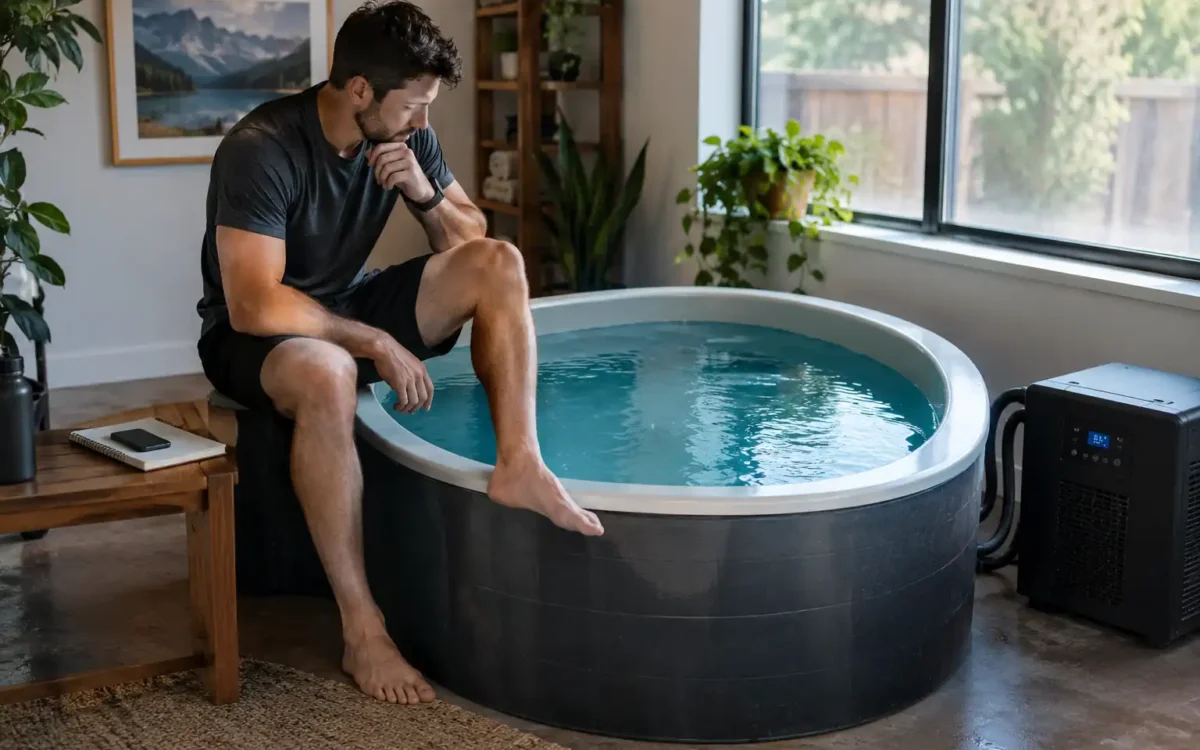
Most articles about cold water pick a side before they’ve even started writing — either it’s presented as a miracle recovery tool, or it’s dismissed as an overhyped trend with no real science behind it. A serious look at cold plunge benefits and risks has to hold both of those threads at once, because the honest picture sits somewhere in between, and treating it otherwise does readers a disservice.
This isn’t a small distinction. A one-sided benefits list makes a genuinely useful practice sound like a miracle cure, which sets people up for disappointment or, worse, encourages them to ignore real warning signs because the source they trusted never mentioned any downside existed. A one-sided risk list does the opposite damage, scaring people away from something that could reasonably help them, based on worst-case scenarios that apply to a small minority of situations.
This piece is written for two overlapping readers: someone who’s curious but hasn’t tried cold plunging yet and wants a realistic picture before they start, and someone already plunging who wants to understand what’s actually happening in their body beyond the surface-level explanations most content settles for. Both should walk away with a clearer, more calibrated sense of what this practice can and can’t do.
The goal of this breakdown is to sit in the middle deliberately — giving benefits and risks roughly equal space, equal scrutiny, and the same standard of evidence. Where the science is solid, we’ll say so plainly. Where it’s thin, we’ll say that too, even if it makes for a less exciting headline.
What’s in this breakdown
- Physical Benefits
- Mental and Mood Benefits
- Benefits That Are Overhyped or Unproven
- Known Risks and Side Effects
- Who Should Avoid It or Get Medical Clearance First
- Mistakes That Turn a Safe Practice Into a Risky One
- Getting the Benefits While Minimizing Risk
- What the Evidence Actually Says
- Frequently Asked Questions
Physical Benefits
The most consistently reported physical effect is a short-term reduction in muscle soreness following intense exercise. Cold-induced vasoconstriction reduces blood flow to inflamed tissue temporarily, which appears to ease some of the discomfort that shows up a day or two after a hard workout.
Circulation is another commonly cited area, though the mechanism is more nuanced than most summaries suggest. The alternating constriction and dilation of blood vessels during and after cold exposure may support vascular flexibility over time, though this effect is more consistently observed with repeated practice than from a single session.
Inflammation deserves its own mention, since it’s one of the more researched angles in this space. We’ve covered its effect on inflammation in a dedicated breakdown, including how long the anti-inflammatory window actually lasts and where the evidence gets less certain the further you push past general soreness relief.
For a broader look at physical benefits beyond what fits here, the full research breakdown on cold plunge benefits goes into specific studies, sample sizes, and the numbers behind claims we’re only summarizing in this overview.
Skin and recovery from minor physical stress are worth a brief mention too, though the evidence here is thinner than for soreness reduction. Some people report improved skin tone and reduced puffiness after regular cold exposure, plausibly linked to the same vasoconstriction-and-rebound-dilation cycle involved in muscle recovery, though this specific application hasn’t been studied nearly as thoroughly as post-exercise soreness has.
Immune function is another area that generates a lot of enthusiasm online, often citing a small, frequently referenced study involving trained practitioners who could influence certain immune markers through a combination of cold exposure and specific breathing techniques. It’s a genuinely interesting result, but it involved a small, specially trained group rather than the general population doing occasional cold plunges, so extrapolating it into “cold plunging boosts your immune system” for anyone who tries it overstates what that particular research actually showed.
Mental and Mood Benefits
This is where cold plunge therapy benefits get discussed most enthusiastically online, and for reasonable cause — the neurochemical response is genuinely well-documented. Cold exposure triggers a measurable release of dopamine and norepinephrine, chemicals tied directly to alertness and mood.
What’s less commonly explained is the timing. This isn’t a spike-and-crash effect; the lift tends to build gradually and can remain elevated for a couple of hours after a session, which is part of why people often describe feeling calmer or more focused well after they’ve toweled off, not just in the moment.
Sleep is a related area worth calling out specifically. How it affects sleep quality has its own dedicated coverage, since the timing of a session relative to bedtime changes the outcome meaningfully — a session too close to sleep can backfire, while one a couple of hours earlier tends to align with the body’s natural cooling signal before rest.
There’s also a stress-resilience angle that’s harder to measure but frequently reported by people who plunge consistently over months rather than weeks. The theory researchers point to is a kind of controlled-stress training effect — repeatedly practicing a manageable, self-chosen version of the body’s stress response may make unrelated, unavoidable stressors feel somewhat easier to handle. This is a genuinely promising area, but it’s also one where self-reported experience currently outpaces the controlled research confirming it at scale.
Cortisol is worth untangling here too, since it gets described inconsistently. The initial cold shock does spike cortisol briefly, which sounds counterproductive for stress relief. But that spike tends to resolve quickly, and with regular practice, some research suggests baseline cortisol over time can trend lower rather than higher — a pattern closer to exercise-induced stress than chronic, unmanaged stress.
Benefits That Are Overhyped or Unproven
Is cold plunge good for you across every claim attached to it online? No — and this is the section most wellness content skips entirely. Several popular claims outpace what the current evidence actually supports.
The body already handles detoxification through the liver and kidneys; cold water doesn’t add a meaningful additional pathway.
Some calorie expenditure occurs from shivering thermogenesis, but the effect is modest and not a substitute for diet or exercise.
Anecdotal reports exist for various conditions, but robust clinical evidence for treating diagnosed illness is largely absent.
None of this means cold plunging is worthless — it means the honest version of its benefit list is shorter and more specific than the version that tends to go viral. Overselling a practice with real, narrower benefits usually backfires once people notice the gap between promise and result.
Cold plunge myths vs facts is worth thinking about as a general filter for anything you encounter about this practice, not just the three examples above. A useful rule of thumb: claims that sound almost too convenient — fixing multiple unrelated problems at once, working identically for everyone, or requiring no adjustment period — are worth extra scrutiny before accepting them at face value.
It’s also worth noting that “unproven” and “definitely doesn’t work” aren’t the same category. Some of these claims may eventually gain stronger support as research catches up; others may simply reflect enthusiasm outpacing evidence permanently. The honest position right now is uncertainty, not a firm verdict in either direction.
Known Risks and Side Effects
Cold plunge side effects range from mild and expected to genuinely serious, and the difference usually comes down to individual health factors and how the session is approached. On the mild end: numbness, prolonged shivering, and skin redness are common and typically resolve on their own.
More serious risks include cardiovascular strain from the sudden spike in heart rate and blood pressure that cold shock triggers, a risk of fainting or disorientation during the initial shock response, and in rare cases, dangerous drops in body temperature with prolonged exposure.
Stop a session immediately if you notice:
- Chest pain, tightness, or a racing, irregular heartbeat
- Dizziness, confusion, or fainting
- Numbness that doesn’t ease shortly after exiting
- Uncontrollable shivering that doesn’t settle with rewarming
Complete safety guidelines cover this territory in far more depth, including how to build a session plan that reduces these risks from the start rather than reacting to them after the fact.
Cold shock response deserves its own explanation, since it’s the root cause behind most of the acute risks on this list. The moment cold water hits your skin, your body triggers an involuntary gasp reflex, rapid breathing, and a spike in heart rate — a survival response that evolved for sudden accidental immersion, not a deliberately chosen wellness practice. Understanding that this reaction is automatic, not a sign you’re doing something wrong, helps explain why breathing control matters so much in the first several seconds of any session.
Skin and nerve-related side effects are less discussed but still worth knowing. Frostnip or localized cold injury is possible with prolonged exposure to very cold water, particularly in extremities with reduced circulation. This is uncommon with typical short sessions but becomes more relevant the longer and colder a session gets, especially for anyone with pre-existing circulatory issues.
Who Should Avoid It or Get Medical Clearance First
Certain groups face meaningfully higher risk and are generally advised to seek medical guidance before attempting cold plunging at all, rather than easing in cautiously on their own. Cold plunge and heart conditions covers this overlap directly — the same cardiovascular response that produces mood benefits for most people places real strain on a heart that’s already compromised.
Pregnancy is another area where the research is still limited and caution is the prevailing recommendation. Cold plunge during pregnancy walks through the specific concerns, including circulatory changes and the current, still-developing state of the evidence.
Beyond these two groups, anyone with uncontrolled blood pressure, a history of fainting, Raynaud’s disease, or a recent illness should treat this as a conversation to have with a doctor rather than a decision to make from a blog post alone.
Age is a factor worth mentioning too, though it isn’t an automatic disqualifier. Older adults aren’t excluded from cold plunging by default, but age-related changes in cardiovascular function mean the same caution that applies to anyone with heart-related risk factors applies here as well — starting milder, progressing more slowly, and getting medical input beforehand rather than assuming general fitness translates directly into cold tolerance.
It’s worth being clear about what “medical clearance” actually means in practice too. It isn’t a formality to check off before doing whatever you were already planning — it’s a genuine conversation where a doctor who knows your specific health history, current medications, and risk factors weighs in on whether cold exposure fits safely into your situation, and if so, what limits make sense.
Mistakes That Turn a Safe Practice Into a Risky One
Most injuries and bad experiences with cold plunging don’t come from the practice itself — they come from a handful of preventable habits. Mistakes that increase risk covers this ground thoroughly, but a few are worth naming directly here: starting far too cold, staying in far too long, plunging completely alone, and ignoring early warning signs because they don’t feel dramatic yet.
Timing mistakes matter too. Jumping in immediately after intense strength training can blunt some of the adaptation signal the workout was meant to trigger, and a session too close to bedtime can leave someone more alert than relaxed, working against the exact outcome they wanted.
Inconsistency is a subtler mistake that doesn’t get flagged as often. Going all-in for a week, stopping entirely for a month, then restarting from scratch means the nervous system never gets the repeated, predictable signal it actually adapts to. A modest, sustained routine tends to outperform an intense one that gets abandoned after a rough first attempt, both for safety and for the benefits people are actually chasing.
Breathing mistakes deserve one more mention here as well, since they compound nearly every other risk on this list. Gasping, holding your breath, or tensing up in response to the cold keeps the body locked in a heightened stress state rather than letting it settle, which makes an otherwise manageable session feel far more dangerous than it actually is.
Getting the Benefits While Minimizing Risk
Most of what separates a safe, beneficial practice from a risky one comes down to a few controllable variables: temperature, duration, and how gradually you progress. Using the right temperature for your specific goal and experience level, rather than chasing the coldest number available, does more to manage risk than almost anything else.
Starting safely as a beginner means easing in over weeks rather than days, keeping early sessions brief, and treating the first few attempts as calibration rather than a test of toughness. Consistency at a moderate intensity outperforms occasional extreme sessions for nearly every benefit discussed in this article.
Having a plan before you get in the water matters more than most people expect. Knowing roughly how long you intend to stay, having warm clothes and a towel ready before you start, and never plunging completely alone are small precautions that dramatically reduce the odds of a minor issue turning into a genuine emergency.
It’s also worth building in a regular check-in with yourself as you progress. What felt appropriately challenging in your first few weeks may feel too easy a few months later, and adjusting gradually as tolerance builds — rather than jumping straight to the coldest, longest session you can tolerate — keeps the risk-to-benefit ratio in your favor at every stage rather than just at the beginning.
What the Evidence Actually Says
Not every claim attached to cold plunging rests on the same quality of evidence, and being upfront about that difference is part of giving readers an honest picture rather than a marketing one.
Well-supported by research
- Short-term reduction in muscle soreness after exercise
- Measurable dopamine and norepinephrine release
- Acute stress-hormone and heart-rate response
Promising, still developing
- Mood and stress-resilience benefits with regular practice
- Some inflammatory marker reductions
- Sleep quality improvements with correct timing
Anecdotal or unproven
- Meaningful weight loss
- “Detoxification” claims
- Treatment of diagnosed chronic illness
Does cold plunge really work? For the claims in the strong and moderate columns, the honest answer is yes, with reasonable confidence, for many people. For the claims in the limited column, the fair answer is “not established,” which is different from “definitely false” — it simply means the research hasn’t caught up to the popularity yet.
Sample size and study design matter more than most casual summaries acknowledge. Many cold-exposure studies involve a few dozen participants over a few weeks, which is enough to identify a genuine effect worth investigating further, but not enough to make sweeping population-wide claims with total confidence. This is normal for an emerging area of research, not a reason to dismiss it outright — it’s simply a reason to hold conclusions a little more loosely than headlines typically do.
It’s also worth remembering that individual variation is real and expected. Two people doing the exact same protocol can have meaningfully different experiences based on baseline health, genetics, stress levels, and simple day-to-day variability. Averaged study results describe a general tendency, not a guarantee for any specific person reading them.
What Reading Through the Actual Studies Taught Me
Going into the research for this piece, I expected to find either overwhelming proof or a complete lack of it — the internet tends to frame things that starkly. What I found instead was a lot of small, genuinely careful studies with modest sample sizes, honest limitations sections, and conclusions far more hedged than the headlines built around them. That gap between how research actually talks about itself and how it gets summarized online was the most useful thing this process taught me, and it’s the reason this article leans so heavily on qualifiers like “may” and “appears to” rather than firm claims.
There was one recurring pattern that stood out more than any individual study result: nearly every researcher, regardless of which specific benefit they were studying, included some version of the same caution — that more research with larger groups was needed before drawing firm conclusions. Seeing that same honest hedge repeated across dozens of otherwise unrelated papers said more about the current state of this field than any single finding did.
Frequently Asked Questions
The most consistently supported benefits include short-term reduced muscle soreness after exercise and a measurable release of mood-related neurochemicals like dopamine and norepinephrine.
Yes — cardiovascular strain, fainting, and in rare cases dangerous drops in body temperature are genuine risks, particularly for people with existing heart conditions or other risk factors.
Only modestly, through shivering-related calorie burn. It isn’t a reliable or significant weight loss method on its own and shouldn’t replace diet or exercise for that goal.
Some claims are well-supported, particularly around soreness reduction and mood chemistry, while others remain anecdotal. The strength of evidence varies significantly by specific claim.
People with heart conditions, uncontrolled blood pressure, Raynaud’s disease, or who are pregnant should get medical clearance first, as should anyone with a history of fainting.
Many people report meaningful mood benefits, supported by measurable neurochemical changes, though individual results vary and it shouldn’t replace therapy or medication for diagnosed conditions.
Yes — starting too cold, staying in too long, plunging alone, or ignoring warning signs can turn an otherwise safe practice into a genuinely risky one.
Which Side of This Balance Sheet Matters More to You?
Our complete guide to cold plunge therapy pulls every piece of this together into one starting resource — worth a look if you’re still deciding whether the benefits outweigh the risks for your specific situation.

Related Articles
Cold Plunge and Cortisol: 7 Science-Backed Facts About Stress Hormones
Stress Hormones · Benefits & Science Is your ice bath calming you down — or secretly stressing you…
Read Guide
Cold Plunge and Brown Fat: The Honest Science on Weight Loss and Metabolism
Medical Disclaimer: This article is for general information only and is not medical advice. Talk to a qualified…
Read Guide
Cold Plunge for Athletes: Recovery, Timing, and Performance Guide
A quick note before you read on: This article shares general training and recovery guidance and isn’t medical…
Read Guide