
These cold plunge maintenance tips will help you keep your tub clean, safe, and running well for years. Most people spend weeks researching which cold plunge tub to buy, then almost no time thinking about what happens after it’s sitting in the garage full of water. That’s usually where things go wrong. The tub itself rarely fails first — the water does. It sits, it collects body oils and sweat, and within a week or two it can go from “fine” to “why does this smell strange” without anyone noticing the in-between stage. Good cold plunge maintenance isn’t complicated, but it does need to be consistent, and that’s the part most beginners underestimate.
Daily Cold Plunge Maintenance Tips: The Habit That Prevents Most Problems
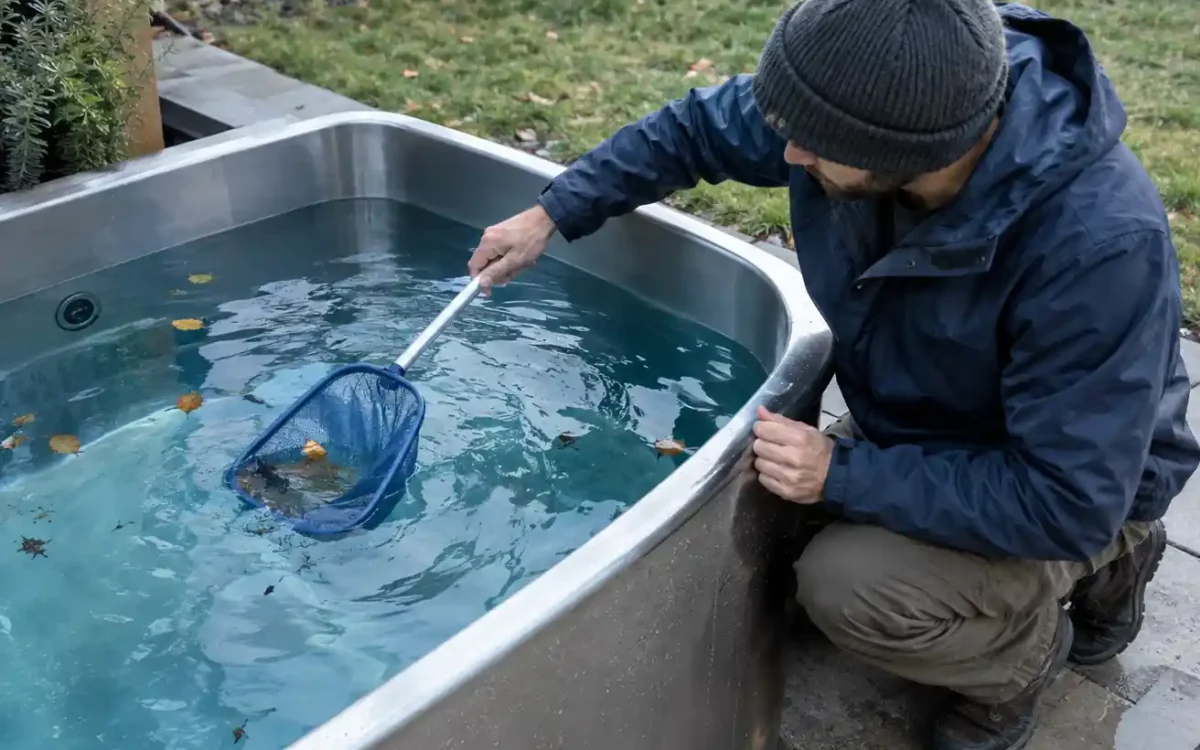
Cold plunge upkeep doesn’t need to feel like a chore. The first of these cold plunge maintenance tips is also the simplest: build one small habit — a 60-second check every time you use the tub. Skim the surface with a small net to pull out hair, leaves, or debris before it sinks and breaks down. Wipe your feet before stepping in, since dirt from the floor is one of the most overlooked contamination sources. And glance at the water level — a chiller or pump running with low water can strain the motor and shorten its life.
None of this takes real effort. It’s the accumulation of skipped days that causes problems, not any single missed check — and of all the cold plunge maintenance tips in this guide, this daily habit is the one that matters most.
Your Weekly Cold Plunge Maintenance Routine
Once a week, go a level deeper than the daily glance. These cold plunge maintenance tips take about ten minutes: test the water with a basic pool test strip, wipe down the waterline and interior walls where body oils tend to collect first, and inspect your filtration system if your tub has one. If you’re still deciding on your setup, our cold plunge tub buying guide covers which materials and filtration types make this weekly routine easier or harder down the line.
Cold Plunge Water Chemistry for Beginners
Water chemistry sounds intimidating until you realize it’s really just four numbers. pH should sit between 7.2 and 7.8 — outside that range, sanitizers work less effectively and the water can irritate skin. Total alkalinity acts as a buffer that keeps pH from swinging wildly, and it’s typically kept between 80 and 120 ppm. Calcium hardness matters more than people expect: too low and the water can be corrosive to metal fittings, too high and you risk scaling.
Sanitizer, whether chlorine or bromine, is what actually keeps bacteria in check, and a light residual level is enough — more isn’t better, and over-sanitizing can leave water feeling harsh on the skin. These ranges line up with the CDC’s Healthy Swimming guidelines, which make a solid reference for any home tub owner.
Cold water does slow chemical reactions and bacterial growth, but it doesn’t stop either one. That’s the misconception that gets people into trouble — and it’s why the cold plunge maintenance tips in this guide start with regular testing, not guesswork.
Cold Plunge Filter and Chiller Maintenance Tips
If your setup includes a chiller, these cold plunge maintenance tips start with the filter — treat it like the most important part of the system, not an afterthought. A clogged filter is usually the real reason behind cloudy water, even when the chemistry checks out fine. Inspect it weekly if you plunge daily, and follow the manufacturer’s replacement schedule even if the water still looks clear — visible clarity and actual filtration performance aren’t always the same thing.
Keep an eye on the chiller’s ventilation area too; dust buildup around intake vents makes the unit work harder and can shorten its lifespan. The Pool & Hot Tub Alliance publishes free residential water-care resources built on the same principle: clean filters and balanced water prevent most equipment problems. If you built or are planning a DIY setup, our DIY cold plunge setup guide walks through chiller and filtration choices that make this part of maintenance far less of a hassle.
Cold Plunge Maintenance Tips for Cloudy Water, Algae, and Odor
Even with a decent routine, issues show up occasionally. Use these cold plunge maintenance tips to read the symptoms before reaching for a random fix.
Usually a filtration issue
Often points to a clogged or aging filter before it points to a chemistry problem. Clean or replace the filter first, then retest the water.
Algae growth
Cold water slows algae, it doesn’t prevent it. A dropped sanitizer level combined with sunlight exposure is the usual cause — restore sanitizer levels and scrub visible surfaces.
Organic buildup
A sharp chemical smell often means the sanitizer is overworked breaking down sweat and oils, not that there’s too much of it. A partial water refresh usually resolves this faster than adding more chemical.
Body oils or lotions
Rinsing off before entering the tub reduces this significantly. Persistent foam despite rinsing often signals it’s time for a fuller clean.
How Often Should You Change Cold Plunge Water?
When readers ask for cold plunge maintenance tips about water changes, this is what I tell them: it depends almost entirely on how often you use the tub and whether you’re running filtration. As a general starting point:
| Usage Pattern | Test Frequency | Full Drain & Refill |
|---|---|---|
| No filtration, daily use | Daily glance, weekly test | Every 3–5 days |
| Filtered chiller, daily use | Weekly test | Every 3–4 weeks |
| Filtered chiller, 2–3x per week | Every few days | Every 6–8 weeks |
| Occasional / seasonal use | Before each session | Every 4–6 months, or if quality drops sooner |
Treat these as starting ranges rather than fixed rules. Water that’s cloudy, smells off, or feels different against your skin is telling you it’s time, regardless of what the calendar says — and that’s the most reliable cold plunge maintenance tip of all.
Winterizing and Cold Plunge Maintenance Cost
If your tub sits outdoors and you live somewhere winters get genuinely cold, check whether your specific model needs to be drained or protected from freezing. This is one of the cold plunge maintenance tips people usually learn the hard way: a frozen pump or chiller line can crack components that are expensive to replace. A fitted cover does double duty here — it keeps debris out year-round and reduces temperature swings that make the chiller work harder in colder months.
As for ongoing cost, most home users spend a modest amount monthly on test strips, sanitizer, and the occasional filter replacement — far less than most people assume before they own a tub. The bigger cost driver isn’t the routine maintenance itself, it’s neglecting these cold plunge maintenance tips long enough that a part needs replacing instead of simply cleaning.
When I started actually tracking my own routine instead of eyeballing it, the difference was obvious within a month. The weeks I skipped the filter check were, without exception, the weeks the water looked worse — not the weeks I happened to use it more. It’s a small thing, but it changed how seriously I take the “boring” five minutes of cold plunge maintenance compared to the exciting part of actually plunging.
Frequently Asked Questions
A quick skim and wipe after every use, a deeper weekly check of water chemistry and filters, and a full drain-and-refill on a schedule based on how often you use it and whether you have filtration — see the table above for specifics. These cold plunge maintenance tips work best as a routine, not a rescue mission.
Many tubs handle chlorine fine at low, pool-standard levels, but it depends on your chiller’s internal components — some heat exchanger materials react poorly to chlorine over time. Check your manufacturer’s guidance before adding any chemical sanitizer.
Cloudy water is most often a filtration problem rather than a chemistry problem. One of the simplest cold plunge maintenance tips: check and clean or replace the filter first, then retest the water before assuming you need more sanitizer.
They’re not strictly required, but a filter meaningfully extends how long water stays usable between full changes and reduces how much manual cleaning and chemical adjustment you’ll need to do. If you take one cold plunge maintenance tip from this FAQ, let it be this: a filter pays for itself in water savings.
For most home setups, ongoing costs are modest — test strips, occasional sanitizer, and periodic filter replacement. It’s generally far less than the cost of neglecting maintenance and having to repair or replace equipment. Following the cold plunge maintenance tips above is the cheapest insurance your equipment can get.
Think about your own tub right now — when did you last actually test the water instead of just looking at it?
Putting these cold plunge maintenance tips into practice is what separates a tub that lasts for years from one that becomes a source of frustration within a few months. For safety considerations around who should and shouldn’t be cold plunging at all, see our cold plunge safety guide.

Related Articles
Cold Plunge Water Treatment: 5 Ways to Keep Your Water Clean and Safe
Safety note before you read on: This guide covers general cold plunge water treatment options, including filters, UV…
Read Guide
Best Portable Cold Plunge: What to Look for Before You Buy
A quick note before you read on: This guide covers what to look for and general expectations when…
Read Guide
Inflatable Cold Plunge Tub: Is It Actually Worth Buying?
This article is for general informational purposes only. Product durability and performance can vary by manufacturer and how…
Read Guide