
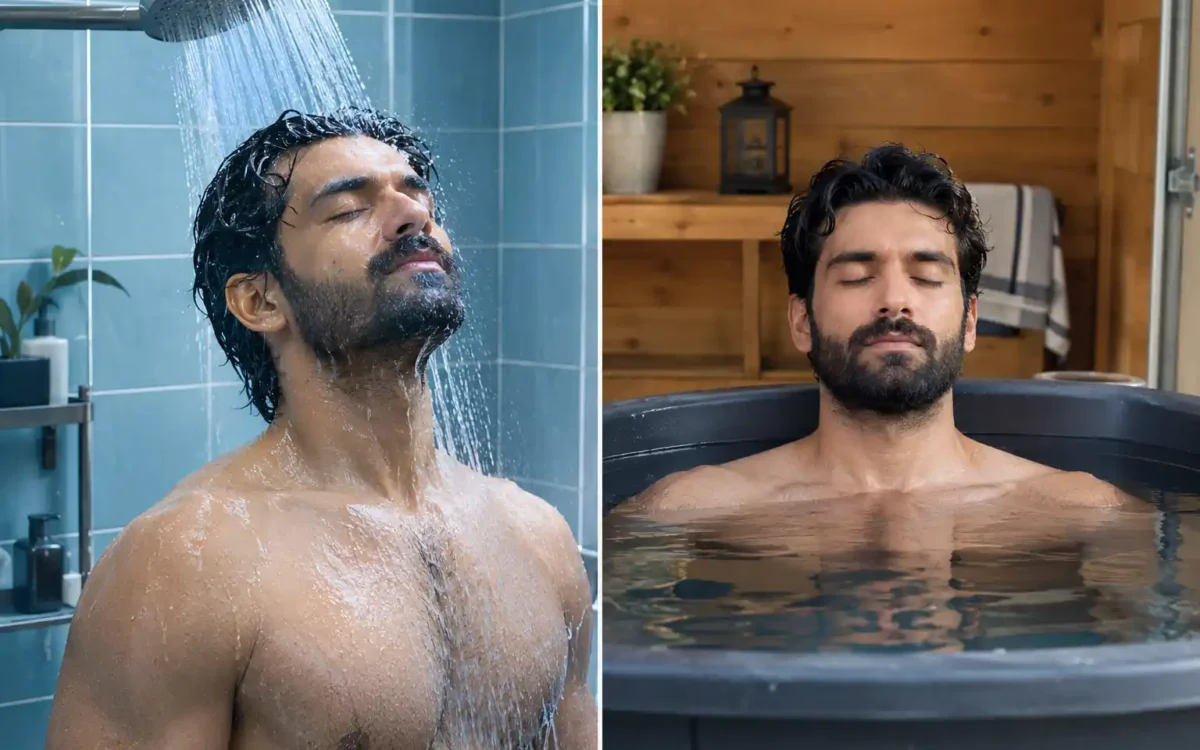
“Just take a cold shower, it’s basically the same thing” is one of the most repeated pieces of advice in the cold plunge vs cold shower debate, and it’s only partly true. Both expose your body to cold water, both can genuinely help with alertness and mood, and both cost nothing to try. But treating them as interchangeable misses some real physiological differences that matter if you’re chasing specific results like faster muscle recovery. This guide breaks down exactly where a shower holds up, where it falls short, and when it’s actually worth investing in a plunge.
Part of why this comparison gets muddled online is that both practices genuinely do share real benefits — better mood, more alertness, a sense of accomplishment. That overlap makes it easy to assume they’re roughly equivalent. The reality sits somewhere in between: a shower is a legitimate starting point, not a lesser knockoff, but it isn’t a full substitute once your goals get more specific, and knowing exactly where that line sits saves a lot of guesswork.
Cold Plunge vs Cold Shower: What’s the Real Difference?
The core distinction behind cold plunge vs cold shower benefits comes down to two things: how much of your body is exposed, and how consistently that exposure holds throughout the session. A shower delivers moving water that only contacts one section of your body at a time as you rotate, and the water itself warms slightly the moment it touches your skin. A cold plunge submerges your entire body at once in still water that stays at a constant, controlled temperature the whole session.
That full-body, constant-temperature exposure is also why cold plunges create meaningfully stronger physiological responses in research comparing the two — bigger spikes in norepinephrine, and a hydrostatic pressure effect from full submersion that a shower simply can’t replicate, regardless of how cold the water running over your skin feels in the moment.
There’s also a psychological difference worth naming. In a shower, it’s genuinely easy to shift your body slightly out of the direct cold stream, or reach over and nudge the temperature warmer. In a plunge, once you’re in, you’re fully committed — there’s no small adjustment available, which is part of why the practice tends to build a different kind of mental discipline over time, one that carries over into how people handle discomfort in other parts of life too.
Cold Plunge vs Cold Shower Temperature Difference
How much colder is a cold plunge than a cold shower is one of the most practical questions to answer here, since it explains a lot of the effectiveness gap between the two approaches, beyond just how each one feels in the first few seconds.
A typical home shower’s “cold” setting depends entirely on your plumbing and the season, and often lands warmer than people assume. A dedicated cold plunge, by contrast, is built to hold a specific, genuinely cold temperature every single session. If you want the full breakdown of what different plunge temperatures actually feel like, our cold plunge temperature guide covers that full range in more detail, including what each specific band actually feels like in practice.
This temperature gap matters more than the numbers alone suggest, because the physiological response to cold exposure isn’t linear — it tends to ramp up meaningfully once you cross into the lower end of that plunge range. A shower sitting at the upper end of its typical range can feel bracing without actually triggering the same depth of response that a properly cold plunge does, even if it feels similarly uncomfortable in the moment.
Is a Cold Shower as Good as a Cold Plunge?
For building general cold tolerance and giving yourself a quick jolt of alertness, a cold shower genuinely does a lot of the job — it activates your sympathetic nervous system and gets your heart rate up in a similar way, just to a smaller degree. Where it falls short is in the deeper recovery and relaxation response, since showers don’t produce the same activation of the parasympathetic “rest and recover” side of your nervous system that a longer, full-body plunge does.
Think of it less as one being “fake” cold exposure and the other “real” cold exposure, and more as a dial rather than a switch. A shower turns the dial partway. A plunge turns it much further. Depending on what you’re trying to accomplish on any given day, partway might be exactly enough, and that’s a perfectly reasonable place to stay.
Cold Shower vs Cold Plunge for Muscle Soreness
This is where the gap becomes most measurable. Because a cold plunge submerges your entire body at once, it cools deeper tissue more evenly and applies hydrostatic pressure that helps push fluid and metabolic byproducts back toward your heart — something a rotating stream of shower water can’t replicate.
Some research directly comparing the two for post-exercise recovery has found cold plunges reduce delayed onset muscle soreness meaningfully more than cold showers over the same recovery window. The practical takeaway isn’t that a shower is useless after a hard session — it’s that if soreness reduction is your specific goal, the extra effort of a plunge is buying you a real, measurable improvement rather than just a placebo feeling of “doing something” for recovery.
| Factor | Cold Shower | Cold Plunge |
|---|---|---|
| Body coverage | Partial, rotating | Full immersion |
| Hydrostatic pressure | None | Present, aids circulation |
| Setup cost | $0 | $1,000+ typical |
| Consistency | Varies with plumbing | Controlled, repeatable |
Our cold plunge and inflammation reduction guide goes deeper into the mechanism behind that recovery advantage if muscle soreness is your main reason for considering either option in the first place.
Cold Plunge vs Cold Shower for Recovery
For serious post-workout recovery specifically, cold plunge vs cold shower for recovery isn’t really a close contest — full immersion consistently outperforms a shower in research on soreness reduction, largely because of the combination of deeper, more even cooling and that hydrostatic pressure effect. That said, “outperforms” doesn’t mean a shower does nothing; it means a plunge does noticeably more for the same time invested.
If recovery speed genuinely matters to your training — you’re competing again soon, or stacking hard sessions close together — that difference is worth taking seriously rather than assuming any cold exposure is functionally interchangeable. A shower still beats skipping cold exposure entirely, but it’s a smaller lever than a plunge for this specific goal.
Cold Plunge vs Cold Shower for Mental Clarity
This is actually the category where the gap narrows the most. Both methods trigger a jolt of alertness through the sympathetic nervous system, and for a quick morning wake-up boost, a cold shower does a genuinely solid job at zero cost and zero setup time. The deeper, longer-lasting calm and stress-resilience benefit tends to favor the plunge, simply because you’re staying in the cold longer and more completely than a quick shower allows.
If your main reason for cold exposure is a quick, energizing morning ritual rather than a deliberate recovery or stress-training tool, this is genuinely one of the areas where a shower can reasonably hold its own against a plunge.
I went through a stretch of using cold showers exclusively for a couple of months before eventually adding a plunge into my routine, mostly out of curiosity about whether the extra cost and hassle were actually worth it. The honest answer: for the quick mental reset, I didn’t notice a huge difference. For how sore I felt after a hard leg day, the difference was obvious within the first week of switching to full immersion. Neither felt like a waste of time — they just solved different problems.
What surprised me most, looking back, was how much easier the shower habit was to maintain during genuinely busy weeks. There’s something to be said for the practice you’ll actually stick with consistently over the one that’s technically more effective but easier to skip when mornings get hectic.
Can a Cold Shower Replace a Cold Plunge?
A Cold Shower Is Enough If…
You want a quick alertness boost, you’re just testing whether cold exposure is for you, or budget and space are tight.
You Need a Cold Plunge If…
You’re chasing measurable muscle recovery, want consistent, controlled temperatures, or are building a serious cold-exposure habit.
If a cold shower has you convinced cold exposure is worth sticking with, our guide to starting cold plunging is the natural next step once you’re ready to go further.
There’s also nothing wrong with using both at different times. Plenty of people keep cold showers as their everyday, low-effort habit and reserve a proper cold plunge for days when recovery genuinely matters more, like after an especially hard training session or a competition, giving them the best of both without overcomplicating a daily routine.
Frequently Asked Questions
For alertness and a basic introduction to cold exposure, it’s fairly close. For recovery and deeper relaxation benefits, a cold plunge is measurably more effective.
You’ll get a real but smaller version of most benefits — a cold shower isn’t ineffective, it just doesn’t match the intensity of full-body immersion.
Cold plunge, fairly consistently, due to full-body coverage and the added hydrostatic pressure effect that a shower can’t provide.
To a smaller degree. The partial exposure and warmer effective temperature of most showers means the anti-inflammatory effect is present but less pronounced than full immersion.
There’s no exact equivalent, since the mechanisms differ, but many people find 2-3 minutes of cold shower exposure a reasonable daily starting point for general alertness benefits.
Someone chasing a quick, free way to wake up and feel more alert every morning is well served by a cold shower alone.
Someone chasing serious muscle recovery after hard training sessions is leaving real benefit on the table by sticking with a shower. Which one actually matches what you’re after?

Related Articles

Cold Plunge in Winter: 7 Rules for Safe, Comfortable Outdoor Plunging
Winter Guide · Outdoor Plunging The water doesn’t care that it’s January. Everything around it does. A cold…
Read Guide
Cold Plunge vs Cryotherapy: Which One Is Actually Right for You?
A quick note before you read on: This article compares two wellness practices for general informational purposes and…
Read Guide
How Long Should You Cold Plunge? Duration Guide by Level and Temperature
A quick note before you read on: This article shares general, widely-used guidance on cold plunge duration for…
Read Guide