
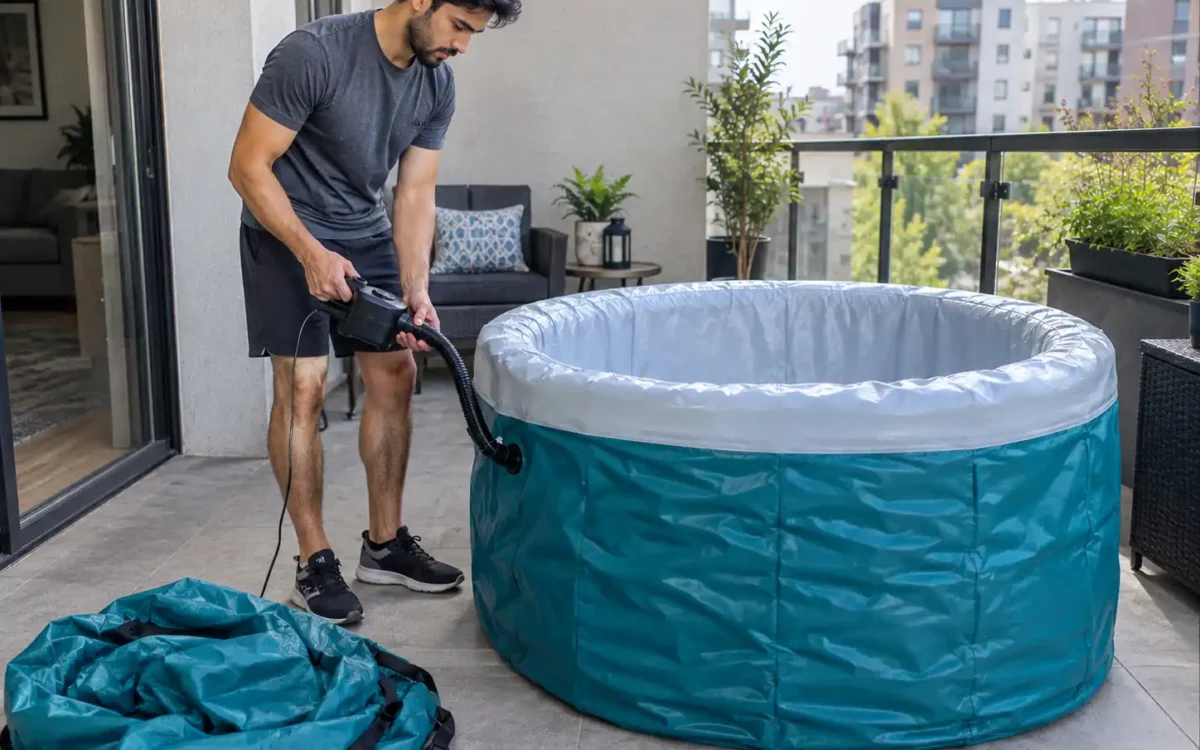
“Inflatable” and “flimsy” get treated as synonyms far too often in this space, and that assumption costs people money in both directions — some avoid an inflatable cold plunge tub that would have suited them perfectly, while others buy a cheap ring-style version expecting stock-tank durability and end up disappointed. The truth sits in the details most listings skip entirely.
There’s a real range hiding behind that single word “inflatable,” and understanding what actually separates a genuinely solid option from a disappointing one is the difference between a purchase you’re happy with for years and one you regret within a month.
What Actually Separates a Good Inflatable Tub From a Bad One
The single biggest quality difference comes down to construction method, not brand name. Better inflatable cold plunge tubs use drop-stitch material — thousands of internal threads connecting the inner and outer walls, allowing the tub to inflate to a genuinely rigid 6 to 9 PSI, similar to how a quality paddleboard holds its shape.
Cheaper ring-style tubs, by contrast, rely on a single air chamber with far less internal structure, which is why they wobble, sag, and lose shape noticeably faster under regular use. Two products can both be labeled “inflatable” while behaving almost nothing alike once filled with water.
This distinction rarely gets explained clearly on product pages, since “inflatable” sells the same regardless of construction quality underneath the marketing copy. Checking specifically for drop-stitch construction, rather than trusting the word “durable” in a listing, is the single most useful filter when comparing options.
A quick way to verify this before buying: look for the target PSI rating in the product description. Listings that specify a firm inflation pressure, rather than staying vague about it, are far more likely to be genuine drop-stitch builds than ones that avoid the number entirely.
Inflatable Cold Plunge Tub Pros and Cons
Being upfront about both sides matters more here than in most gear categories, since the format genuinely suits some situations far better than others.
None of these trade-offs are dealbreakers on their own — they simply mean the format rewards a specific kind of buyer more than a general one. Someone renting an apartment gets far more value from the portability than someone with a dedicated permanent outdoor space ever would.
Lower Upfront Cost
Typically the cheapest way into a real, purpose-built tub rather than an improvised container.
Portable and Storable
Deflates and packs away, ideal for renters or limited space.
Weaker Insulation
Loses temperature faster than a rigid, insulated tub, especially outdoors.
Shorter Lifespan
Even quality models wear faster than hard-shell alternatives under heavy daily use.
Inflatable vs. Hard Shell: A Side-by-Side Look
Inflatable vs hard shell cold plunge decisions usually come down to how you’ll actually use the tub, not which one is objectively superior in every category.
| Factor | Inflatable | Hard Shell |
|---|---|---|
| Upfront Cost | Lower | Higher |
| Portability | Excellent | Limited |
| Insulation | Weaker | Stronger |
| Long-Term Durability | Lower | Higher |
| Best For | Testing, small spaces, occasional use | Daily use, permanent setups |
If you’re still weighing the broader format decision beyond just inflatable versus hard shell, our comparison of ice baths and dedicated cold plunge tubs covers the related question of temperature-controlled tubs versus simpler containers more generally.
Ergonomics get overlooked in this comparison too. Inflatable walls flex slightly under weight, which some people find perfectly comfortable and others find less stable than a rigid edge to grip while entering or exiting. This is a personal preference more than a clear-cut winner, but it’s worth testing in person if you have the chance, rather than assuming comfort based on photos alone.
Durability: Punctures, Leaks, and Realistic Lifespan
Do inflatable cold plunge tubs puncture easily is one of the most common concerns, and the honest answer is: less than people assume, provided a few basic precautions are followed. Setting the tub on a mat or tarp rather than directly on rough concrete or gravel, and keeping pets’ claws away from the material, prevents the vast majority of puncture incidents reported by owners.
How long does an inflatable cold plunge tub last varies significantly by build quality. A genuine drop-stitch model treated reasonably can hold up through months of regular use without issue, while a bargain ring-style tub may show wear within weeks of frequent setup and teardown. Most leaks trace back to a loose valve rather than an actual puncture, which is worth checking first before assuming the material itself has failed.
A repair kit that comes with most quality models handles the rare genuine puncture without much drama — a small patch applied correctly can restore full function in under an hour. Keeping that kit somewhere easy to find, rather than misplaced in a drawer somewhere, turns an occasional puncture from a crisis into a minor inconvenience.
Insulation Quality and Chiller Compatibility Explained
Inflatable cold plunge tub insulation quality lags behind rigid, foam-insulated tubs by design — the flexible walls simply can’t match a solid, layered shell for heat retention. This isn’t necessarily disqualifying, but it does mean a chiller paired with an inflatable tub works somewhat harder to maintain temperature than the same chiller on a well-insulated hard-shell unit.
If you’re comparing full material options across the board before deciding, our cold plunge tub buying guide breaks down insulation performance across stainless steel, ceramic, wood, and inflatable builds side by side, which is worth reviewing before committing to any single format.
Climate matters here more than people initially expect. An inflatable tub in a mild, temperate region might hold a chiller-set temperature almost as effectively as a rigid one, simply because there’s less ambient heat working against the insulation to begin with. The same tub in a hot, direct-sun location will show its insulation limits far more quickly.
Who an Inflatable Tub Actually Makes Sense For
Inflatable cold plunge for small spaces is a genuinely strong use case — apartment dwellers, renters, and anyone without a dedicated outdoor area benefit from a setup that disappears into a closet when not in use. It’s also a sensible low-commitment way to find out whether cold plunging is a habit worth keeping before investing in something more permanent.
Households with multiple people testing the practice at once also benefit from the lower price point, since it’s far easier to justify one inflatable tub shared among a family than a premium hard-shell unit before anyone knows whether the habit will actually stick for the whole household.
Travel and seasonal use round out the strongest use cases. Someone who wants cold exposure available at a vacation property for only part of the year, or who splits time between two homes, gets real practical value from a setup that can move with them rather than staying fixed in one location permanently.
For anyone already certain they want a sturdier, longer-lasting setup and willing to build rather than buy, our DIY cold plunge setup guide walks through an alternative path that trades some portability for significantly better long-term durability, often at a comparable price point.
It’s also worth being honest that neither format is a permanent commitment. Plenty of people start with an inflatable, outgrow its limitations once cold plunging becomes a genuine daily habit, and upgrade to something sturdier a year or two later without ever regretting the cheaper starting point that got them into the practice in the first place.
Even for people who eventually do upgrade, a used inflatable tub in good condition often finds a second life easily, either passed along to someone else just starting out or kept as a backup for travel or a secondary location, rather than becoming dead weight in storage.
What Three Months of Actual Use Taught Me
I went into using an inflatable tub expecting it to feel noticeably cheap compared to a rigid setup I’d tried previously, and was surprised by how solid a proper drop-stitch model actually felt once fully inflated and filled. What did wear thin over time wasn’t the material itself, but the valve — after repeated inflate-deflate cycles, it needed more frequent attention to stay fully sealed, which nobody had mentioned to me beforehand and which ended up being the actual maintenance task worth tracking.
The portability turned out to matter more than I expected too. Being able to deflate the whole setup and store it flat during a stretch of bad weather, rather than leaving an expensive rigid tub exposed outdoors, was a genuine convenience I hadn’t fully appreciated until I actually needed it.
Frequently Asked Questions
Quality drop-stitch models can be genuinely solid and reliable for regular use, though they generally trail hard-shell tubs on insulation and long-term durability.
A well-made model treated with reasonable care can last months to a couple of years of regular use, while cheaper ring-style versions often wear noticeably faster.
Yes, many models are chiller-compatible, though weaker insulation means the chiller typically has to work harder to maintain a set temperature compared to a rigid, insulated tub.
Occasionally, though most leaks come from a loose valve rather than a genuine puncture. Checking and hand-tightening the valve resolves the majority of reported issues.
Often yes — the lower upfront cost and portability make it a reasonable way to test whether cold plunging is a habit worth keeping before investing in a more permanent setup.
Is Portability or Permanence What You Actually Need Right Now?
That single question tends to answer the inflatable-versus-hard-shell debate faster than any spec sheet comparison ever could, and it’s worth answering honestly before you spend a single dollar either way.

Related Articles
Cold Plunge Water Treatment: 5 Ways to Keep Your Water Clean and Safe
Safety note before you read on: This guide covers general cold plunge water treatment options, including filters, UV…
Read Guide
Best Portable Cold Plunge: What to Look for Before You Buy
A quick note before you read on: This guide covers what to look for and general expectations when…
Read GuideCold Plunge Maintenance Tips: How to Keep Your Tub Clean and Safe
A quick note before you read on: This article is for general educational purposes and reflects common maintenance…
Read Guide