
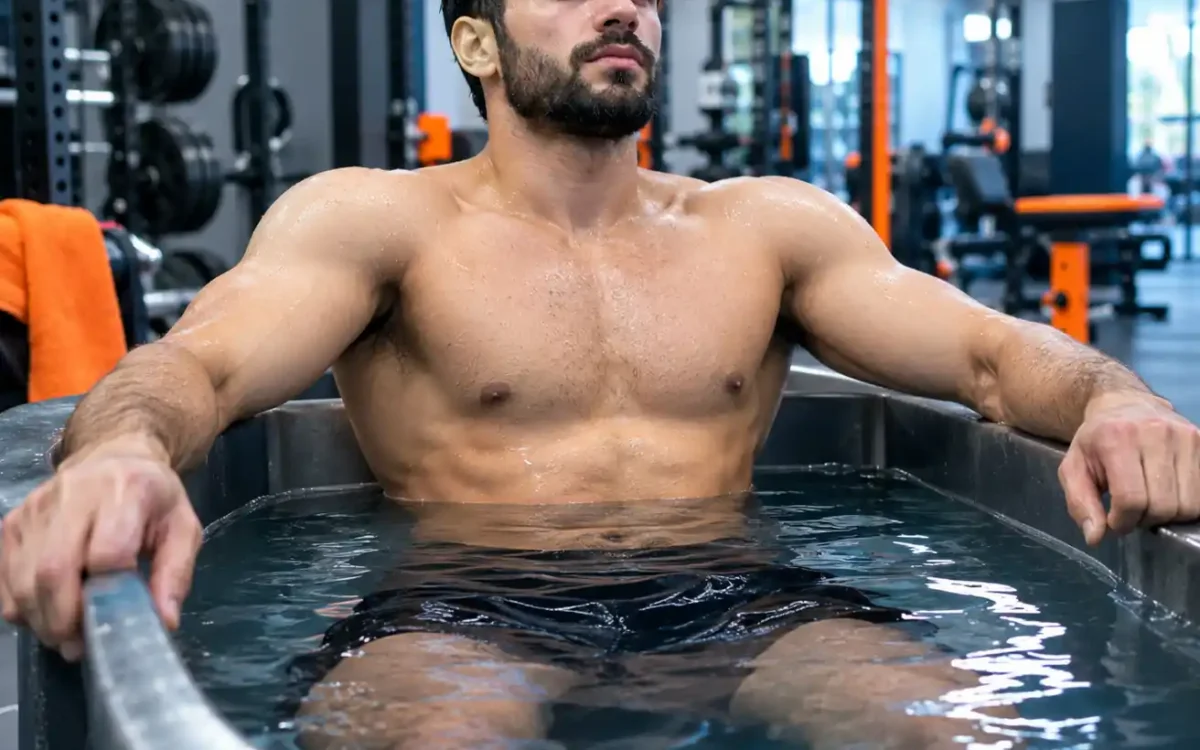
There’s a popular assumption that cold plunge for athletes is simply a universal good — hop in after any workout, feel less sore, recover faster, repeat. The reality is more specific than that, and it matters. Research on cold water immersion shows real, well-documented recovery benefits for athletes, but timing and training goal change the picture considerably, and treating every session the same way means leaving results on the table or, in some cases, working against your own progress. This guide breaks down exactly when cold plunging helps athletic performance, when to think twice, and how often to actually use it.
None of this is meant to talk you out of cold plunging as an athlete — the evidence for its recovery benefits is genuinely strong. The point is that “just get in after training” is incomplete advice, and the athletes who get the most out of it tend to be the ones who match the tool to the moment rather than applying it uniformly.
Why Athletes Use Cold Plunge for Sports Recovery
Intense training creates microscopic muscle damage, which is a normal part of getting stronger but also the reason you feel wrecked the day after a hard session. Cold water immersion narrows blood vessels near the skin and in working muscle, which appears to reduce swelling and help clear some of the metabolic byproducts of exercise faster than passive rest alone. Athletes across combat sports, soccer, and strength training have reported meaningfully less delayed onset muscle soreness after consistent cold plunge sessions, and several controlled studies back that pattern up.
There’s a mental-performance piece too that doesn’t get talked about enough. The nervous-system activation from cold exposure — increased alertness, a burst of norepinephrine — is part of why so many athletes describe cold plunging as sharpening focus and building a kind of stress tolerance that carries over into competition, separate from the purely physical recovery benefit.
It’s worth being clear-eyed about what the research actually shows versus what marketing around cold plunging sometimes implies. The soreness and subjective-wellness improvements are well supported across multiple sports. Claims about dramatically improved long-term performance from cold plunging alone are much thinner — it’s a genuinely useful recovery tool sitting alongside sleep, nutrition, and training structure, not a replacement for any of them.
This is also why the timing question below matters so much more for athletes than for casual users. Someone plunging purely for mood or general wellness doesn’t need to think much about training phases. An athlete chasing specific performance and recovery outcomes benefits from being far more deliberate about when a session happens, not just whether it happens at all.
Cold Plunge Timing After Training: Strength vs Endurance
This is the piece most general cold plunge content skips entirely, and it’s arguably the most important one. Cold plunge timing after training depends heavily on what kind of session you just finished, because the same inflammation that causes soreness is also part of how your muscles adapt and grow stronger.
The concern with strength training specifically comes from a handful of studies showing that immediate post-lift cold water immersion may dampen some of the cellular signaling pathways involved in building muscle. The effect size varies between studies and isn’t universally agreed upon, but enough evidence exists that most strength coaches now recommend a cautious approach during dedicated muscle-building phases rather than assuming cold exposure is harmless regardless of timing.
None of this means strength athletes should avoid cold plunging altogether — plenty of powerlifters and strength athletes use it regularly. The adjustment is almost always about spacing, not elimination, and even a few hours of separation is often enough.
| Strength / Hypertrophy Day | Endurance / High-Intensity Day |
|---|---|
| Some research suggests immediate cold exposure may blunt strength-adaptation signals | Cold immersion generally supports faster recovery with minimal downside |
| Better to wait several hours, or plunge the next morning instead | Can be used within an hour of finishing without much concern |
| Priority: protect the muscle-building signal | Priority: reduce fatigue and inflammation for the next session |
In practice, this means an athlete in a heavy lifting block might reserve cold plunging for rest days or the morning after, while an athlete deep in a running or combat-sport training cycle can use it right after most sessions without much downside. If you’re still working out your general timing preferences, our cold plunge before or after workout guide covers the broader decision framework this builds on.
How Often Should Athletes Cold Plunge?
Most of the research pointing to measurable recovery improvements uses a frequency of roughly three to four sessions a week, not daily use. That consistency, more than any single heroic session, is what tends to show up in soreness scores and readiness metrics over a few weeks.
Daily cold plunging isn’t necessarily harmful for most healthy athletes, but it doesn’t appear to outperform a well-placed three-to-four-times-a-week routine either, based on the training studies that actually measured outcomes over several weeks. Overdoing frequency without a clear reason mostly just adds time and effort without adding proportional benefit — better to place your sessions deliberately around your hardest training days than to treat it as a daily box to check.
These are ranges reported after several weeks of consistent, moderate use — not a single-session guarantee. If you’re unsure how long each session should run to see this kind of benefit, our duration guide covers session length by experience level in more detail.
It’s also worth tracking your own response rather than assuming the averages apply exactly to you. Two athletes doing the identical routine can report noticeably different levels of benefit, and factors like training load, sleep quality, and overall stress all interact with how much cold plunging actually helps in any given week.
Cold Plunge Before Competition and In-Season Use
Cold plunge before competition is a different conversation than cold plunge after training. Right before a game or event, most athletes and coaches lean toward keeping muscles warm and primed rather than cold, since cold exposure can temporarily reduce power output and reaction speed in the short window afterward. It fits far better as a post-competition or off-day recovery tool than a pre-performance one.
The reasoning comes down to how cold temporarily affects nerve conduction velocity and muscle contraction speed — both can be measurably slower for a short window after cold exposure, which is exactly the opposite of what you want walking into a competitive event. That same effect is actually useful after competing, when reducing swelling and inflammation matters more than explosive output.
In-Season
Frequent, shorter sessions focused on managing accumulated fatigue between games or heavy training days. Consistency matters more than duration here.
Off-Season / Building Phase
More selective use, timed away from key strength sessions, so adaptation signals aren’t blunted during the phase where you’re trying to build the most.
Pre-Competition
Generally avoided in the hours right before performing; warming up, not cooling down, is the priority here for most sports.
Cold plunge for in-season athletes often looks completely different from how it’s used in an off-season strength block, and matching the approach to the phase you’re actually in matters more than following one fixed rule year-round.
A useful way to think about it: during heavy competition stretches, your main enemy is accumulated fatigue, so cold plunging earns its place as a recovery tool almost every time you train or compete. During a dedicated strength-building block, your main goal shifts to maximizing adaptation from each session, so the same habit needs to be applied more selectively and placed away from your key lifting days. Neither phase makes cold plunging wrong — it just changes what “using it well” looks like.
I spent some time talking with a semi-competitive distance runner who’d built cold plunging into her routine over a full racing season, and what stood out most wasn’t the soreness reduction she mentioned first — it was how she’d learned to treat it as a tool tied to her training calendar rather than a fixed daily habit. Heavy mileage weeks, she’d plunge after nearly every hard run. During a strength-focused block leading into a race, she pulled back and used it far more sparingly. That kind of flexible, phase-aware approach came up again and again when I looked into how serious athletes actually use cold exposure, far more than any single rigid protocol.
What surprised me most was how little she second-guessed skipping sessions during that strength block. She wasn’t worried about losing progress by cutting back — she’d simply learned, through trial and a bit of research of her own, that the timing mattered more than the frequency alone.
Frequently Asked Questions
A few quick answers to the questions that come up most when athletes are deciding how to fit cold plunging into a real training schedule.
Some research suggests immediate cold exposure right after strength training may modestly blunt hypertrophy signaling, so many athletes in a muscle-building phase wait several hours or plunge the next morning instead.
For endurance or high-intensity conditioning work, within an hour is generally fine. For heavy strength training, waiting several hours, or plunging the next day, is the more cautious approach.
Roughly three to four sessions a week is the frequency most associated with measurable recovery improvements in current research, rather than daily use.
Generally not right before competing — cold exposure can temporarily reduce power output, so it’s better suited to post-competition or rest-day recovery than pre-performance use.
It’s not a direct injury-prevention tool, but by reducing excessive soreness and supporting recovery between sessions, it can help athletes avoid the kind of accumulated fatigue that often contributes to overuse injuries.
Are you timing your cold plunge around your training phase, or just doing it the same way after every single session?
Cold plunge for athletes works best as a tool matched to what your training actually calls for that week — not a one-size-fits-all habit.

Related Articles
Cold Plunge and Cortisol: 7 Science-Backed Facts About Stress Hormones
Stress Hormones · Benefits & Science Is your ice bath calming you down — or secretly stressing you…
Read Guide
Cold Plunge and Brown Fat: The Honest Science on Weight Loss and Metabolism
Medical Disclaimer: This article is for general information only and is not medical advice. Talk to a qualified…
Read Guide
Cold Plunge and Testosterone: Does Cold Water Really Boost Testosterone?
This article is for general informational purposes only and does not constitute medical advice. Hormonal health is influenced…
Read Guide