
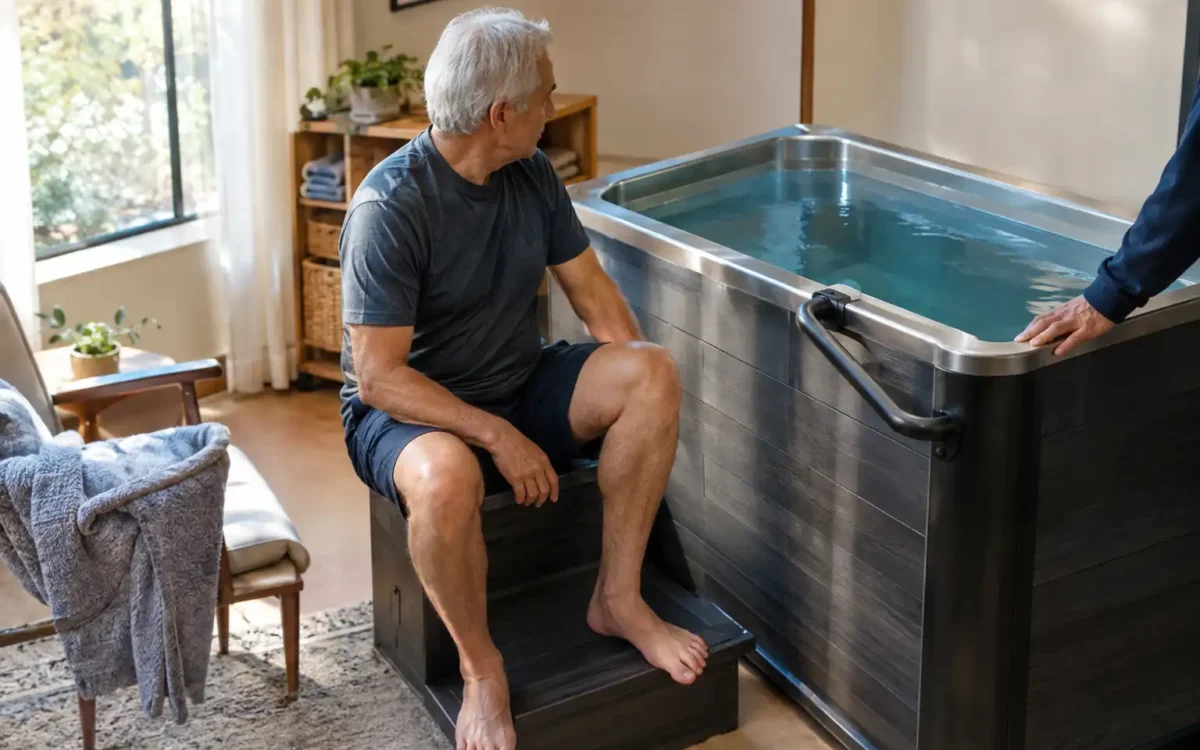
Wondering whether cold plunge for seniors is actually safe once you’re past 60, or whether the whole practice is really just built around younger, healthier bodies? It’s a fair question, and the honest answer is that age changes the equation meaningfully — not enough to rule the practice out entirely for most people, but enough that the standard advice aimed at athletes in their twenties needs real adjustment before it applies safely to someone decades older.
Most of what circulates online about cold plunging assumes a baseline of youthful cardiovascular resilience that simply doesn’t describe everyone interested in trying it. This guide is written specifically for the gap that leaves behind — the practical, age-adjusted version of the practice rather than a one-size-fits-all protocol borrowed from a much younger demographic.
What Actually Changes Physically As We Age
The core reason age matters here comes down to how the body regulates temperature and handles sudden cardiovascular demand. Blood vessels lose some elasticity over time, the heart’s ability to rapidly adjust to stress can decline, and temperature regulation itself becomes less efficient with age.
None of this means cold exposure becomes automatically dangerous — it means the margin for error shrinks, and the same intensity that a younger, healthier person tolerates easily can represent a meaningfully bigger stressor for an older body, even one that’s otherwise in reasonably good shape.
Skin sensitivity and circulation in the extremities also shift with age, which is part of why hands and feet often feel the cold more intensely and take longer to rewarm afterward. This isn’t dangerous on its own, but it’s a genuine, noticeable difference worth expecting rather than being caught off guard by during an early session, especially for anyone new to cold exposure entirely.
A Safer Temperature Range for Seniors
Is cold plunge safe for seniors at the same temperatures typically recommended for general audiences? Generally, no — cold plunge temperature for seniors tends to sit noticeably warmer than standard protocols, precisely because of the physiological changes just described.
| Factor | General Adult Guidance | Senior-Specific Guidance |
|---|---|---|
| Water Temperature | 50–59°F | 60–68°F |
| Session Length | 1–5 minutes | 1–5 minutes, starting shorter |
| Weekly Frequency | 2–4 sessions | 1–3 sessions, with rest days early on |
| Medical Clearance | Recommended for risk factors | Strongly recommended for most conditions |
Best cold plunge temperature for seniors 60+ still triggers the same beneficial norepinephrine and mood-related responses associated with cold exposure generally — it simply does so with less cardiovascular shock, which matters more as the margin for handling that shock narrows with age.
It’s worth being honest that a warmer starting range doesn’t mean a lesser experience. Many of the physiological responses people chase from cold exposure — the alertness, the mood lift, the sense of accomplishment — show up meaningfully within this gentler range, without needing to chase the more extreme numbers sometimes associated with the practice online.
Session Duration and How Often Makes Sense
How long should seniors cold plunge is best answered conservatively at first: brief sessions, often under two minutes to start, with plenty of room to extend gradually only once the body has shown it tolerates the milder range comfortably over several sessions.
Cold plunge protocols for adults over 60 generally favor allowing more recovery time between early sessions than younger practitioners might need — a rest day or two between plunges initially isn’t overly cautious, it’s simply appropriate given how the body’s stress-recovery capacity can shift with age.
Once a comfortable baseline is established over several weeks, many people find they can gradually increase frequency toward the higher end of the range, but that progression should follow the body’s actual response rather than a fixed calendar. Feeling consistently good the day after a session, rather than unusually fatigued, is a reasonable signal that frequency can increase, while lingering tiredness or soreness is a sign to hold steady a bit longer.
Medical Conditions That Require Clearance First
Cold plunge risks for older adults concentrate heavily around cardiovascular health, and for good reason. Cold plunge and heart conditions covers this overlap in detail, since the same sudden vasoconstriction and heart-rate spike that produces cold exposure’s benefits also places real, immediate demand on a heart that may already be working with less reserve.
Cold plunge contraindications for elderly individuals generally include uncontrolled high blood pressure, a history of arrhythmia or heart attack, diabetes with nerve involvement, and conditions affecting balance or blood pressure regulation when standing. None of these are automatic permanent disqualifiers, but each one changes the conversation from “how do I start” to “should I start, and under what specific conditions.”
Medication interactions are worth raising directly with a doctor too, since several common prescriptions for blood pressure, heart rhythm, or blood thinning can change how the body responds to sudden cold stress in ways that aren’t always obvious from the medication label alone. This is exactly the kind of detail a general guide can flag but can’t resolve on its own — only a provider familiar with the specific prescription and current dosage genuinely can.
Stop a session immediately if you notice:
- Chest pain, pressure, or a racing, irregular heartbeat
- Dizziness, confusion, or feeling faint
- Sudden weakness or difficulty moving normally
- Shortness of breath that doesn’t ease quickly
Building a Senior-Friendly Setup
Senior-friendly cold plunge tub features matter just as much as the water temperature itself, since a safe setup reduces risk before you’ve even gotten in the water at all. A stable step or platform, a secure grab bar, and a non-slip surface around the entire area address the practical injury risk that often gets overlooked in favor of focusing purely on temperature.
General safety fundamentals still apply on top of these age-specific additions — our complete safety guidelines cover baseline precautions that matter regardless of age, from entry technique to recognizing early warning signs before they become serious.
Indoor, temperature-controlled setups tend to make more sense for older adults than outdoor plunging, at least initially. Cold-air exposure while walking to and from an outdoor tub adds an extra variable that’s easy to underestimate, particularly in winter, when the walk itself can be as much of a fall risk as the water.
Getting Started the Right Way at Any Age
For anyone cleared to begin, easing in slowly matters more here than almost any other factor. Entering slowly, legs first and then the torso, rather than jumping or dropping in quickly, gives the body a moment to begin adjusting before the full shock response hits at once.
If you’re unsure what temperature range actually fits your specific starting point, our detailed cold plunge temperature reference breaks things down by goal and experience level, which is worth cross-referencing against the more conservative senior-specific guidance covered here.
Breathing calmly through the first thirty seconds matters more than almost any other single detail, since the instinct to gasp or hold your breath works against the body’s ability to settle into the cold. Slow, steady exhales, longer than the inhale, help keep the initial shock response from escalating unnecessarily.
Watching My Father Approach This Cautiously
My father took up cold plunging in his late sixties after his doctor cleared him following a routine cardiovascular checkup, and what struck me most was how methodically he approached something that younger people in his social circle treated almost casually. He kept a small notebook by the tub, noted the temperature and how he felt each time, and genuinely didn’t mind starting far milder than the enthusiastic testimonials he’d seen online. A year in, he’s still plunging regularly, and I think that patience early on is exactly why.
What he mentioned most often wasn’t the cold itself, but how much more confident he felt knowing he’d actually had the conversation with his cardiologist beforehand instead of guessing. That confidence, more than any specific temperature or duration, seemed to be what let him settle into a routine rather than treating each session as a small gamble.
Frequently Asked Questions
It can be, for many older adults, when approached with milder temperatures, shorter sessions, and medical clearance for anyone with existing cardiovascular or circulatory conditions.
A milder range of roughly 60 to 68°F is generally recommended for seniors, noticeably warmer than the 50 to 59°F range often suggested for the general population.
Starting under two minutes is a reasonable, conservative approach, extending gradually over time only as tolerance is clearly established.
Uncontrolled high blood pressure, a history of arrhythmia or heart attack, diabetes with nerve involvement, and conditions affecting balance or blood pressure regulation are all reasons to seek medical guidance before starting.
It’s strongly recommended, particularly for anyone with a history of heart disease, high blood pressure, diabetes, or other chronic conditions common with age.
What Would Your Doctor Actually Say?
If you haven’t asked yet, that conversation is worth having before your first session — a five-minute check-in now is a small price for starting this practice with real confidence instead of guesswork, rather than finding out the hard way whether cold plunge for seniors was ever the right fit for your specific health picture.

Related Articles
Cold Plunge When Sick? 6 Rules for Illness, Immunity and a Faster Recovery
Last month I woke up with that unmistakable scratch in the back of my throat — the kind…
Read Guide
Who Should Avoid Cold Plunge? A Complete Safety Checklist
A quick note before you read on: This article shares general safety information, not medical advice. Always talk…
Read Guide
Is Cold Plunge Safe? What the Research Actually Says
A quick note before you read on: This article shares general safety information and isn’t medical advice. Always…
Read Guide