
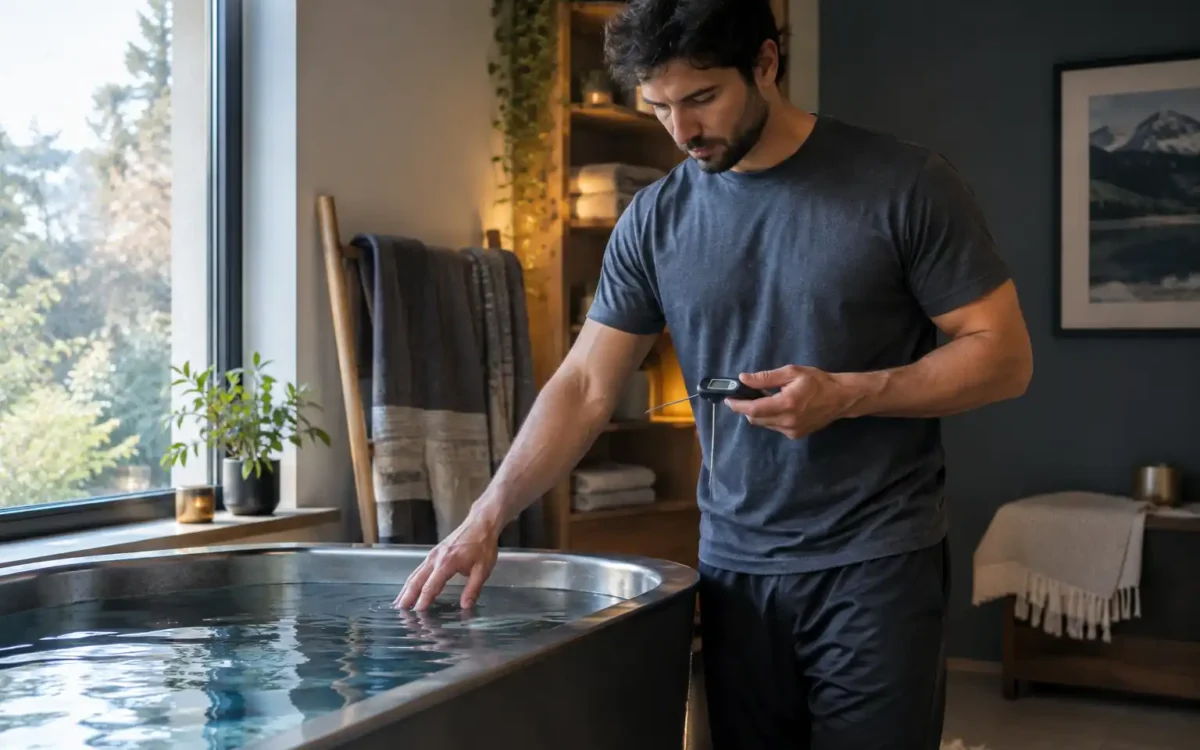
Is cold plunge safe? It’s the question almost everyone asks right before they try it for the first time, and the honest answer isn’t a simple yes or no — it depends heavily on your health, how you do it, and how long you stay in. For most healthy adults using sensible temperatures and short sessions, cold plunging carries a low, manageable level of risk. For certain groups, the same practice carries real, well-documented dangers that deserve to be taken seriously rather than brushed off. This guide breaks down exactly where that line sits.
Part of why this question gets murky is that social media tends to show two extremes: dramatic viral clips of people gasping and struggling in ice water, or breezy claims that cold plunging is harmless for everyone. Neither extreme reflects the actual evidence, and both make it harder for someone genuinely trying to figure out the right answer for their own body. The real picture is more specific, and more useful, once you break it down by who’s doing it, how, and for how long.
Generally safe for healthy adults using short sessions and gradual acclimatization — genuinely risky for people with certain heart, lung, or circulation conditions without medical clearance first.
Is Cold Plunge Safe for Healthy Adults?
For most people without underlying health conditions, yes — is cold plunging bad for you isn’t really the right framing for this group. Major health organizations generally describe cold water immersion as low-risk for healthy adults when sessions are kept short, water isn’t extreme, and the person eases in gradually rather than acclimatizing cold. The body’s stress response to cold is well studied and, for a healthy cardiovascular and respiratory system, it’s a manageable, temporary spike rather than a genuine threat.
That said, “healthy” is doing real work in that sentence. Plenty of people who feel generally fine have undiagnosed cardiovascular issues, which is exactly why a quick check-in with a doctor before starting is worth the ten minutes it takes, even if you feel completely well.
It’s also worth separating two different questions that often get blended together: is the practice itself risky, and is a particular person’s approach to it risky. A lot of the frightening stories that circulate online involve someone skipping every safety basic — jumping straight into extreme cold, staying in far too long, or plunging completely alone with no way to get help. Those stories say more about the approach than about cold plunging as a practice, and it’s a distinction worth keeping in mind whenever a dramatic clip makes the whole practice look inherently unsafe.
Cold Plunge Risks and Side Effects
Even for healthy adults, cold plunge risks and side effects are real and worth understanding rather than ignoring, even if the overall picture is reassuring. The most immediate is the cold shock response — a sharp spike in heart rate and blood pressure the instant cold water hits your skin, alongside involuntary gasping and rapid breathing. Beyond the first minute, the ongoing risks shift toward numbness, reduced coordination, and, with long enough exposure, hypothermia. Skin and nerve issues are also possible with extended sessions in very cold water, though this is far more relevant to prolonged open-water exposure than a typical few-minute home plunge.
If you want the deeper physiology behind that first-minute spike specifically, our cold shock response guide breaks down exactly what’s happening and how to manage it as it happens.
It’s worth noting that most documented serious incidents involve open, unsupervised cold water — rivers, lakes, and oceans — rather than a controlled home tub with a known, consistent temperature. That doesn’t eliminate risk in a home setup, but the environment itself matters: predictable water temperature, easy exit, and staying within arm’s reach of help all meaningfully lower the odds of something going wrong during a typical session.
Who Should Avoid Cold Plunge? Safety Tiers
Rather than a blanket yes-or-no, it’s more useful to think of cold plunging in three tiers based on your health background.
| Generally Safe | Caution Advised | Avoid Without Clearance |
|---|---|---|
| Healthy adults, no diagnosed conditions | Mild, controlled high blood pressure | Heart disease, arrhythmia, history of heart attack |
| Regular exercisers with normal cardiovascular health | Managed asthma or mild respiratory sensitivity | Uncontrolled high blood pressure |
| Experienced cold-exposure practitioners | Raynaud’s or poor circulation, done briefly | Pregnancy, without doctor guidance |
Is cold plunge safe with high blood pressure specifically depends heavily on whether it’s controlled and how your doctor feels about the added cardiovascular stress. Similarly, is cold plunge safe for people with asthma varies a lot by individual — cold air and cold shock can both trigger airway tightness in some people, so this is a conversation worth having with your doctor rather than guessing. Our guide to cold plunge and heart conditions goes much deeper into the cardiovascular-specific considerations.
The middle “Caution Advised” tier deserves special attention, since it’s the one people most often skip over entirely. Falling into this tier doesn’t mean cold plunging is off the table — it means the conversation with a doctor is more important than for someone in the first tier, and starting more conservatively, with milder temperatures and shorter sessions, is the sensible default rather than diving straight into whatever protocol looks impressive online, no matter how confident the person demonstrating it seems.
Is Cold Plunge Safe Every Day?
For most healthy people, daily short cold plunges aren’t inherently dangerous, and plenty of regular practitioners do plunge every day without issue. That said, daily use isn’t necessary to get the documented benefits, and it does mean daily cumulative stress on your cardiovascular system, so building in occasional rest days is a reasonable, low-cost precaution rather than a strict requirement.
If you’re specifically training for something rather than plunging purely for wellness, the frequency question shifts slightly — matching your sessions to your training schedule, rather than a fixed daily habit, tends to serve most goals just as well with less overall cumulative stress on your system over the course of a demanding week.
Warning Signs to Stop Immediately
How dangerous is cold plunging really comes down largely to whether you recognize and respect your body’s warning signs, rather than pushing through them. Most bad outcomes don’t come out of nowhere — the body typically gives a fairly clear sequence of signals first, and the skill worth building is treating those signals as a hard stop rather than something to tough out. These are the signals that mean it’s time to get out, not push forward:
Uncontrollable shivering that doesn’t ease with a few slow breaths
Numbness spreading beyond your hands and feet
Dizziness, confusion, or difficulty thinking clearly
Chest tightness or pain of any kind
Inability to get your breathing back under control after a minute or so
Is cold plunge safe without supervision is a fair question for beginners specifically — having someone nearby for your first several sessions, or at minimum plunging somewhere you can easily call for help, removes a meaningful amount of risk while you’re still learning how your body responds.
Cold Plunge Safety for Beginners
If you’re just starting out, the safest path is the least dramatic one: mild temperatures first, sessions under a minute or two, and a gradual build-up over several weeks rather than jumping straight into an extreme setup you saw online. Many of the injuries and scary moments associated with cold plunging trace back to skipping this ramp-up entirely. If you want the full breakdown of common beginner errors, our cold plunge mistakes guide covers the specific missteps that turn a normally safe practice into a risky one.
A simple rule of thumb that holds up well: if a session ever feels genuinely alarming rather than just uncomfortable, that’s information, not a challenge to push through. Discomfort is expected and part of the practice; alarm is your body flagging something worth listening to, every single time.
A relative of mine who’s fairly cautious by nature asked me almost this exact question before trying her first plunge — is this actually safe, or is it one of those trends that looks fine on video and isn’t? What settled it for her wasn’t a blanket reassurance, it was going through her own health history point by point and realizing none of the real risk factors applied to her. She started at a mild temperature, kept her first few sessions under a minute, and felt completely in control the entire time. The caution wasn’t wasted effort — it’s exactly why the experience went well.
What stuck with me afterward was how differently she approached it compared to how most beginners seem to online — she treated the ramp-up period as non-negotiable rather than something to rush through, and months later that’s still the same approach she uses.
Frequently Asked Questions
For most healthy adults, yes, though daily use isn’t required to see benefits, and occasional rest days are a reasonable precaution.
Yes, particularly for people with heart conditions, uncontrolled high blood pressure, or certain respiratory issues, and for anyone who ignores warning signs like chest tightness or uncontrollable shivering.
Yes, when approached gradually — mild temperatures, short sessions, and a slow build-up over several weeks make it safe for most beginners without underlying conditions.
People with diagnosed heart disease, uncontrolled high blood pressure, or who are pregnant should get medical clearance first; several other conditions warrant caution and a doctor’s input.
Generally yes, though it’s still worth easing in gradually and being aware of warning signs, since even healthy people can occasionally have undiagnosed sensitivities.
Before your next session, take a moment to actually think through your own health history rather than assuming the general advice applies exactly to you.
Is cold plunge safe isn’t a question with one universal answer — it’s a question worth answering honestly about your own body, every single time you consider it.

Related Articles
Cold Plunge When Sick? 6 Rules for Illness, Immunity and a Faster Recovery
Last month I woke up with that unmistakable scratch in the back of my throat — the kind…
Read Guide
Who Should Avoid Cold Plunge? A Complete Safety Checklist
A quick note before you read on: This article shares general safety information, not medical advice. Always talk…
Read Guide
Cold Shock Response Explained: Why You Gasp When You Enter Cold Water
A quick note before you read on: This article explains general physiology and isn’t a substitute for medical…
Read Guide